
Although they started of making just motor vehicles, premium and luxury automakers have long treated their identities as more than just a means to sell such products. Over time, they have extended their reach into furniture, watches, apparel, residences, and household objects to position themselves as lifestyle markers.
This strategy rests on a straightforward logic: a strong automotive name carries deep-rooted associations of engineering precision, material quality, and considered design.
By attaching that brand name to carefully chosen non-automotive goods, manufacturers reinforce these core values in the daily lives of their existing clientele while capturing new audiences who may never purchase a car yet admire their brand.

Bentley, for example, has expanded into home furniture and residential towers; Porsche has collaborated on premium kitchen appliances; and Ferrari has developed dedicated fashion lines and writing instruments.
These ventures are far from random merchandising exercises; they represent calculated efforts to maintain brand presence in environments where the car itself cannot go.
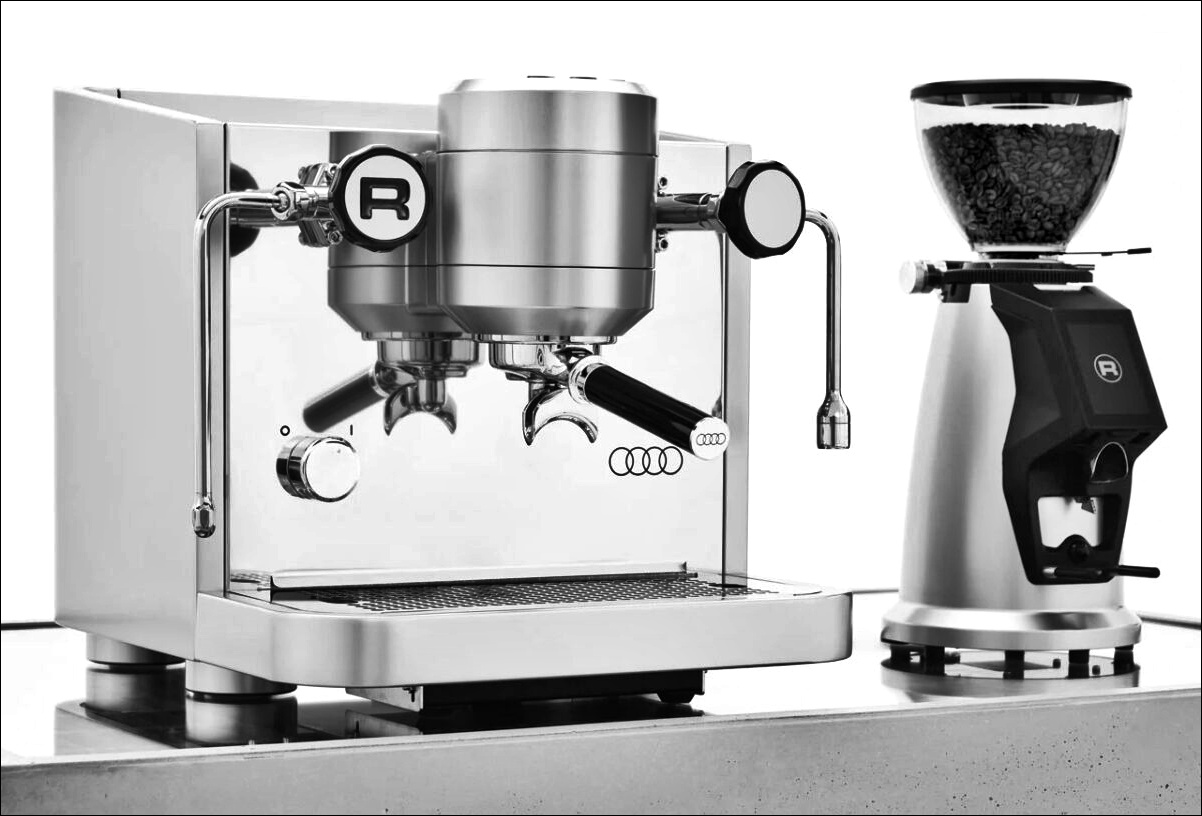
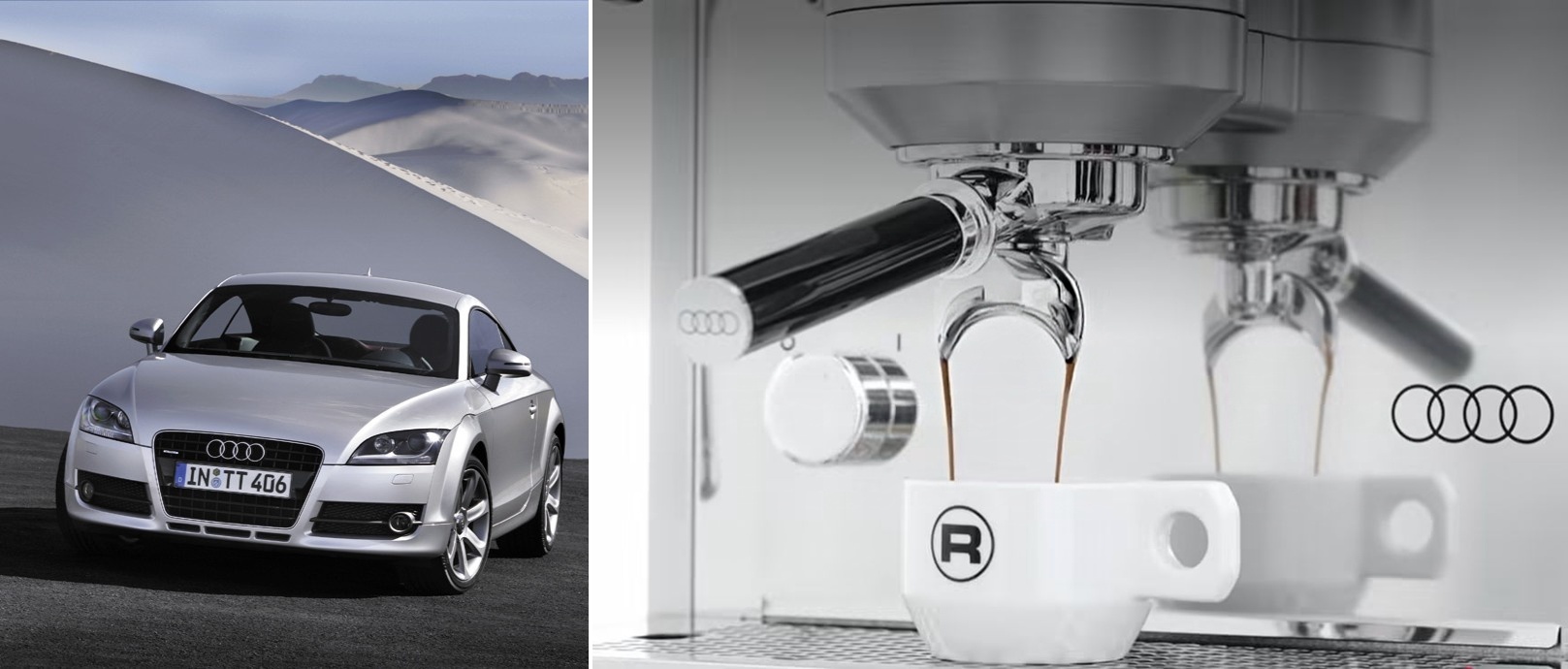
A compelling recent illustration of this philosophy can be seen in the partnership between Audi and Italian coffee equipment specialist Rocket Espresso to create a coffee machine. The entire dual-boiler espresso machine and a matching grinder project’s visual identity are associated with the iconic Audi TT.
An iconic design
Tracing the lineage of the TT reveals a masterclass in automotive design history. Conceived initially as a small sketch by American designer Freeman Thomas in 1994 while working under J Mays at Audi’s California studio, the concept debuted at the 1995 Frankfurt motor show and appeared in showrooms by 1998.
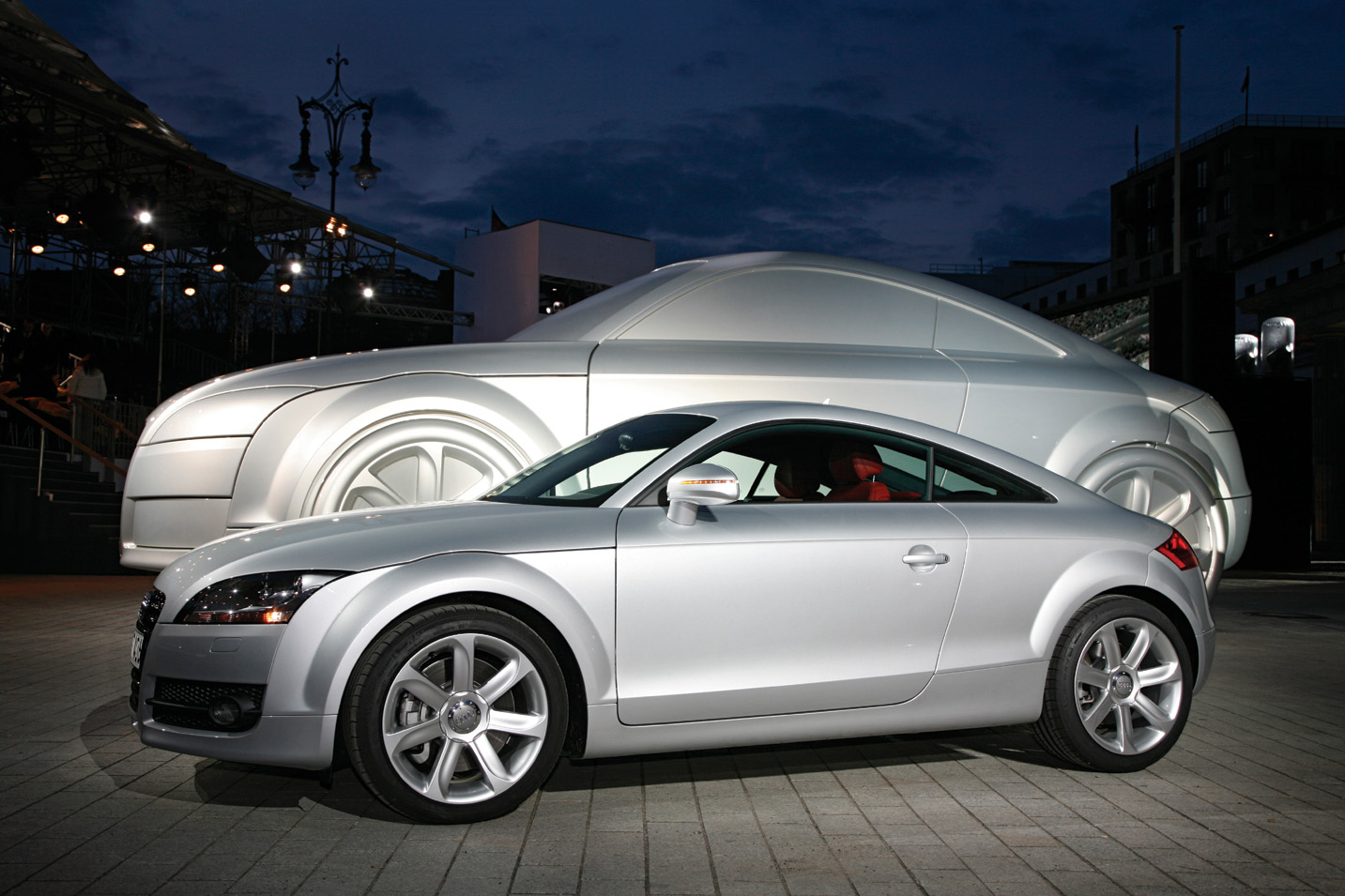
The ‘TT’ designation paid homage to the Isle of Man Tourist Trophy, a legendary motorcycle race where Audi predecessor companies NSU and DKW recorded notable historic successes.
The car’s physical form drew heavily from classic principles of functional geometry alongside the rounded proportions of pre-war Auto Union racing machines. Clean surfaces, restrained lines, and seamless transitions defined its silhouette, punctuated by circular motifs throughout both the exterior and interior.
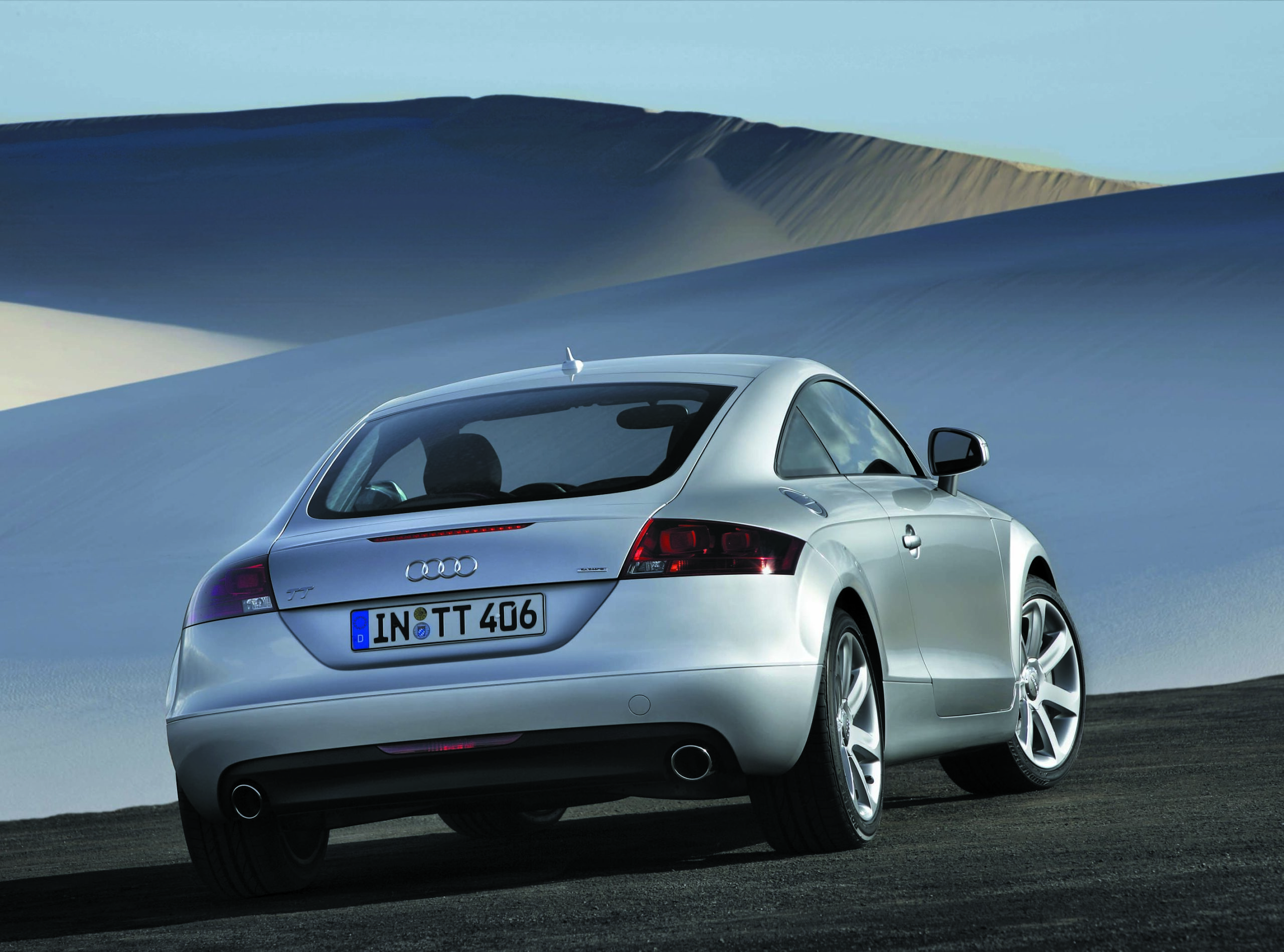
The resulting compact sportscar looked radically different from anything else on the late-1990s market, fundamentally shifting Audi’s broader design language toward greater emotional clarity.
The TT elements
That distinct design language defines the Rocket x Audi espresso machine. Developed closely with the Audi Design Team and Milan-based Valerio Cometti + V12 Design, the appliance builds upon Rocket’s established Bicocca platform.
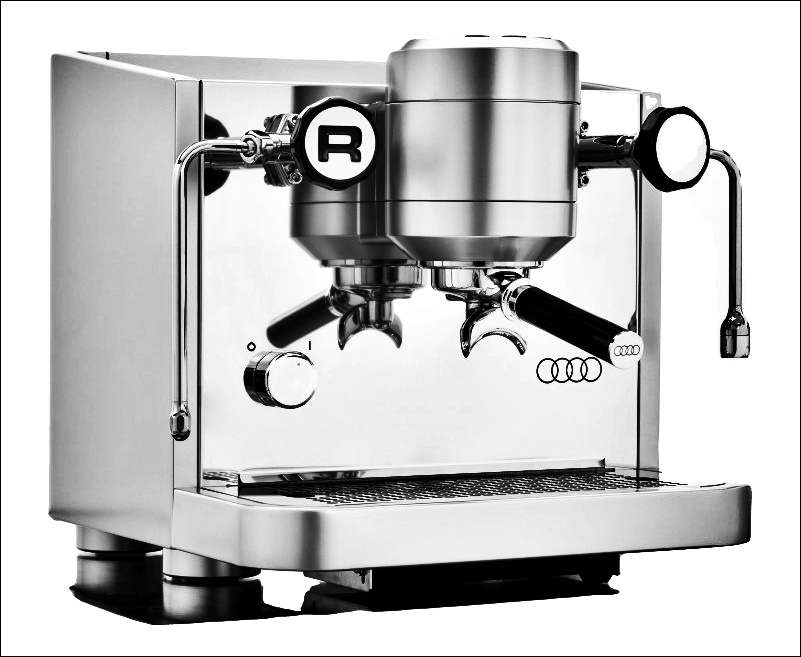
Its side panels rise progressively toward the rear, establishing a dynamic outline that elegantly frames the cup-warming area. And, of course, the Four Rings are visible on many surfaces around the appliance.
Matte aluminium surfaces play against glossy black handles and tactile rotary controls, while circular aluminium feet lift the chassis slightly off the counter to create a floating visual effect.
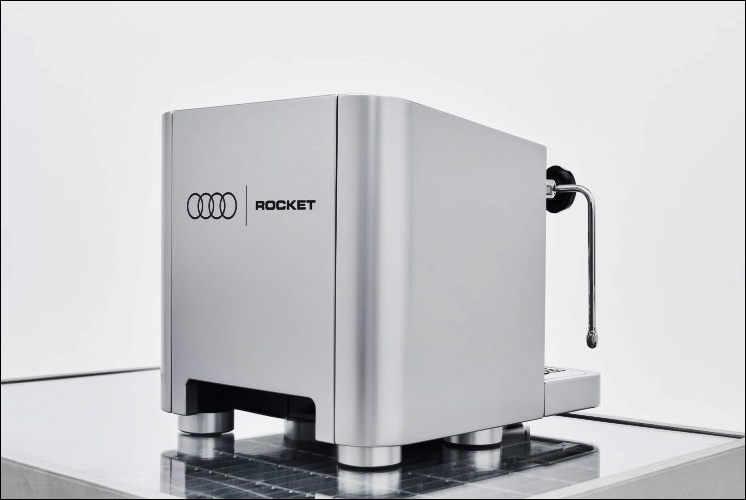
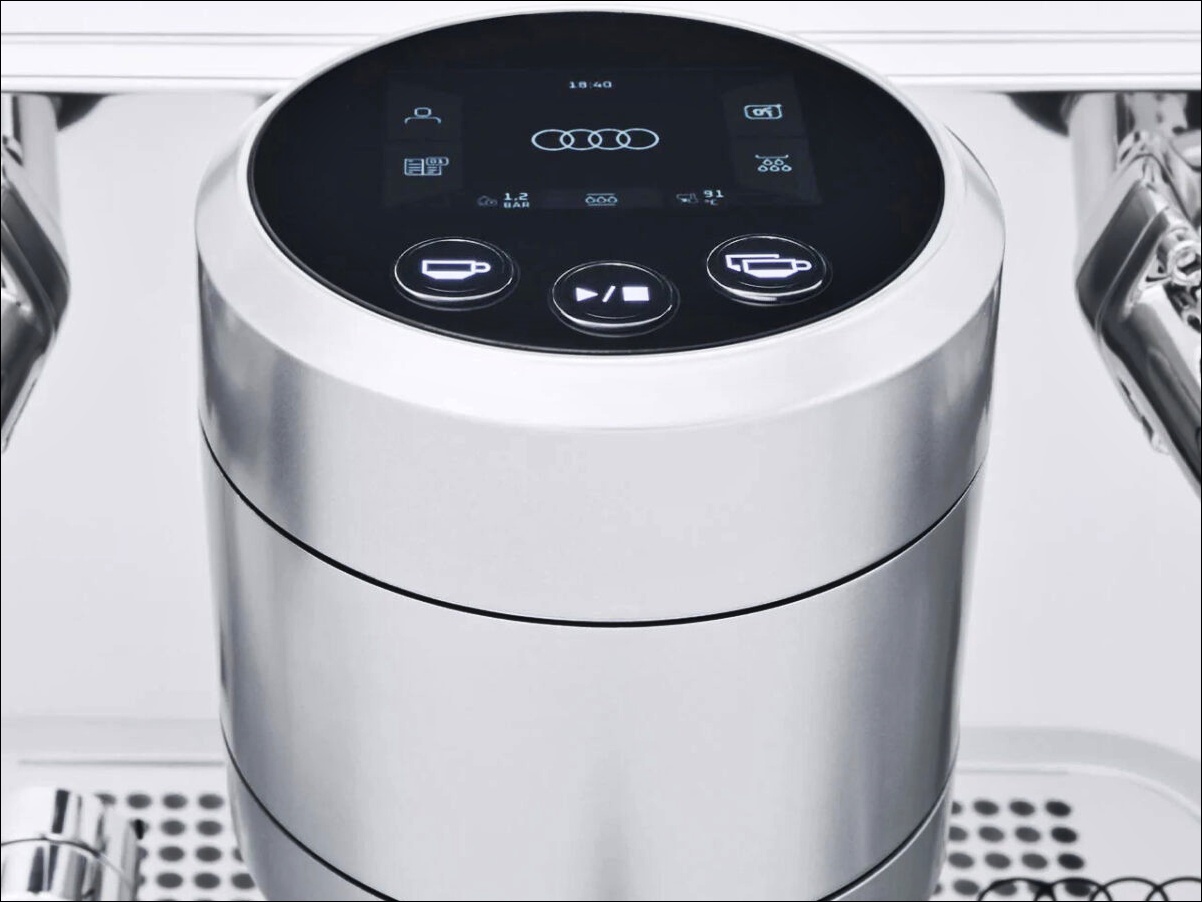
The brewing group is cleanly integrated directly into the main housing rather than treated as an isolated attachment, with a discreet 3.5-inch touch display embedded into the upper section.
The companion grinder adopts this exact formal vocabulary, deploying 65 mm burrs and a robust 480W motor governed by a micrometric adjustment system.
The ‘engine bay’
Beneath its striking exterior, the appliance maintains a conventional yet highly capable prosumer specification. It utilizes dual stainless-steel boilers — a 0.5-litre vessel dedicated to brewing and a 1.5-litre container for steam — driven by a rotary pump and an electrically-heated group head featuring PID temperature control.
Water management is flexible, supporting either an internal 1.8-litre tank or a direct plumbed connection. Measuring 409 mm wide, 465 mm deep, and 400 mm high, the heavy-duty unit weighs 35 kgs, while the grinder offers versatile programmed dosing, continuous grinding functions, and a height-adjustable portaffer holder.

Beyond the car showroom
Ultimately, this collaboration is less about pioneering revolutionary coffee technology and more about translating an iconic automotive design into an entirely different product category. It underscores the subtle (and sometimes not so subtle) practice of taking the automotive brand identity into people’s lives in other ways.
For dedicated Audi enthusiasts, collectors and coffee purists looking to bring this piece of automotive-inspired hardware into their homes, official prices in the UK are recommended at £6,650 (about RM36,000) for the espresso machine together with the grinder.