
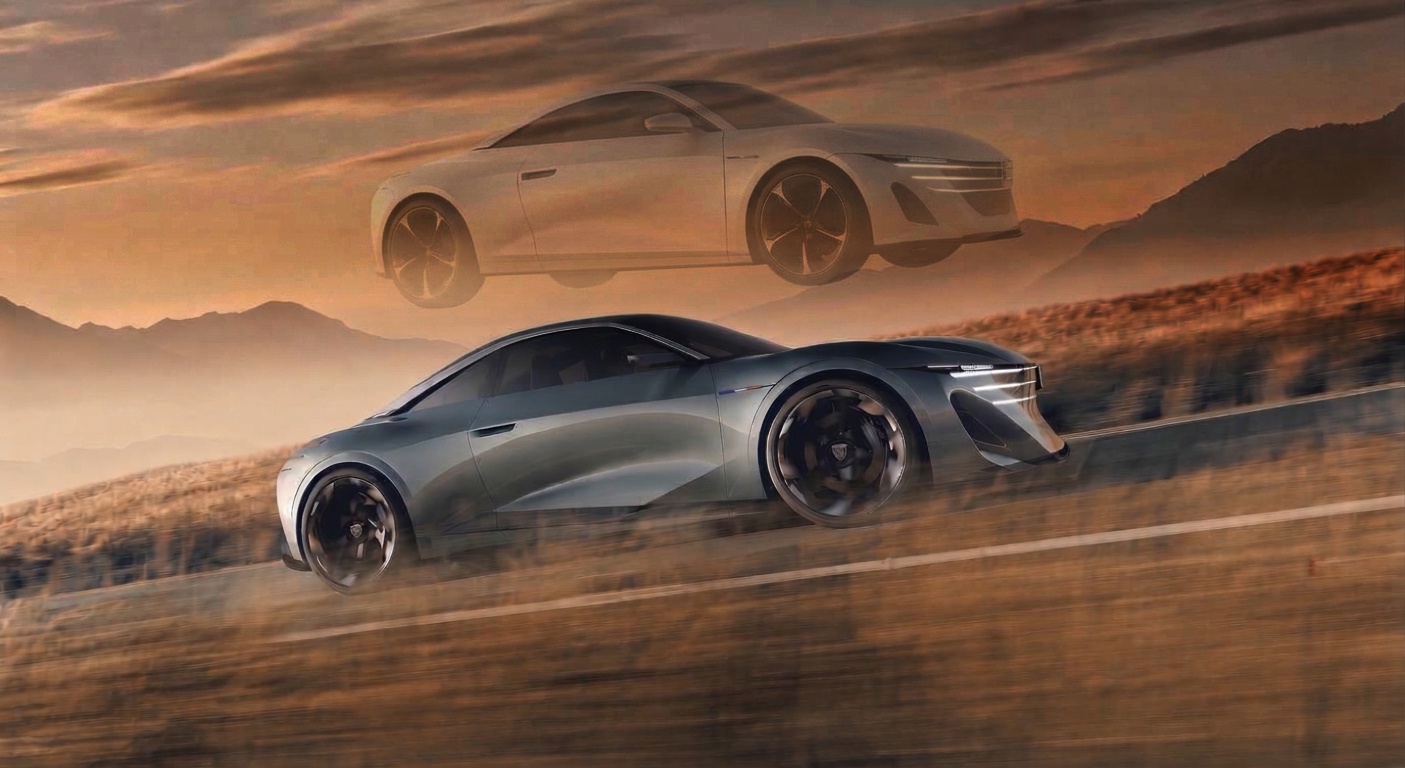
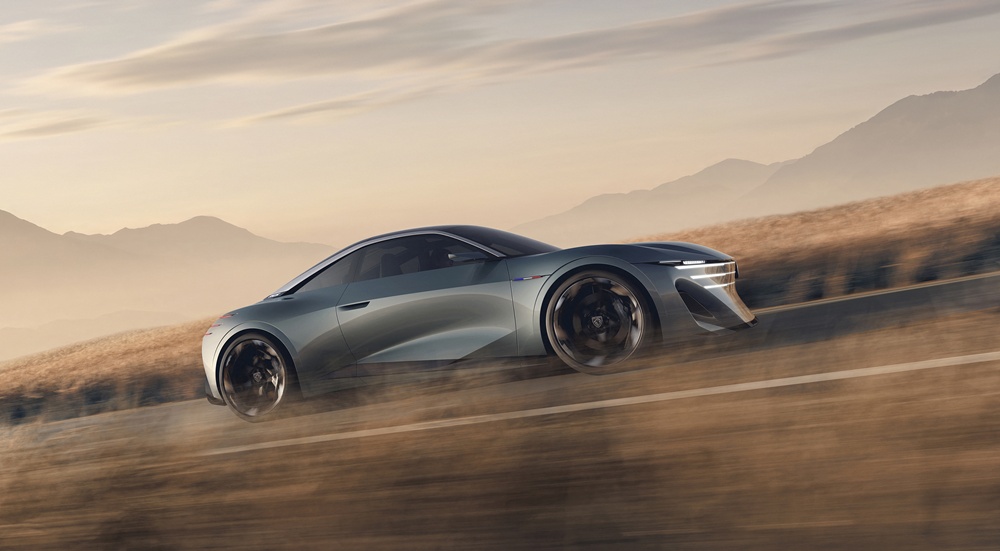
The Peugeot RCZ sports coupe which had a short life between 2009 and 2015 has be reborn as the RCZ Vision concept. With a fully electric powertrain, it provides a preview of the automaker’s design and technology direction for future models.
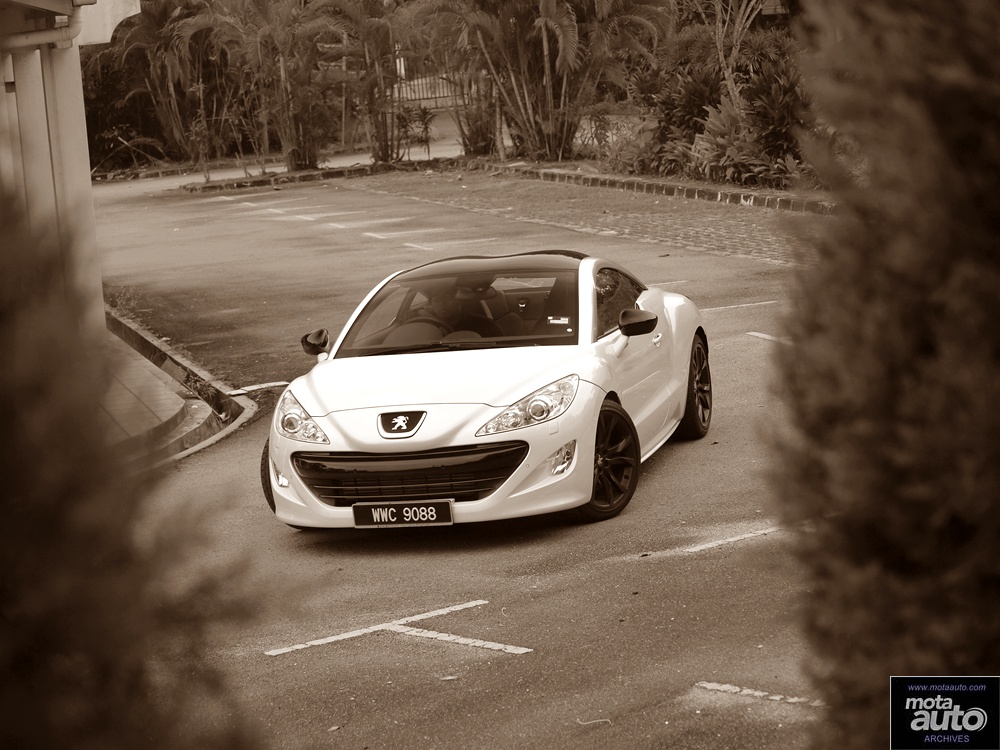
The original RCZ began as the 308 RCZ concept shown at the 2007 Frankfurt Motor Show. Strong and positive public response persuaded Peugeot to make it a production model which competed in the same segment as the Audi TT. Though having been in the market for only a short time, it is a collectors item and was the Malaysia Car of the Year in 2011.
Feline Future design language
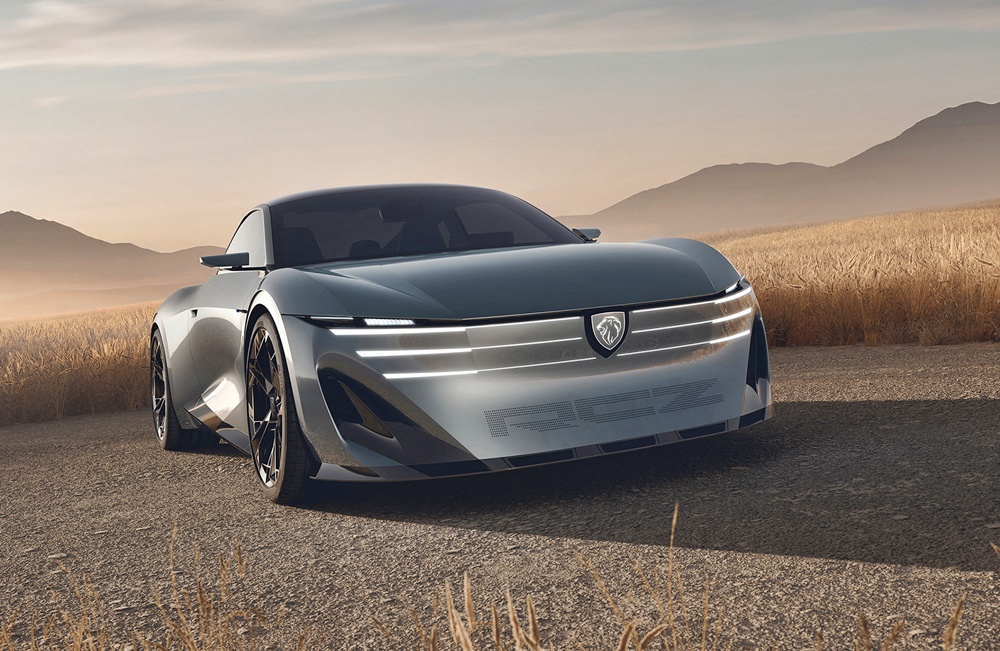
The new RCZ Vision revives the idea of a 2+2 and is the first full expression of Peugeot’s ‘Feline Future’ design language. The approach taken was born from the tension between feline strength and the precision of materials. Freedom, Courage, Elegance, Strength and Instinct were the 5 guiding principles which the designers followed.
STLA One
The RCZ Vision’s architecture is based on STLA One, Stellantis’ next-generation modular vehicle platform. Unveiled by the group in May 2026, STLA One is designed as a single scalable architecture that consolidates what had previously been five separate platforms. It covers the B, C and D segments — essentially small cars through to mid-size family vehicles and crossovers — and is engineered from the outset for multiple powertrain types.
Stellantis positions STLA One as a multi-energy platform. It can accommodate battery-electric, hybrid electric and combustion engine powertrains without the engineering compromises that often arise when a platform is stretched across different propulsion systems.
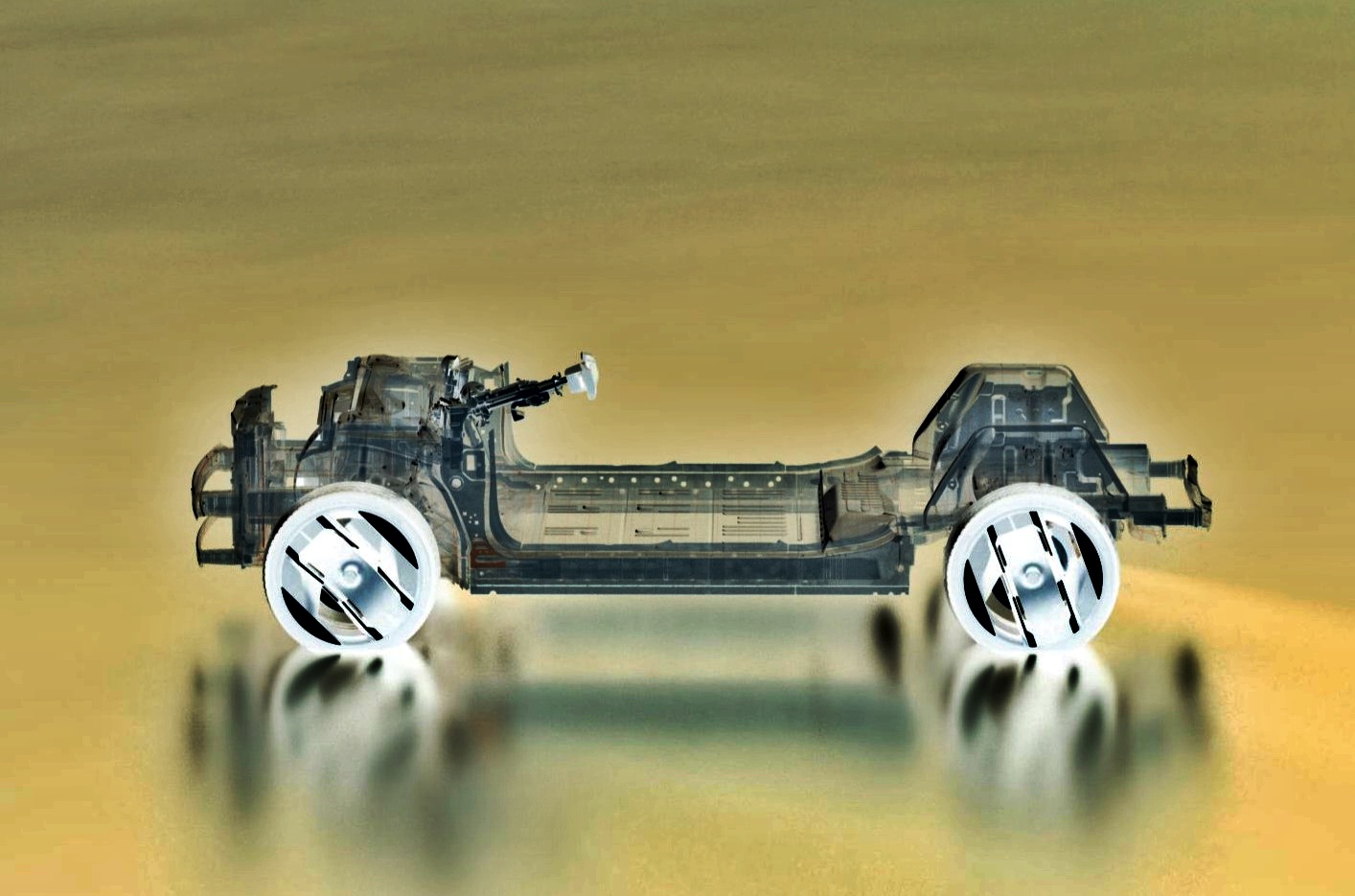
Common interfaces are intended to reduce complexity, shorten development cycles and improve cost efficiency. The company targets a 20% cost improvement driven by this modularity and by battery choices. By 2030, Stellantis aims to have 50% of its global volume on three main platforms, with component reuse of up to 70%.
Eventually, STLA One is planned to be used for more than 30 models and support annual production of over two million units by 2035. The first production models on the platform are scheduled for 2027 introduction, with the next-generation Peugeot E-208 among the early applications.
For fully electric models, STLA One is designed with an 800V system for faster charging. The RCZ Vision concept takes the architecture further by having a solid-state battery and a 1,000V electrical system, illustrating the platform’s readiness for next-generation battery technology.
STLA One is the first Stellantis platform planned to integrate the company’s STLA Brain central computing and software architecture, the STLA SmartCockpit interface system, and steer-by-wire technology. These systems are intended to support over-the-air updates, more flexible driver interfaces and the X-by-Wire controls (steer-by-wire and brake-by-wire) demonstrated on the RCZ Vision.
In the context of the RCZ Vision, the powertrain can generate 367 kW (500 hp), and the range is targeted to be up to 600 kms with energy consumption of 11.5 kWh/100 kms. Charging from 10 % to 80 % is said to take 10 minutes.
RCZ styling elements
The exterior retains the original RCZ’s glass-bubble roof and double-bubble profile, extended further so that the glass runs from the bonnet to the rear. The roof arches are thinner and appear to float. The bodywork is strongly sculpted yet rounded, with a pronounced shoulder line and a contrast between the slim cabin and the broader lower body.
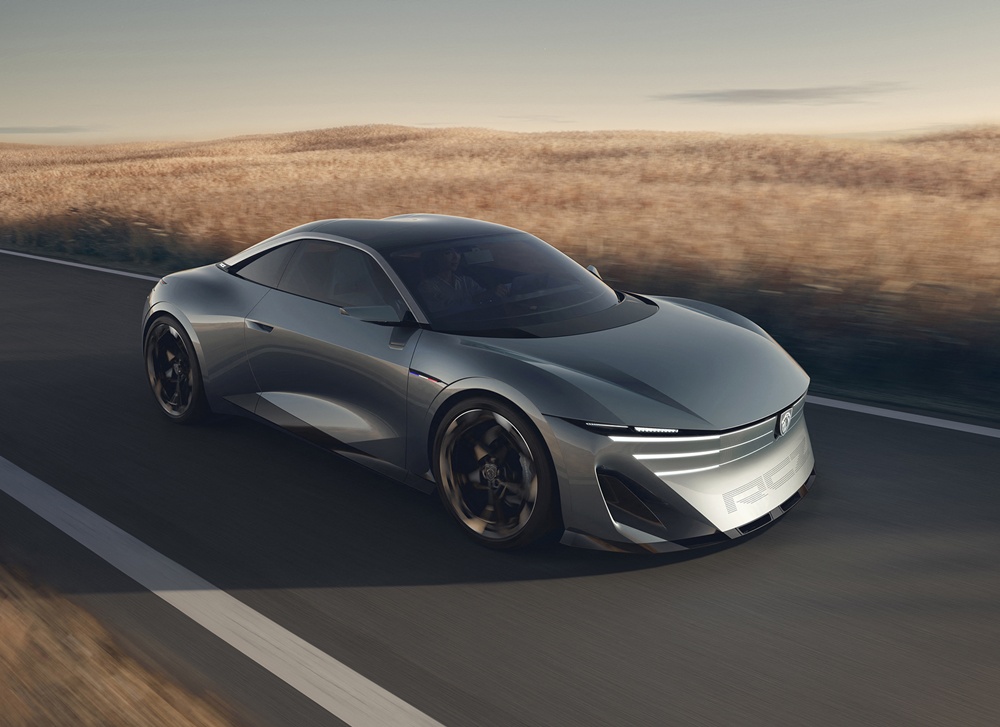
The new light signature uses three ultra-slim horizontal claws front and rear. At the front these sit above a compact Thin Lens LED headlamp; at the rear they integrate all lighting functions. An active rear spoiler remains hidden when the car is stationary.
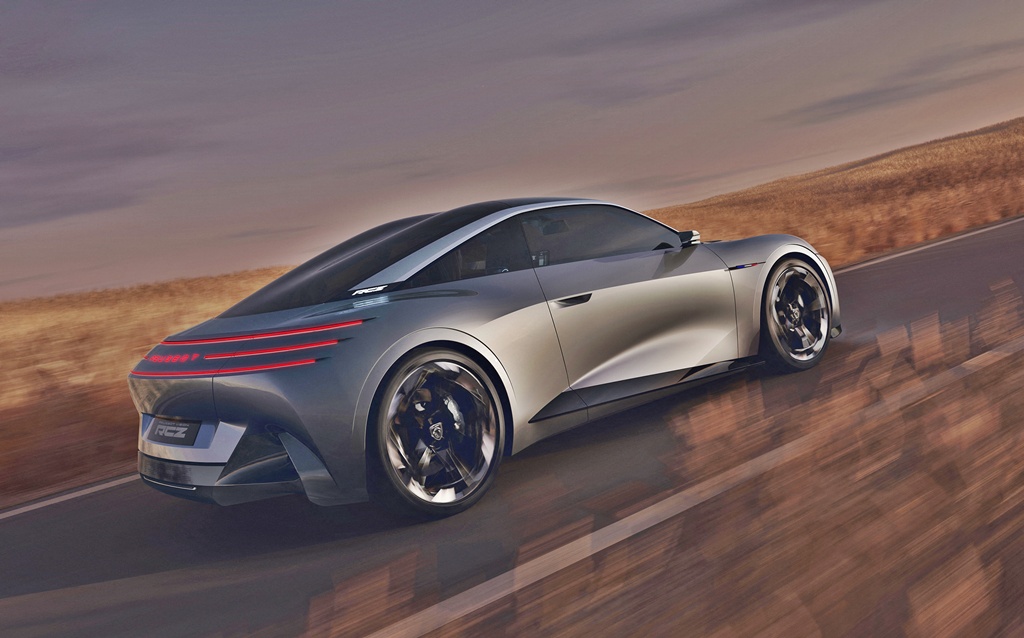
Forged 21-inch aluminium wheels at the front and 22 inches at the rear feature a radiating-spoke design with small triangular details that echo the original RCZ wheels.
Next-generation Peugeot i-Cockpit
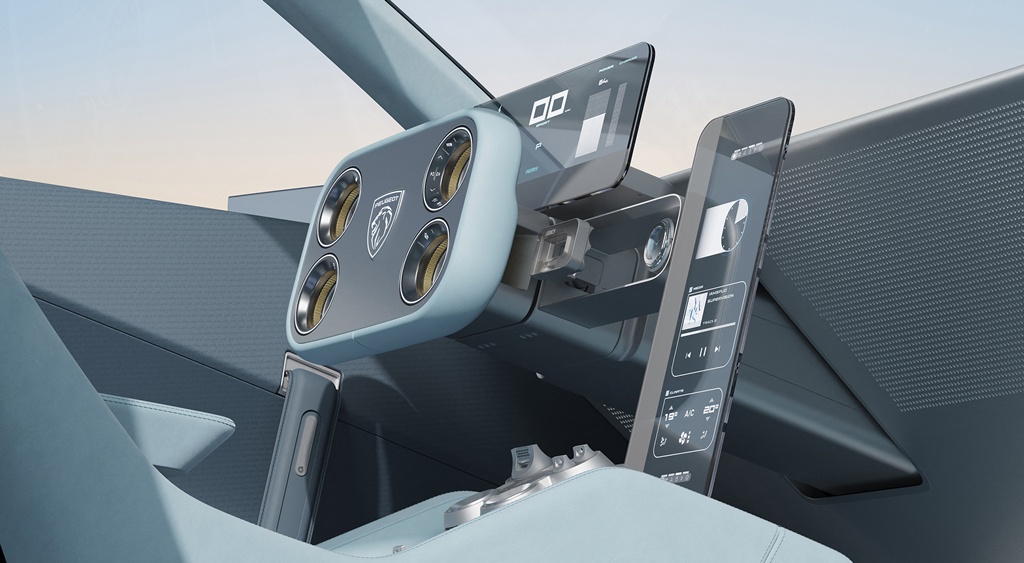
The RCZ Vision previews the next generation of the Peugeot i-Cockpit. It combines the Hypersquare steering control with transparent Micro LED displays. The transparent display sits directly above the Hypersquare and places essential information in the driver’s line of sight.
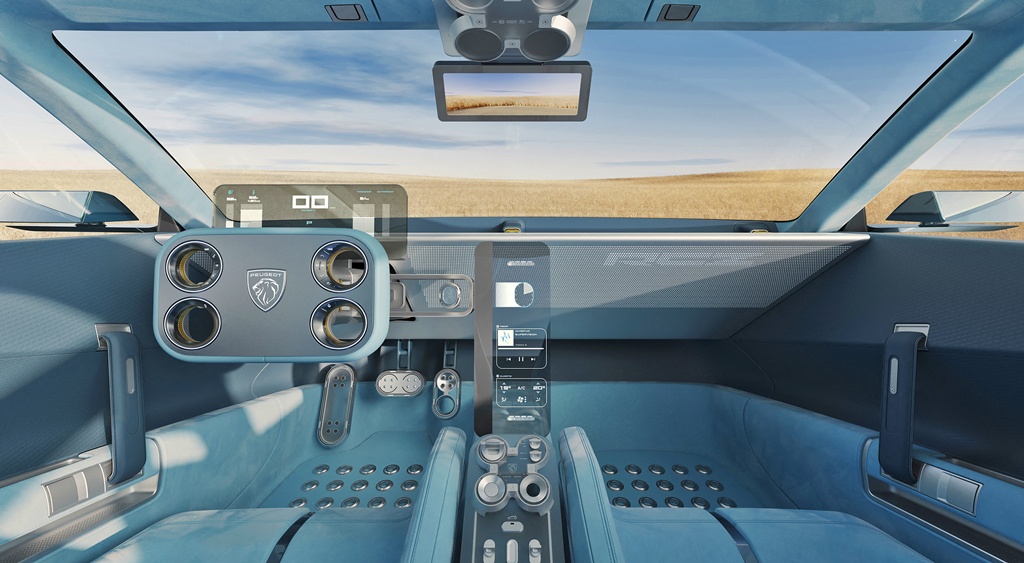
A floating central display is oriented vertically and angled toward the driver. The central screen can be switched off completely; its transparent construction then leaves the dashboard largely free of visual clutter. Primary controls remain reachable without the driver removing hands from the Hypersquare’s four rings. The same production-ready Hypersquare will appear in the next-generation Peugeot E-208.
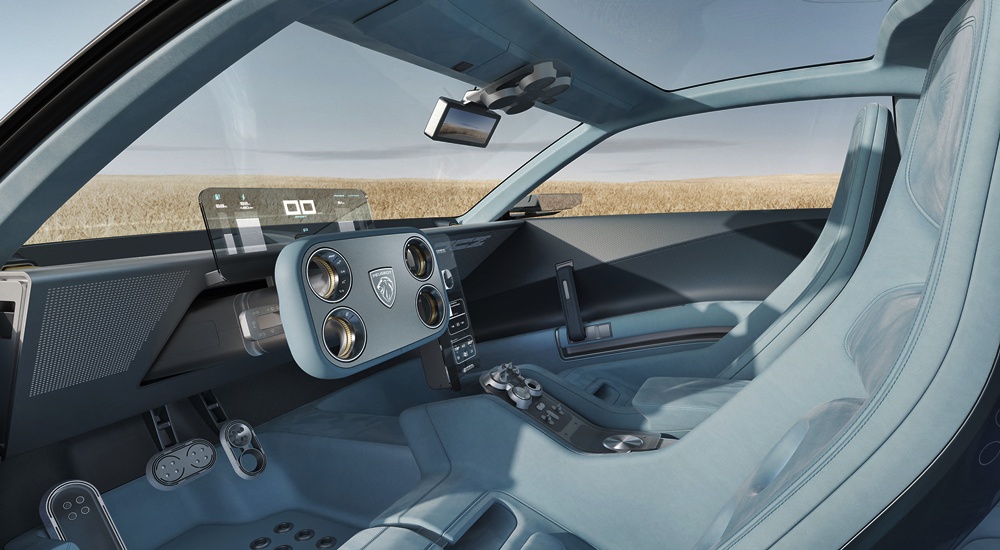
The concept also introduces Steer-by-Wire and Brake-by-Wire systems. There is no mechanical connection between the steering control and the front wheels; the steering ratio varies with speed. At low speeds, the system requires less than one full turn of the control from lock to lock. At higher speeds the ratio is reduced for stability.
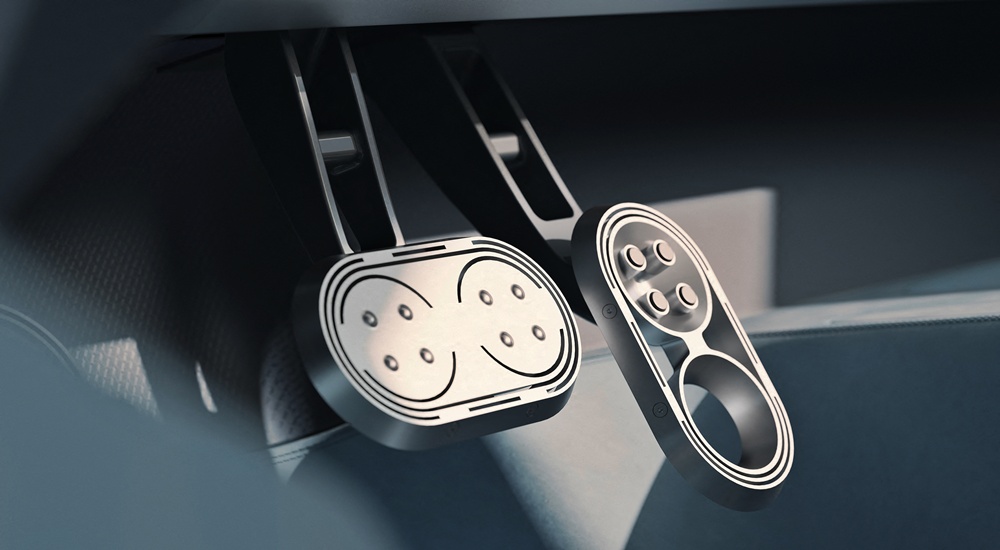
Brake-by-Wire replaces the hydraulic link between pedal and brakes, allowing finer modulation and tighter integration of regenerative braking. Level 2++ automated driving with a hands-free function is available on demand.

4-seater GT cabin
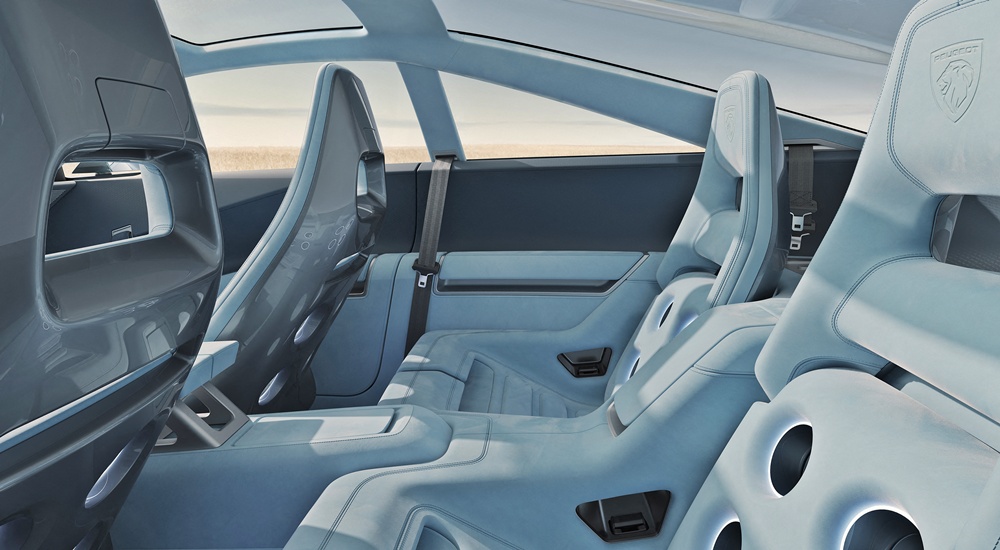
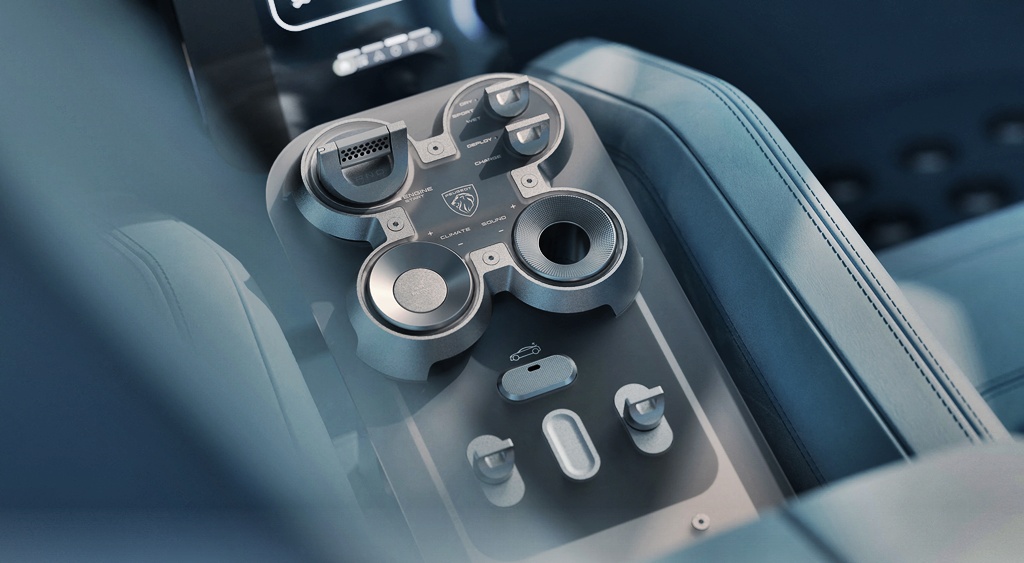
The cabin is configured as a 4-seater Grand Touring interior. The seats use an asymmetrical architecture for lateral support and open seatbacks to save weight. The floating centre console carries physical aluminium controls set into a frosted-glass surface. A dashboard clock designed with French watchmaker Serica is integrated into the central display support.
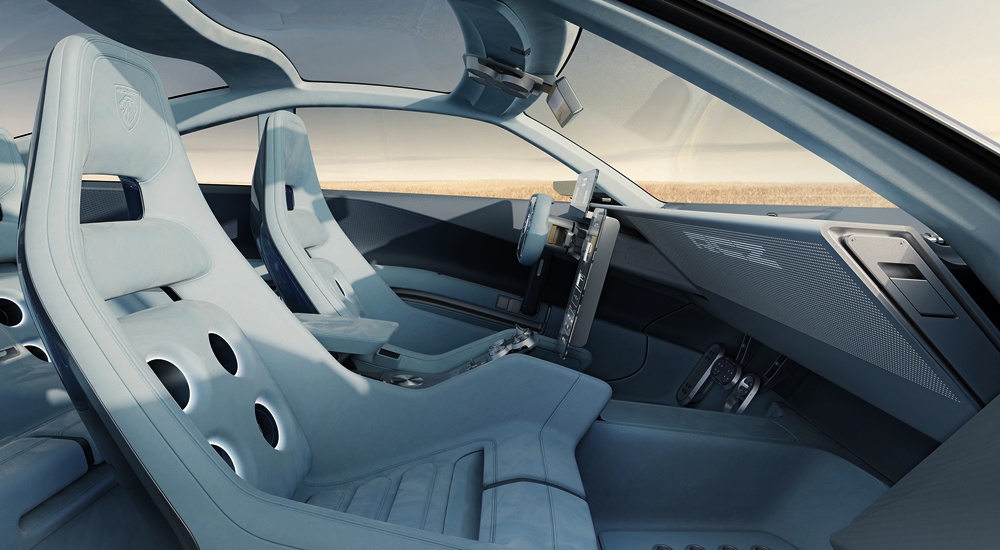
Peugeot positions the RCZ Vision as a ‘philosophy’ rather than a planned production model. It combines the brand’s historical association with distinctive coupe design with the revised i-Cockpit. The solid-state battery, high-voltage architecture, X-by-Wire controls are a preview of the future.