
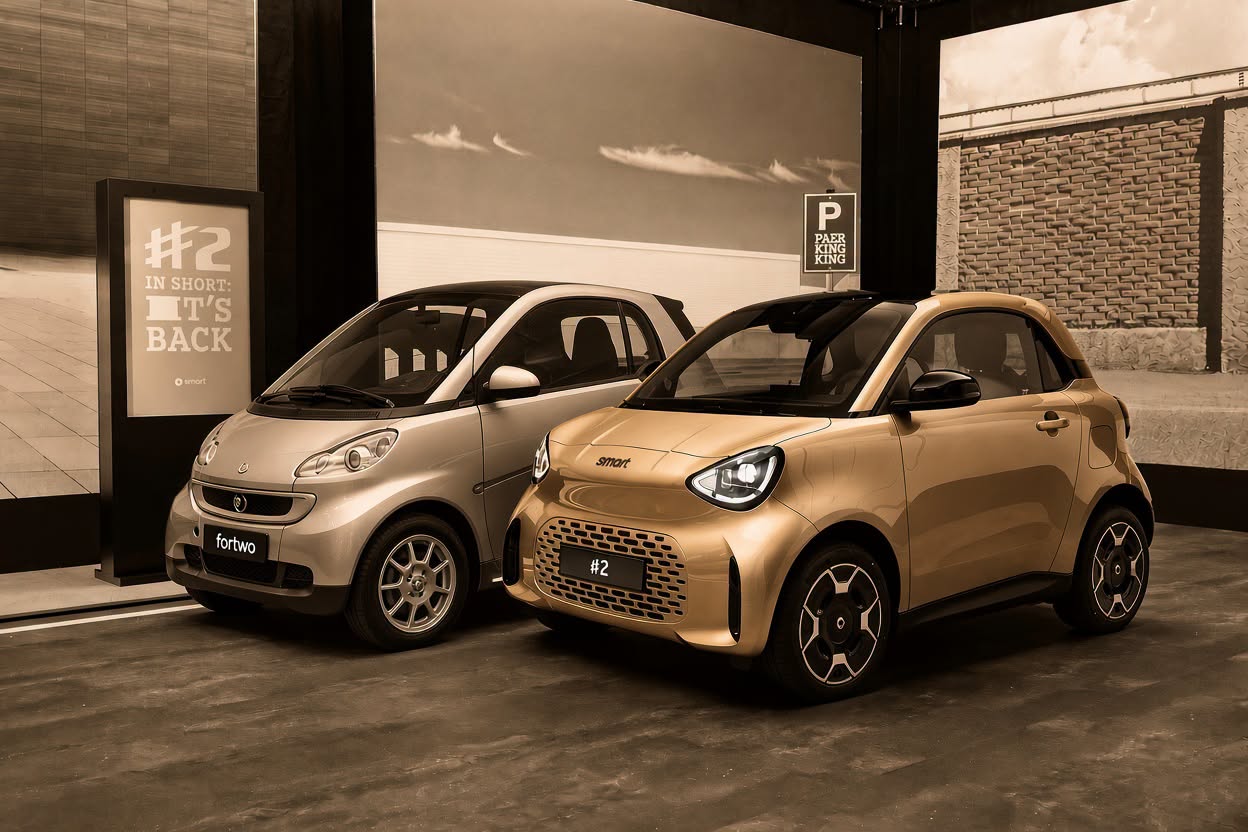
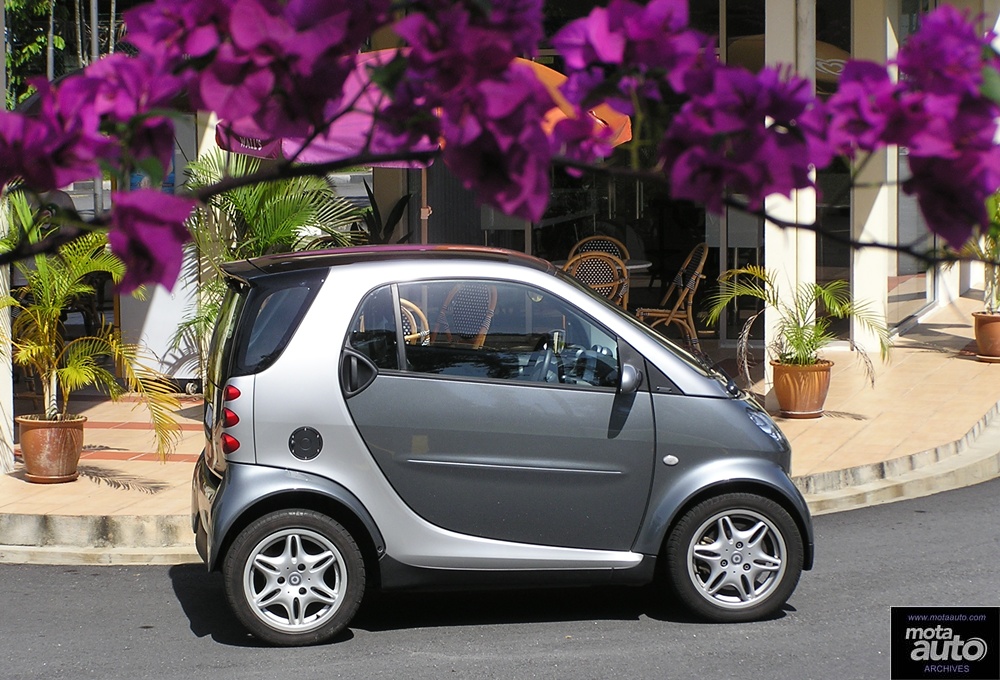
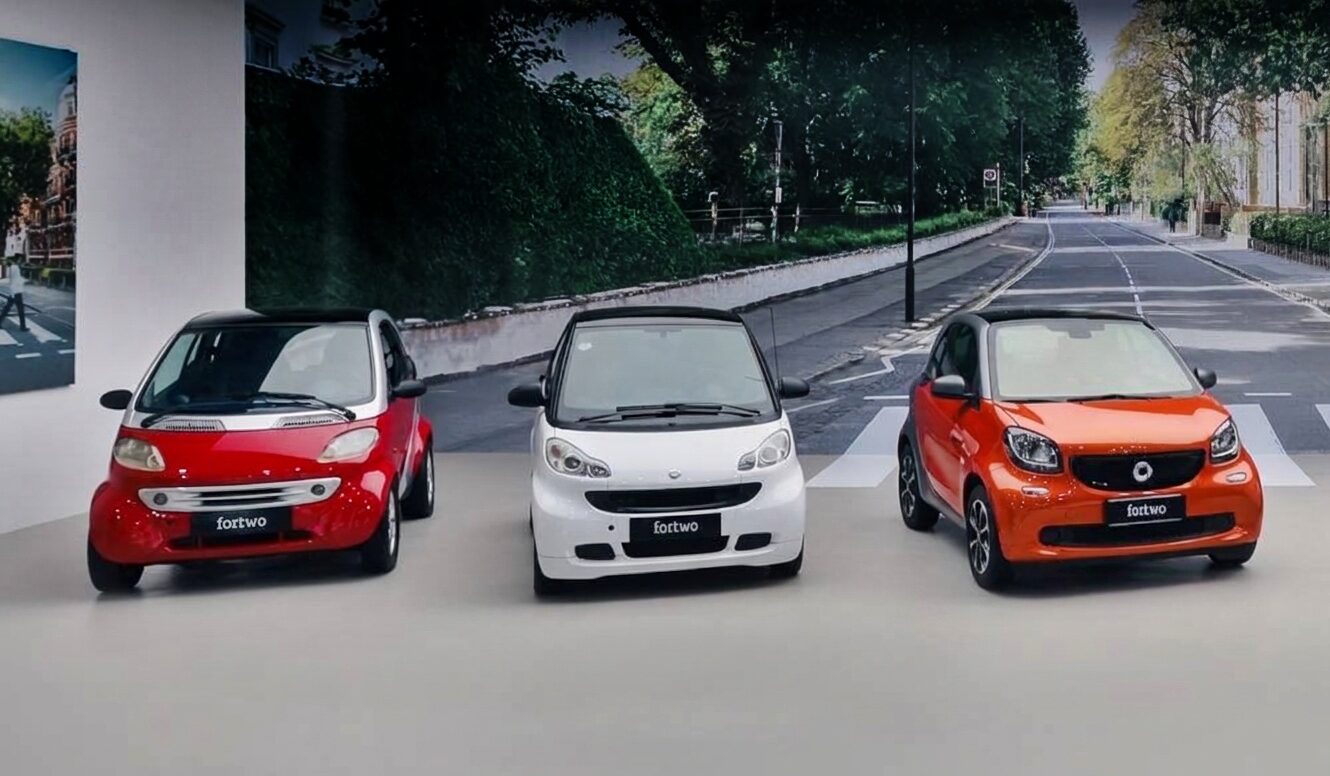
Originally conceived in the 1990s as an innovative urban microcar project by the maker of swatch watches, the smart car attracted the attention of Mercedes-Benz which backed it and later established smart as a brand in the German automaker’s portfolio.
Although it was a novelty that found many enthusiastic buyers for a while, the fortunes of smart declined when the 2010s began and it almost became ‘extinct’ as the business case eroded. China’s Geely Holding Group came into the picture as a partner, which saw smart being restructured into a 50-50 global joint venture in 2019.
Reborn in the electric era
This partnership – with Mercedes-Benz primarily handling design and Geely providing the platform – successfully transitioned smart into an all-electric era (although the final generation of the fortwo did have an electric powertrain as well).
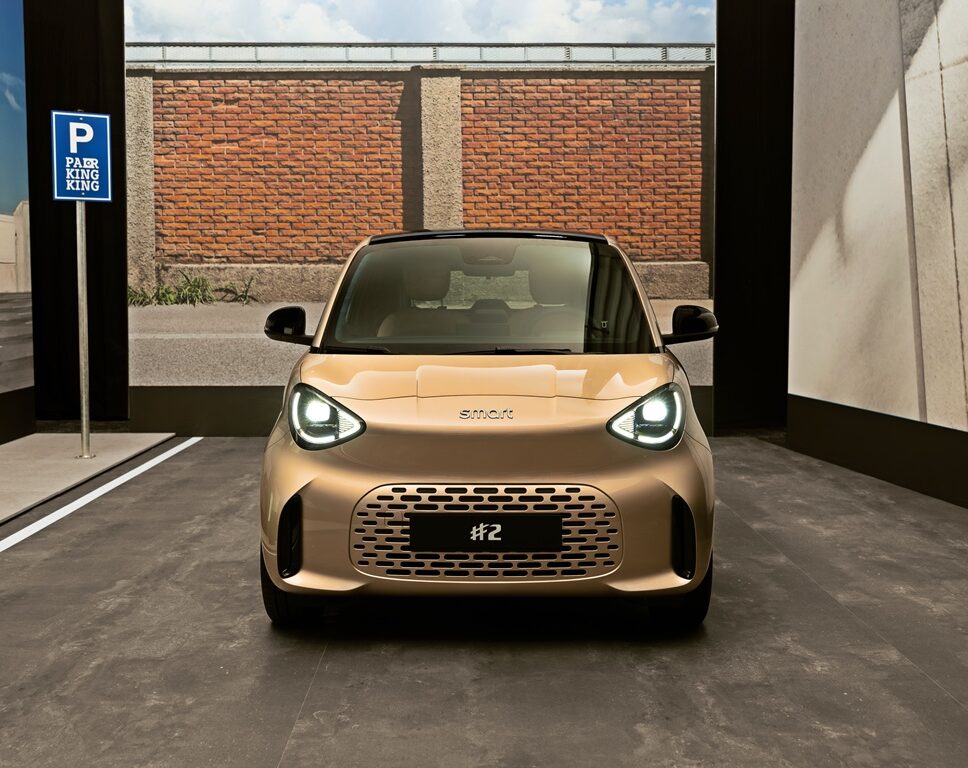
Completely new products such as the #1, #3 and #5 were introduced, with high-performance BRABUS versions, which found a niche in the growing EV market. ‘2’ was seemingly reserved, as it referenced the original smart model known as ‘fortwo’ and its return has been long awaited. 30 years after the original 2-seater concept was unveiled in Paris, smart has introduced the all-new #2 as a contemporary reinvention of its iconic city car format.
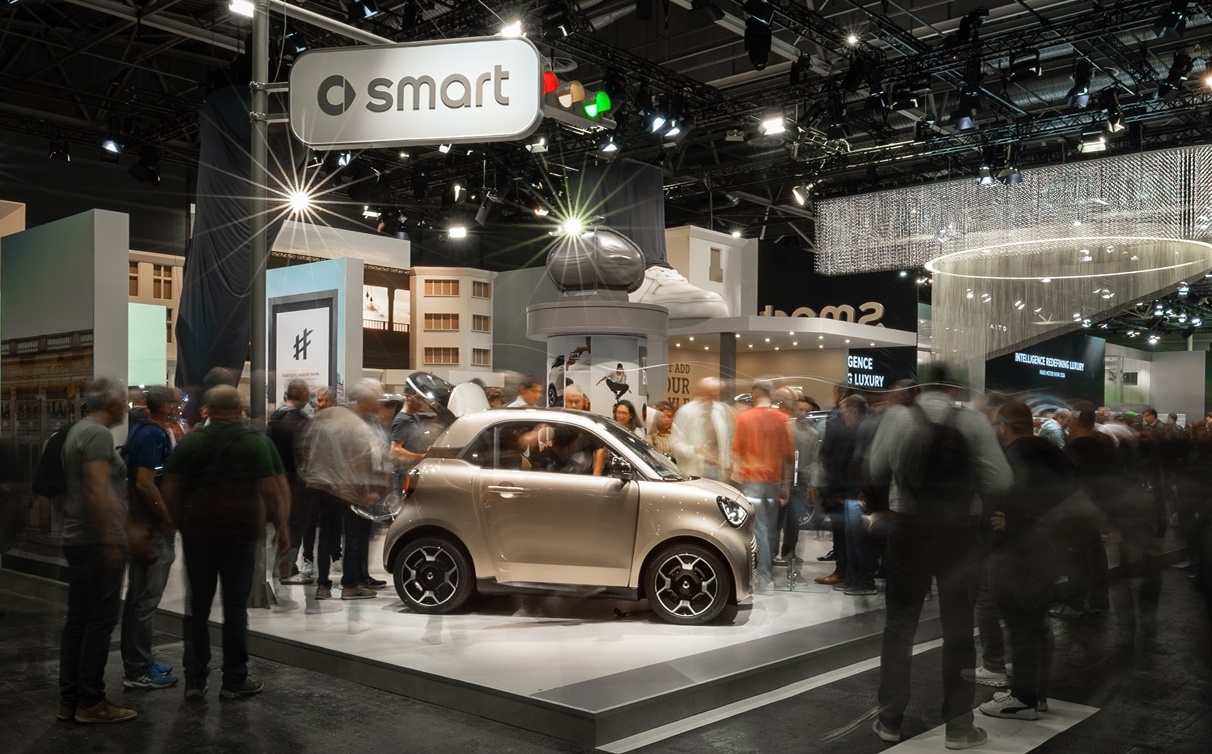
Designed for cities
As with the original, the #2 is designed specifically for urban environments. Measuring just 2746 mm in length (about the same as the fortwo in its final generation), it has the signature wheels-at-the-corners stance that maximizes interior volume within an ultra-compact footprint. Navigating tight city streets and narrow parking spaces is facilitated by a curb-to-curb turning circle of 6.95 metres.
The new model carries forward distinct design signatures from the original fortwo, including a 2-tone body colour finish, an open cabin layout, and the characteristic split tailgate.
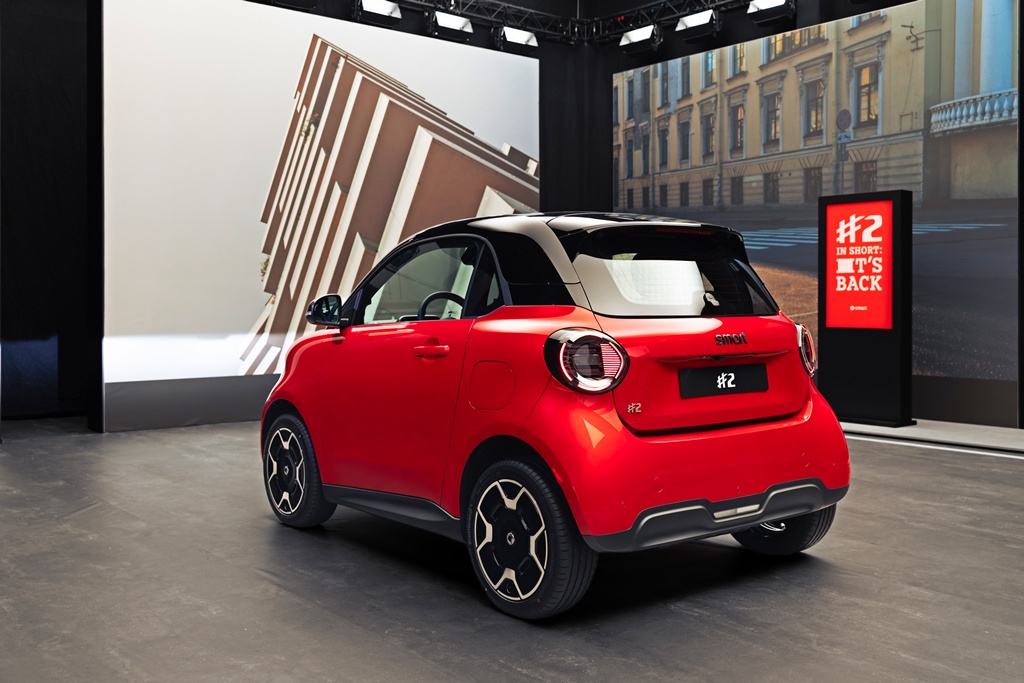
Wolfgang Ufer, CEO of smart Europe GmbH, noted that the vehicle revives an automotive icon tailored to modern global cities by merging the core qualities of the original fortwo with contemporary technology solutions.
Electric Compact Architecture
The #2 is built on the newly developed Electric Compact Architecture platform. Power is supplied by a rear-mounted 60 kW electric motor generating 130 Nm of torque to the rear wheels, aided by wider rear tyres to optimize stability and dynamics.
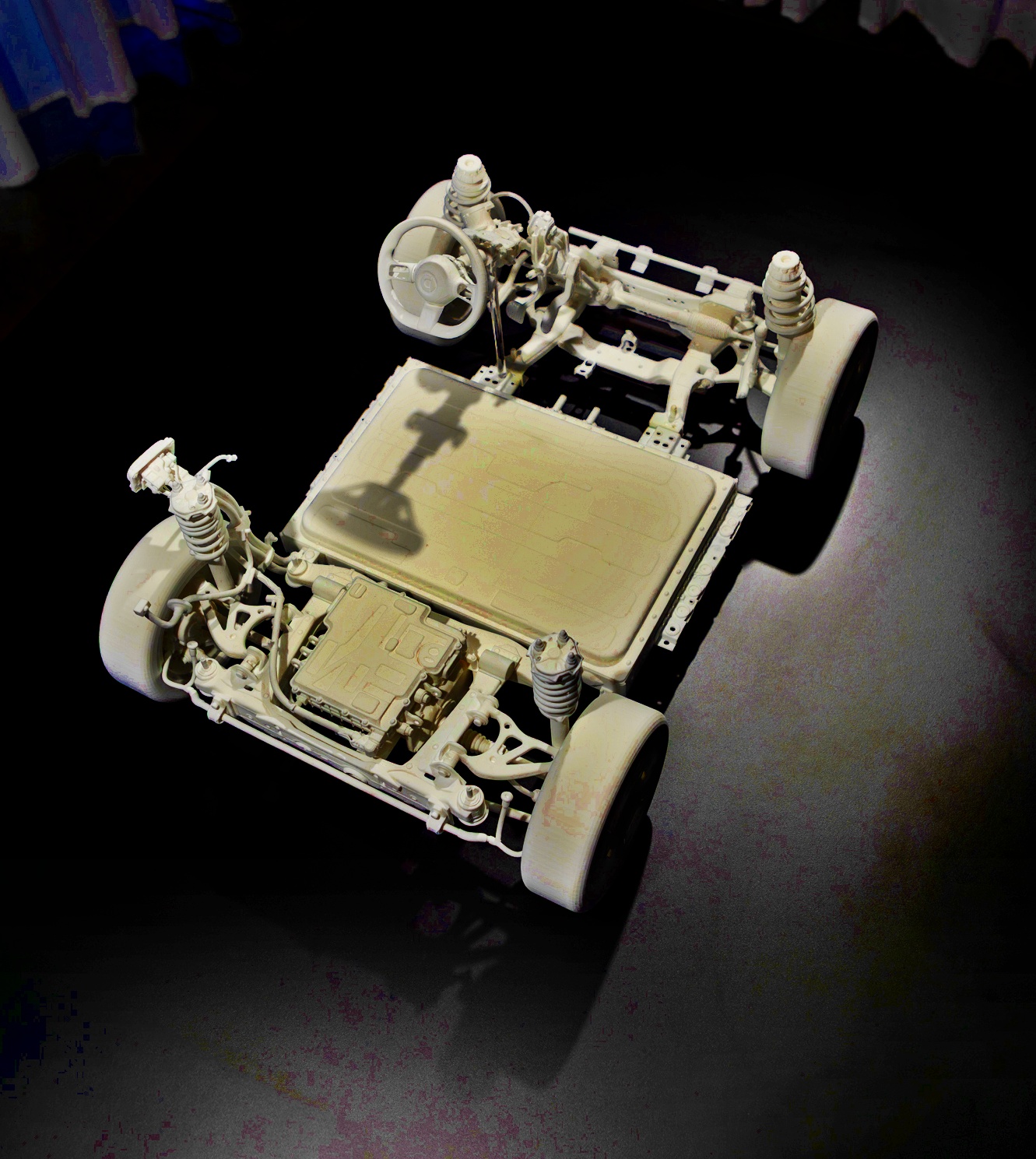
Electricity storage is in a 35.8 kWh LFP battery pack said to provide around 290 kms of range. The electrical architecture supports 65 kW DC fast charging, with a 10% to 80% recharge claimed to be within 20 minutes, alongside 11 kW AC charging capabilities and Vehicle-to-Load (V2L) functionality.
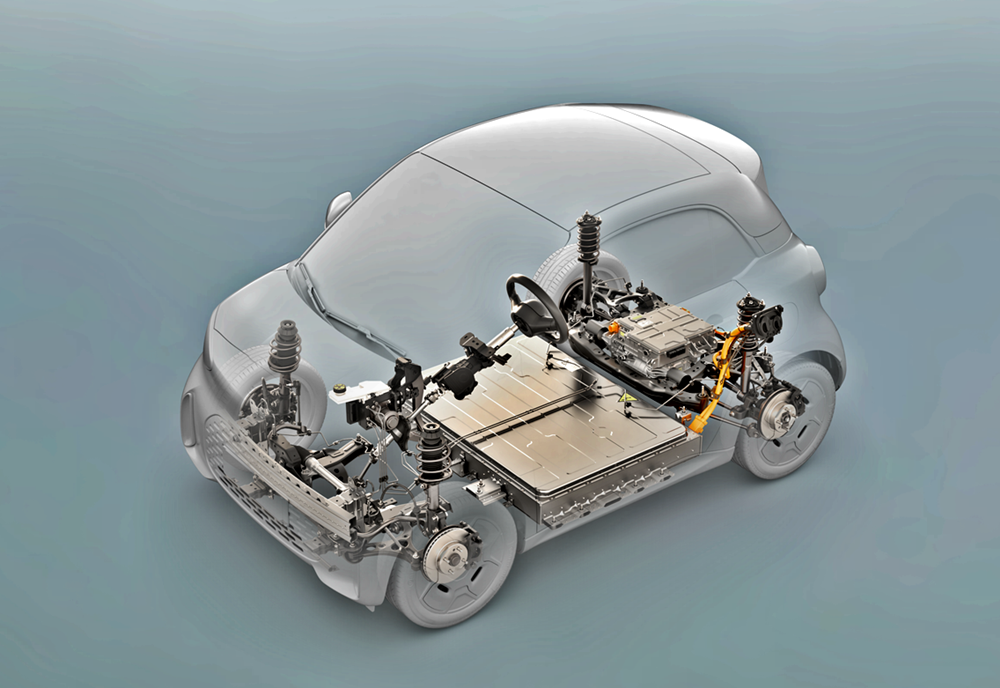
Chassis dynamics are governed by a segment-first 5-link rear suspension and the low centre of gravity is aided by the heavy floor-mounted battery pack. Extensive real-world development testing has been carried out to refine the steering geometry, chassis hard points, and tyre compounds for both urban and highway use.
Tridion Cell Evo
The structure is called the Tridion Cell Evo, which is the same name as the safety cell use in the original smart cars. The smart R&D and engineering team further developed one of the most recognisable elements of smart’s safety philosophy for a new electric era.
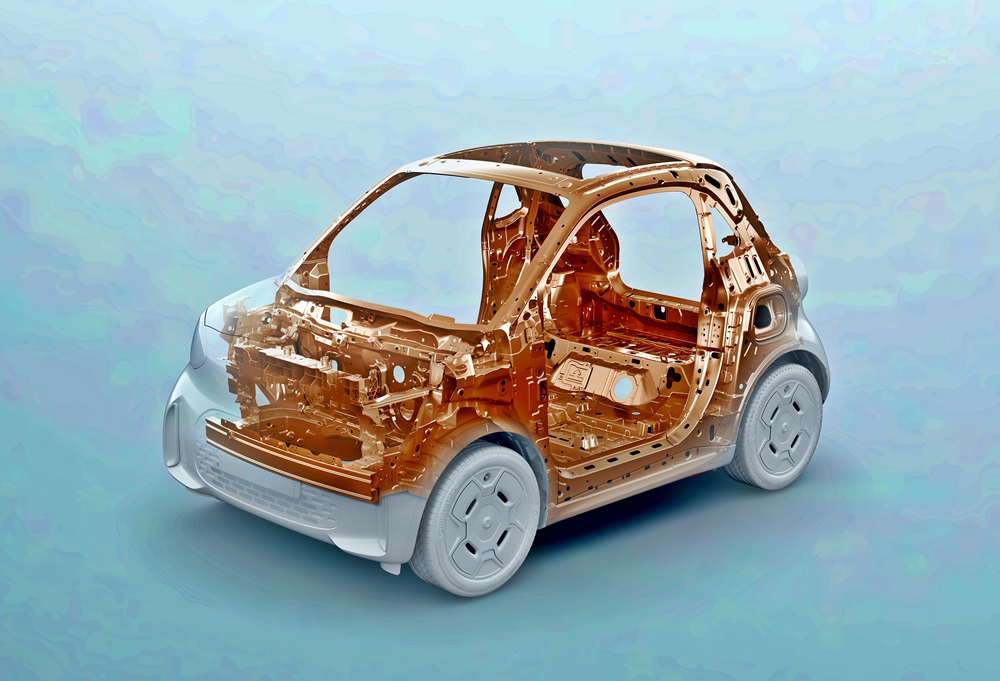
More than 78% of the body structure is constructed from high-strength steel, complemented by a 3-layer steel configuration and materials with high tensile strength and torsional stiffness. The structure has been engineered for exceptional rigidity and can withstand a roof load of more than 4 tonnes.
Occupant protection includes 7 airbags around the cabin and an advanced seatbelt system. The systems help to enhance restraint of the pelvis and lower limbs and reduce forward occupant movement in the event of a collision. The battery system is protected by a layered structural design, further supporting the #2’s safety concept.

Stability assured
Smart mentions that the #2 has also undergone extensive vehicle-dynamics and stability validation. The original car had shown instability initially and having learnt from the A-Class controversy in the ‘moose test’, the development team eliminated the oversteer tendency during extreme lane-change manoeuvres.
The interior features continuous bench-style seating, an S-shaped cockpit, and a 10.1-inch central screen paired with an 8.8-inch driver display supporting 4G connectivity. A notable cabin element is the smart Pillar dashboard interface designed for mounting quick-access gadgets.
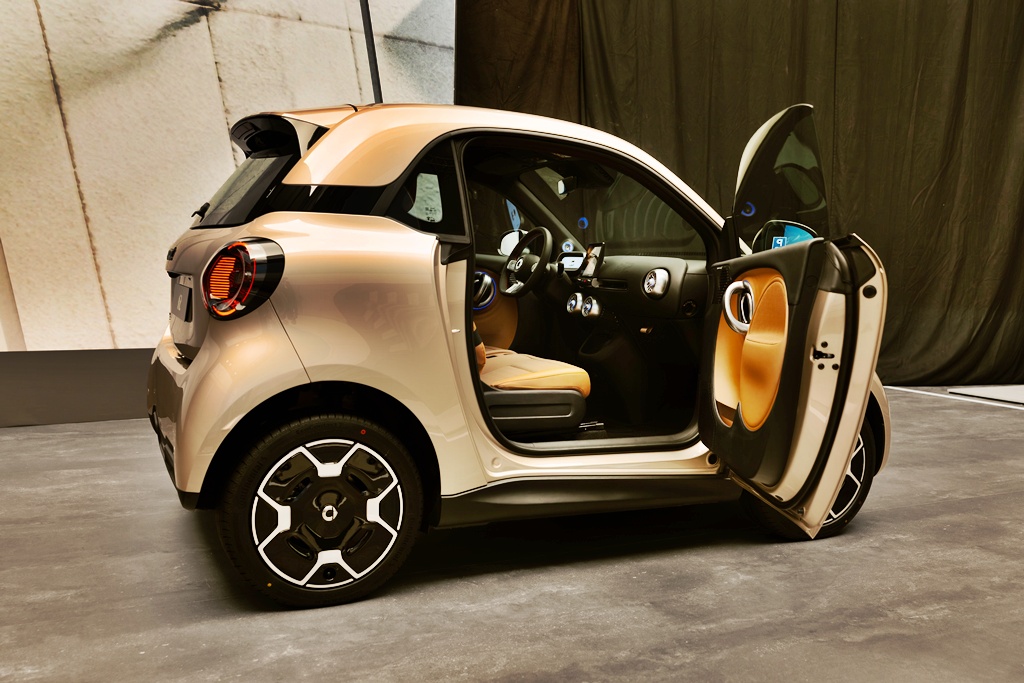
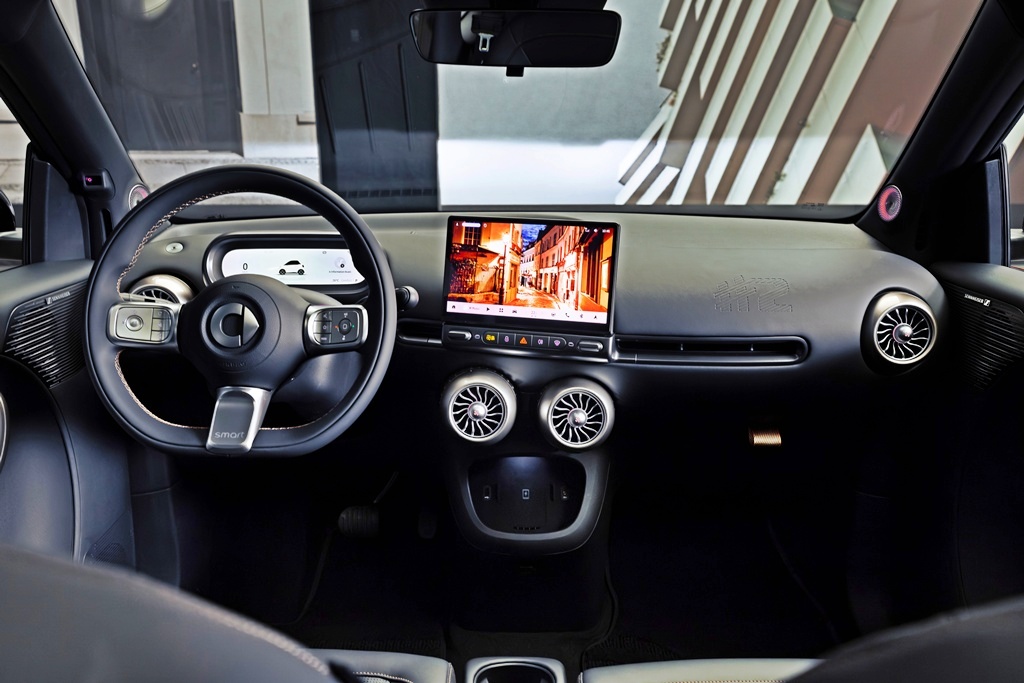
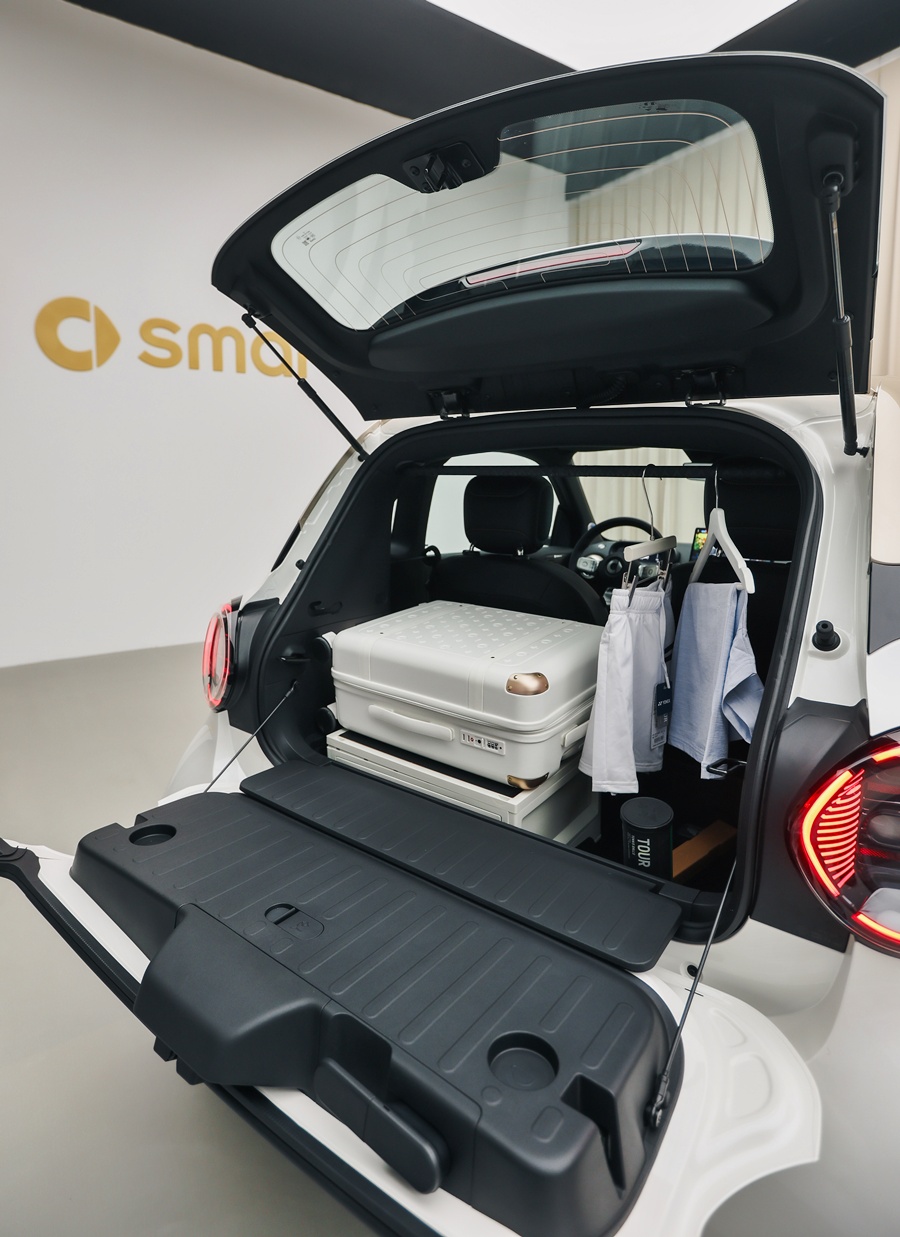
Production of the #2 has started in the factory in China, with first deliveries beginning in early 2027 in some markets. Perhaps Malaysia will be one of the early ones since Geely has a strong presence here via its involvement in Proton. Retail pricing in the UK is expected to be below £20,000 (about RM110,000).

Find out more about smart EVs in Malaysia