
![Proton e.MAS 7 PHEV EV [2026]](https://www.motaauto.com/wp-content/uploads/2026/03/Proton-e.MAS-7-PHEV-EV-2026-4.png "Proton e.MAS 7 PHEV EV [2026]")
With the way the economy is today, how we spend our hard-earned money needs to be more carefully considered. Where there was a time when the ‘smartest’ person might be the one who spent the most, that’s not necessarily the case today. In the age of the enlightened consumer, the smart person is really the one who gets the most value for every Ringgit spent.
This applies in virtually every purchase we make, more so with the rising cost of living. Buying a new car – usually the second most expensive purchase for many – also needs careful planning. It’s something that commits you to a fixed expenditure in your monthly budget and the challenge is choosing an affordable choice that you can support over the next 7 or more years.
While it might be tempting to stick with ICE (internal combustion engine) cars because they are the most affordable, doing so in 2026 is a bit like buying a typewriter when the world has already moved to laptops, iPads etc. With prices of fuel rising and also the battle against climate change, the era of ICE cars could fade into history like the ice age.
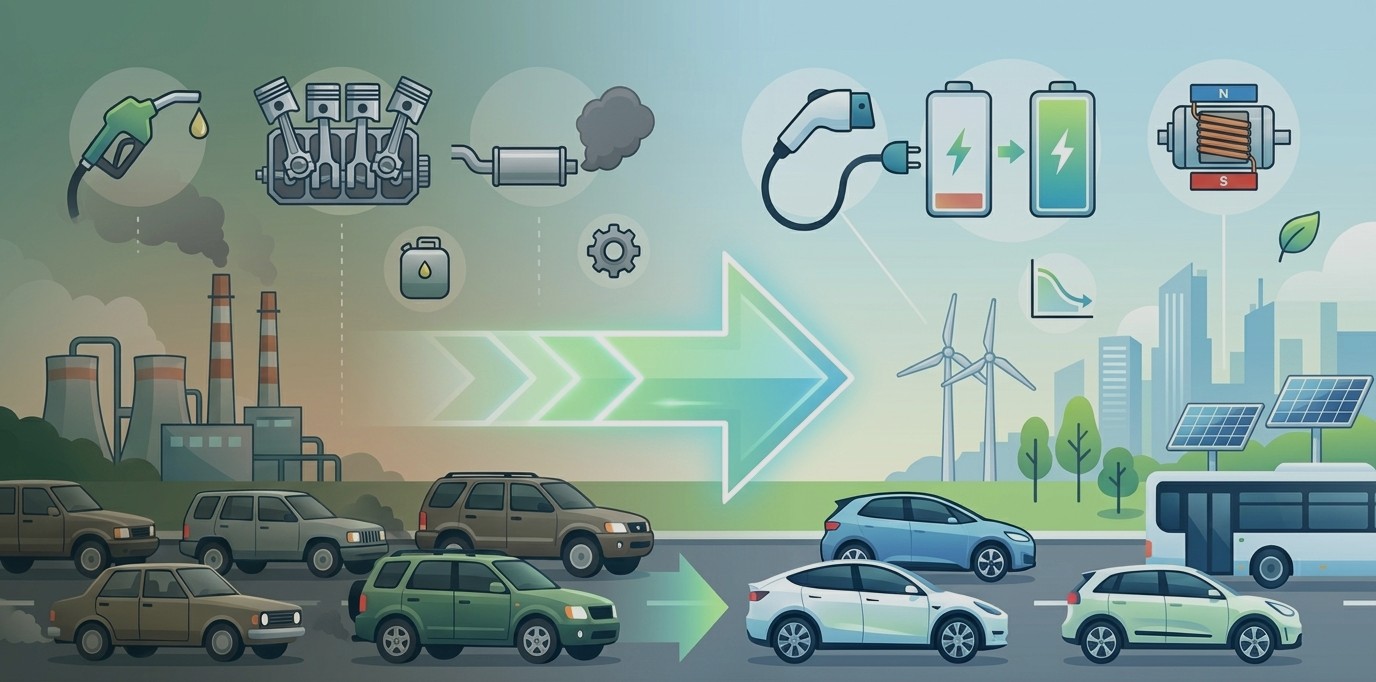
Going electric from now on
Electrification is seen as the most viable solution for continued personal mobility, and governments and the auto industry are pushing towards it. While electric cars existed a century ago, they lacked the technology to compete with ICE cars, which offered more attractive benefits and performance.
In the 21st century, electrified motoring has returned and is available in various forms – from advanced fuel cell electric vehicles using hydrogen to hybrid electric drivetrains. Switching to fully electric vehicles right away is tricky, as the technology is still expensive (but costs are steadily coming down with growing volumes) and the infrastructure to support EVs is still under development. It is nowhere near the number of petrol stations – which are the product of a hundred years of development.
The better HEV solution
With a conventional HEV, the driver is still at the mercy of the engine to keep the battery charged. There is better fuel economy and lower emissions, but there is a better solution that doesn’t cost much more – the plug-in HEV (PHEV). This gives you ‘the best of both worlds’: the advantages and benefits of a fully electric vehicle without the fear of being stranded when the battery is empty.
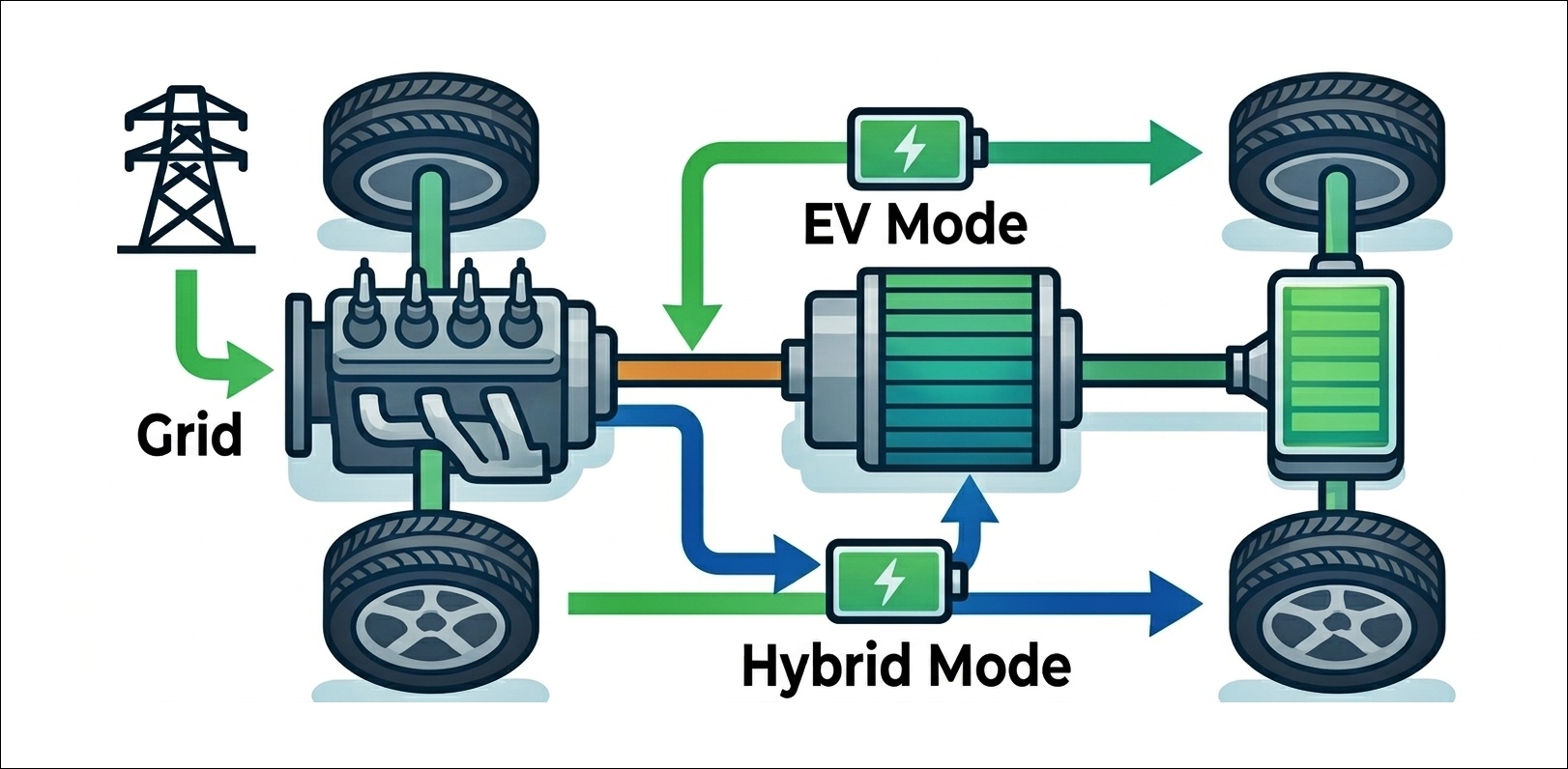
Unlike a conventional HEV which has a small battery that cannot be recharged from an external source and the motor only assists the engine, a PHEV’s larger battery allows it to also run with just the electric motor – often for over 100 kms – and not use a drop of fuel.
PHEV – best of both worlds
While an HEV is essentially a more efficient petrol car that always needs fuel to move, a PHEV thus offers a ‘best of both worlds’ (without ‘the worst of either’) experience. It provides the silent, low-cost drive of an electric car for your city trips but keeps a petrol engine as a back-up to eliminate range anxiety on longer journeys.
![Proton e.MAS 7 PHEV EV [2026]](https://www.motaauto.com/wp-content/uploads/2026/03/Proton-e.MAS-7-PHEV-EV-2026-2.png)
PHEVs therefore strike that perfect middle ground right now: you get much lower overall fuel consumption, and often better performance than ICE equivalents. Over time, this translates to significant savings on fuel, which you can use for other more important things in life.
In 2026, there are many choices of electrified vehicles and increasingly, PHEVs are coming into the picture. As mentioned earlier, the public charging network is still under development but has been steadily growing. It’s at a stage where conditions are ideal for PHEVs as recharging is not as inconvenient as before.
The PHEV from Proton e.MAS
As a Malaysian automaker, PROTON has had the mission to provide affordable mobility to the rakyat, and it has done a commendable job for 40 years. Now, their wholly-owned subsidiary, Proton New Energy Technology (PRO-NET) is again at the forefront with affordable electrified vehicles – fully electric as well as PHEV. Teaming up with Geely, PRO-NET has access to the latest technologies to put its models right up there with others in the market.
With its EVs – the Proton e.MAS 5 and e.MAS 7 – now dominating the fully electric segment, the automaker has turned its attention to broadening the electrification push to further support the government’s direction for carbon neutrality. And rather than waste time with HEV technology, it has adopted PHEV technology as a more future-proof approach.
![Proton e.MAS 7 PHEV EV [2026]](https://www.motaauto.com/wp-content/uploads/2026/03/Proton-e.MAS-7-PHEV-EV-2026-2.jpg)
PRO-NET’s first PHEV is the e.MAS 7 PHEV, which is now available in three versions – Prime, Premium and Premium Plus – to suit different budgets. The price range starts at RM105,800 to RM125,800 (after rebates).
The Prime variant is clearly designed for the cost-conscious Malaysian who prioritises space, comfort and practicality for daily use. Despite being the entry point, it delivers a level of cabin roominess and versatility often associated with similarly-priced MPVs in the same segment.
![Proton e.MAS 7 PHEV EV [2026]](https://www.motaauto.com/wp-content/uploads/2026/03/Proton-e.MAS-7-PHEV-EV-2026-61.jpg)
With thoughtful packaging, it offers up to 30 storage compartments, a generous 10.8 litres under-console space, and an additional 100 litres of underfloor boot storage; features that make everyday use far more convenient for families.
Boot space is equally impressive at 528 litres, expandable up to 2,065 litres with the 60:40 flat-folding rear seats, giving it the flexibility to handle everything from grocery runs to balik kampung luggage without compromise.
![Proton e.MAS 7 PHEV EV [2026]](https://www.motaauto.com/wp-content/uploads/2026/03/2026-Proton-e.MAS-7-PHEV.jpg)
Altogether, the Prime focuses on delivering real, usable space and comfort, thus, making it a smart, practical choice without needing to step up to higher variants.
Differences between versions
A close look at the specifications and features will show that the Premium version, which is RM14,000 higher, gets you some extra features. For the Premium Plus, which is RM20,000 higher than the Prime, the differences are battery size, driving range, and additional luxury features.
![Proton e.MAS 7 PHEV EV [2026]](https://www.motaauto.com/wp-content/uploads/2026/03/Proton-e.MAS-7-PHEV-EV-2026-222.jpg)
With a 7-year hire-purchase loan and 3% interest rate, the difference in the monthly installments for the Prime and Premium/Premium Plus would work out to between RM180 and RM250 a month. You might feel that it’s ‘just around RM200’ more but think of what that extra money can be used for each month.
Remember what we said earlier about being a smart consumer? Consider this: the Prime is already so well equipped that it might be extravagant to spend extra for the other two versions. When you buy the Prime, you aren’t getting a less powerful drivetrain with a 160 kW/262 Nm motor that will get you to 100 km/h in the same 8-second range as the other versions. Why pay more when the performance is the same?
Real-world motoring
The extra money for bigger battery in the Premium Plus gets you an extra electric-only range of 170 kms, compared to the 105 kms of the Prime and Premium which have the same battery capacity.
Does 65 kms make a difference? In real-world driving, probably not because the actual range is very variable and depends on how you drive and even where you drive. It might even be that paying RM20,000 more for the Premium Plus doesn’t get you much further.
![Proton e.MAS 7 PHEV EV [2026]](https://www.motaauto.com/wp-content/uploads/2026/03/Proton-e.MAS-7-PHEV-EV-2026-1.jpg)
The e.MAS 7 PHEV’s fuel consumption is around 23 kms/litre and with the 51-litre fuel tank, that means a range of over 1,000 kms before you need to refuel (and that’s been proven). A larger battery might add some extra range in longer distance motoring – but then again, it is heavier so things might equal out with the lighter battery of the Prime.
![Proton e.MAS 7 PHEV EV [2026]](https://www.motaauto.com/wp-content/uploads/2026/03/Proton-e.MAS-7-PHEV-EV-2026-5.png)
Because the Prime’s battery has a lower capacity, it can reach a full charge faster on a standard home charger compared to the Premium Plus. As for the higher 60 kW DC charging capability that only the Premium Plus has, that’s probably not of great importance in daily driving if you are charging at home, so you’ll rarely need to go to a DC charging station.
High safety standards
In many instances, the lowest-priced versions of a model often have inferior safety features to lower costs (for the automaker). Not so with the e.MAS 7 PHEV which has comprehensive safety features.
Besides the usual ABS and Electronic Stability Control, all e.MAS 7 PHEV versions get a core ADAS (Advanced Drive Assistance Systems) suite that has essential Level 2 capabilities. These include Adaptive Cruise Control, Automatic Emergency Braking, Forward Collision Warning, and Lane Departure Warning.
![Proton e.MAS 7 PHEV EV [2026]](https://www.motaauto.com/wp-content/uploads/2026/03/Proton-e.MAS-7-PHEV-EV-2026-3.png)
There are also 6 airbags to give added protection from injuries if a serious accident occurs. And the high-strength body structure is identical, so whether it’s the Prime or Premium Plus, the level of protection is the same – which has been rated at 5 stars by ASEAN NCAP.
And what of the extras that more money gets you? Would you really miss the panoramic sunroof, 256-colour ambient lighting, HUD and ventilated front seats? Or feel the difference with 18-inch wheels instead of 19-inch wheels? You already get a lot with the Prime version so the question will be whether you need to spend extra money if you’re trying to cope with today’s inflationary conditions.
Get a Proton e.MAS 7 PHEV brochure
Why choose Proton e.MAS?
There are many PHEV choices today, but unlike earlier years, there is no longer a technological gap between Proton models and other brands. Whatever other brands offer, Proton can also match or even beat them – especially when it comes to affordability.
Beyond the cost, there are also advantages to choosing the Proton e.MAS 7 PHEV which comes from a company that has been in the market for 40 years, not 3 or 4 years. For the Proton e.MAS brand, PRO-NET has established a dedicated network of dealerships nationwide with over 35 outlets. So when you own an e.MAS 7 PHEV, you assured of a massive support system from a company that also has Malaysian roots.
Buying the Proton e.MAS 7 PHEV Prime isn’t just a patriotic choice; it can also be the most logical one. And remember, the Proton e.MAS brand is the leading brand of electrified vehicles in Malaysia.