
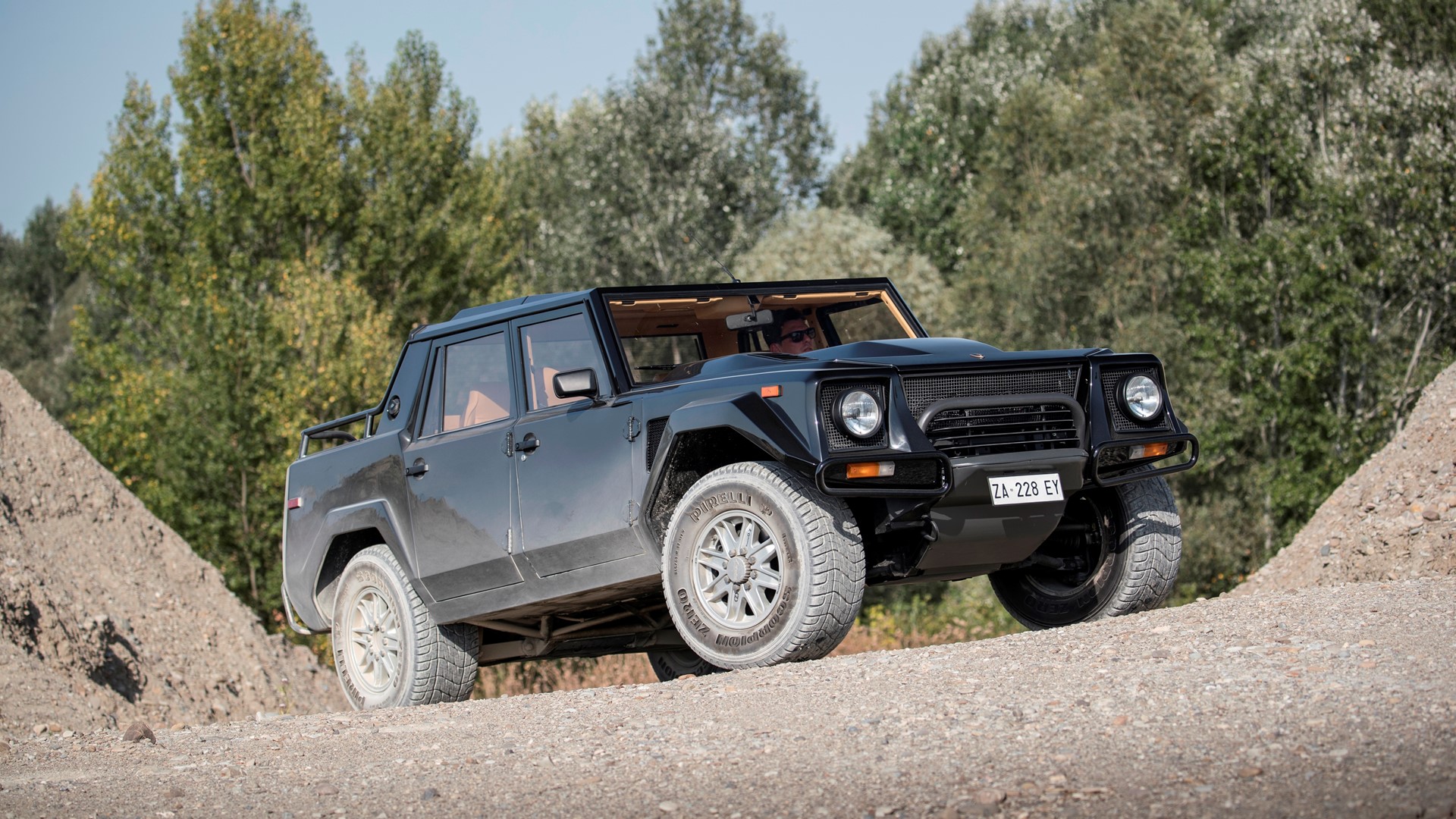
While the Urus may be thought by many to be Lamborghini’s first SUV (or Super SUV, as the Italian automaker prefers to refer to it) when it was unveiled, it was actually the company’s second model.
Back in the days before ‘SUV’ came to refer to what people called 4x4s or dual-purpose vehicles, Lamborghini had a high-performance model that was engineered for rough terrain. It was the LM001 which debuted at the 1981 Geneva Motor Show.
The Cheetah
The LM001 was a partly the continuation of a project which Lamborghini was involved in as an ambitious leap into the off-road sector. It began at the 1977 Geneva Motor Show with the unveiling of the Cheetah. Developed in partnership with the American defence contractor Mobility Technology International, the prototype was a radical departure designed primarily to capture contracts from the US military and Middle Eastern governments.
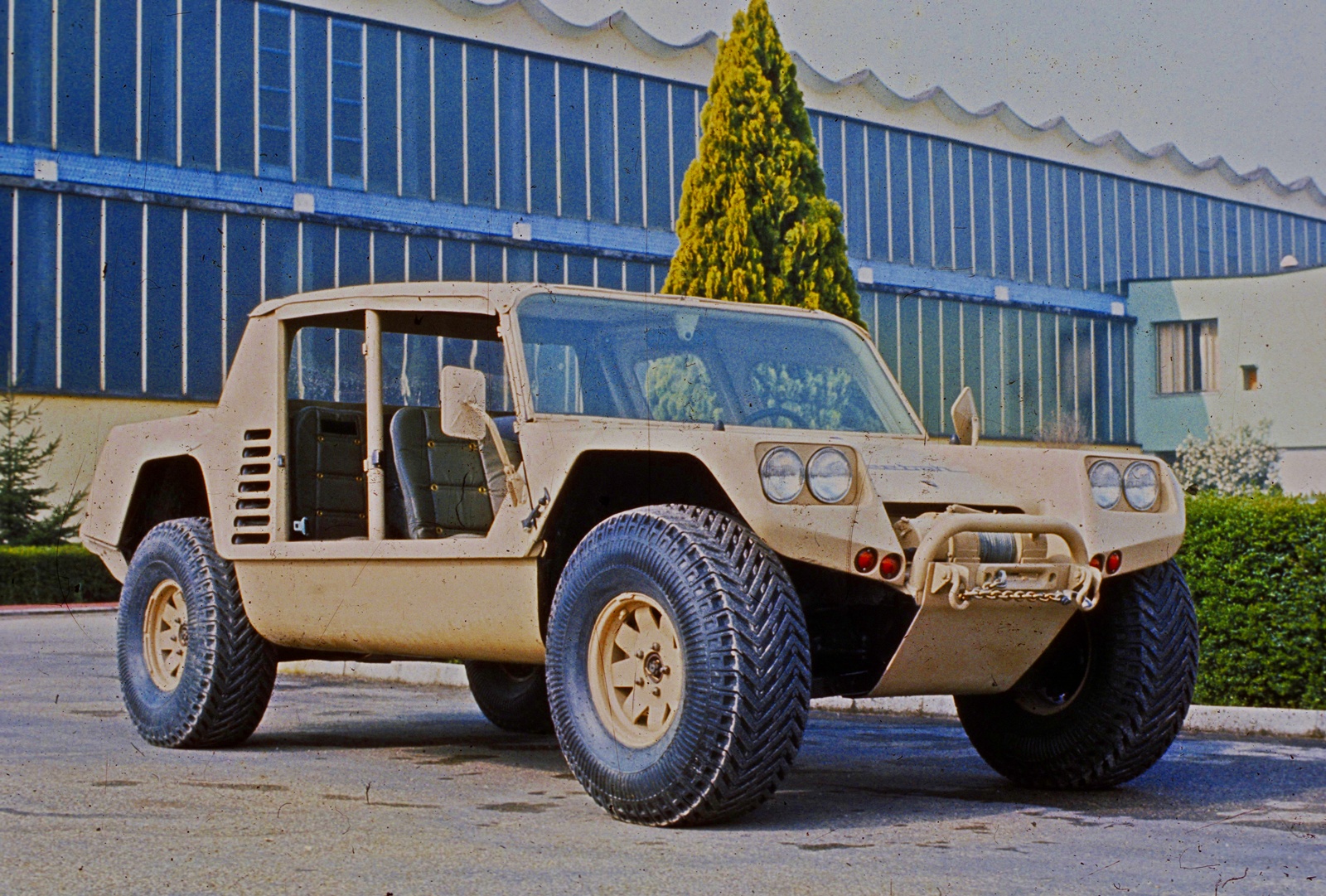
The Cheetah utilized a tubular steel frame enveloped by a lightweight, open fiberglass and aluminium body. Its layout was highly unusual for a military machine, opting for a rear mid-engine configuration powered by a 183 bhp 5.9-litre Chrysler V8 paired with a 3-speed automatic transmission. Various issues, including poor handling on rough ground, saw the project being ended.
The second try
But Lamborghini was still keen on the idea of a fast and powerful off-roader. Engineering director Giulio Alfieri was tasked with turning the military concept into a civilian one which led to the LM001.
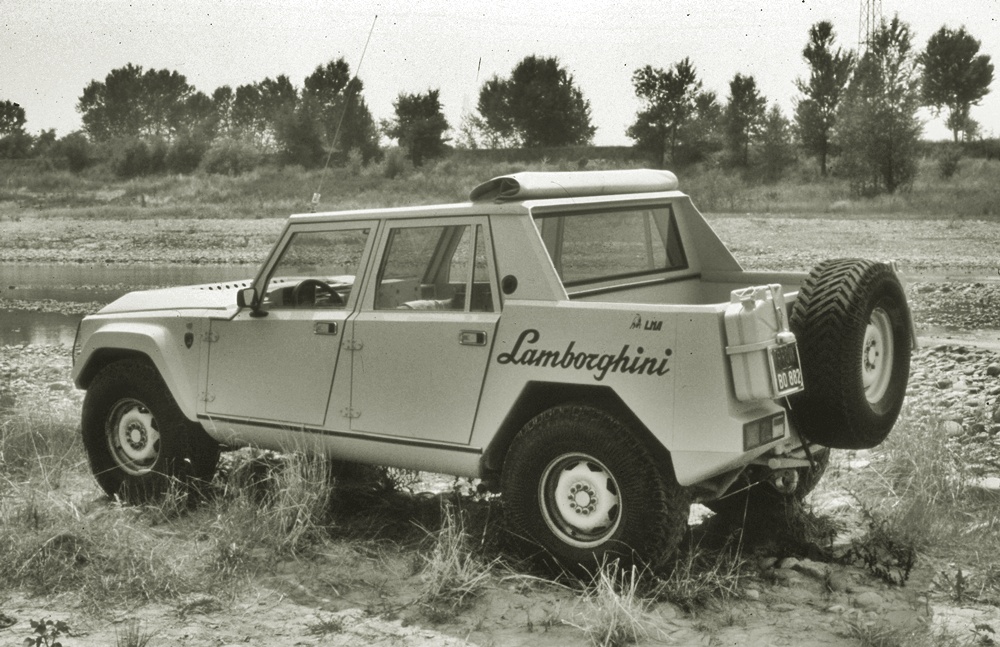
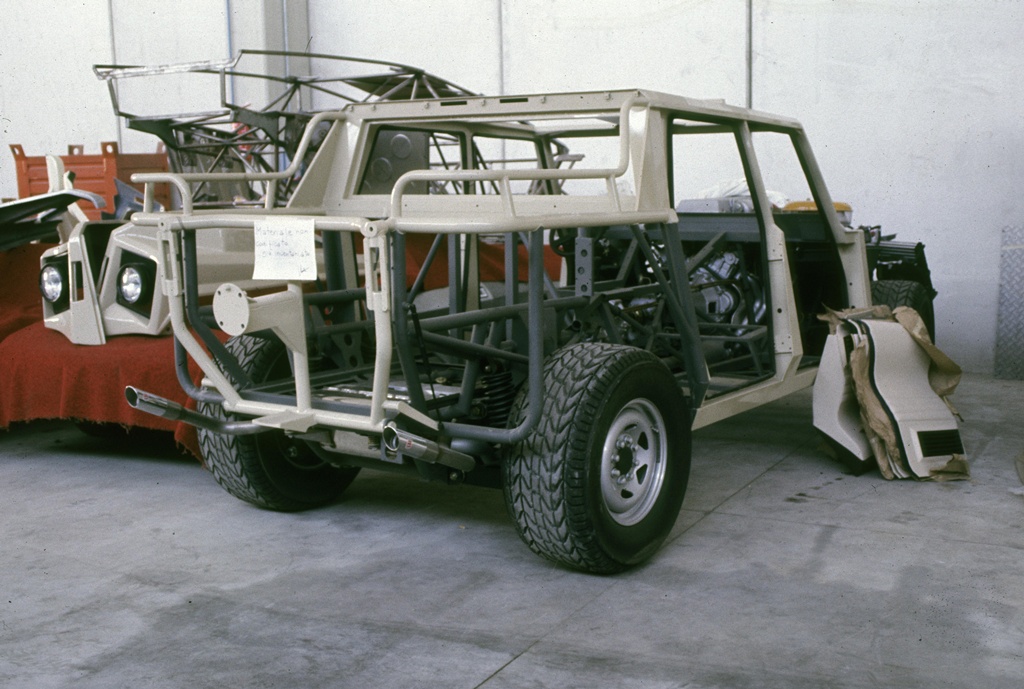
This vehicle introduced a fully enclosed, angular steel body and at one stage of development, the engineers considered using the high-revving V12 engine from the Countach. However, they eventually settled for an AMC-sourced 5.9-liter V8 – installed at the back – for the prototype.
Real-world testing was conducted in the deserts of Saudi Arabia and quickly exposed a critical architectural limitation of the rear-engine layout: under heavy acceleration or steep dune ascents, the front axle became so light that steering precision and directional stability vanished completely.
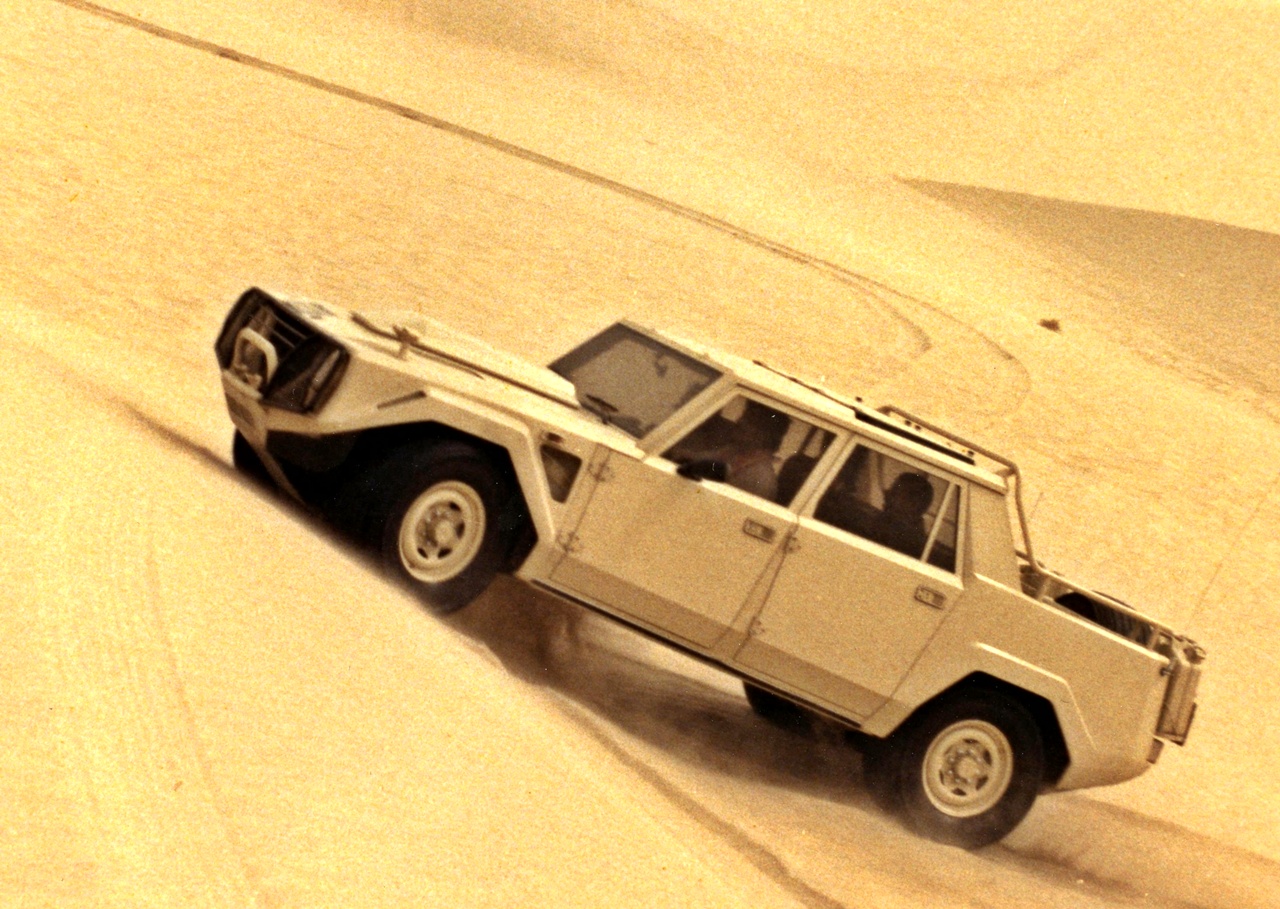
This handling crisis prompted Alfieri and his team to completely revise the vehicle’s platform for the second prototype. By moving the heavy powertrain to the front of the vehicle, they achieved a balanced design that permanently resolved the front-end lifting issues. This front-engine framework became a highly versatile testbed, encouraging several experimental variants.
Different prototypes
Among them was the 1983 LM003, which was the company’s only attempt into diesel experimentation with a 5-cylinder VM Motori turbodiesel engine. It was when its maximum output of 150 bhp proved inadequate for the heavy chassis.
Then there was the LM004 which went to the opposite extreme with a monstrous 7-litre marine V12 derived from powerboat racing. This required a lengthened chassis, but it was eventually deemed too heavy and complex for regular production.

The production LM002
The technical evolution finally culminated with a prototype that would become the LM002 production model that was presented at the 1986 Brussels Motor. This had the 450 bhp 5.2-litre Countach Quattrovalvole V12 engine up front, fed by 6 massive Weber carburettors and fitted with a heavy-duty 5-speed ZF manual gearbox.
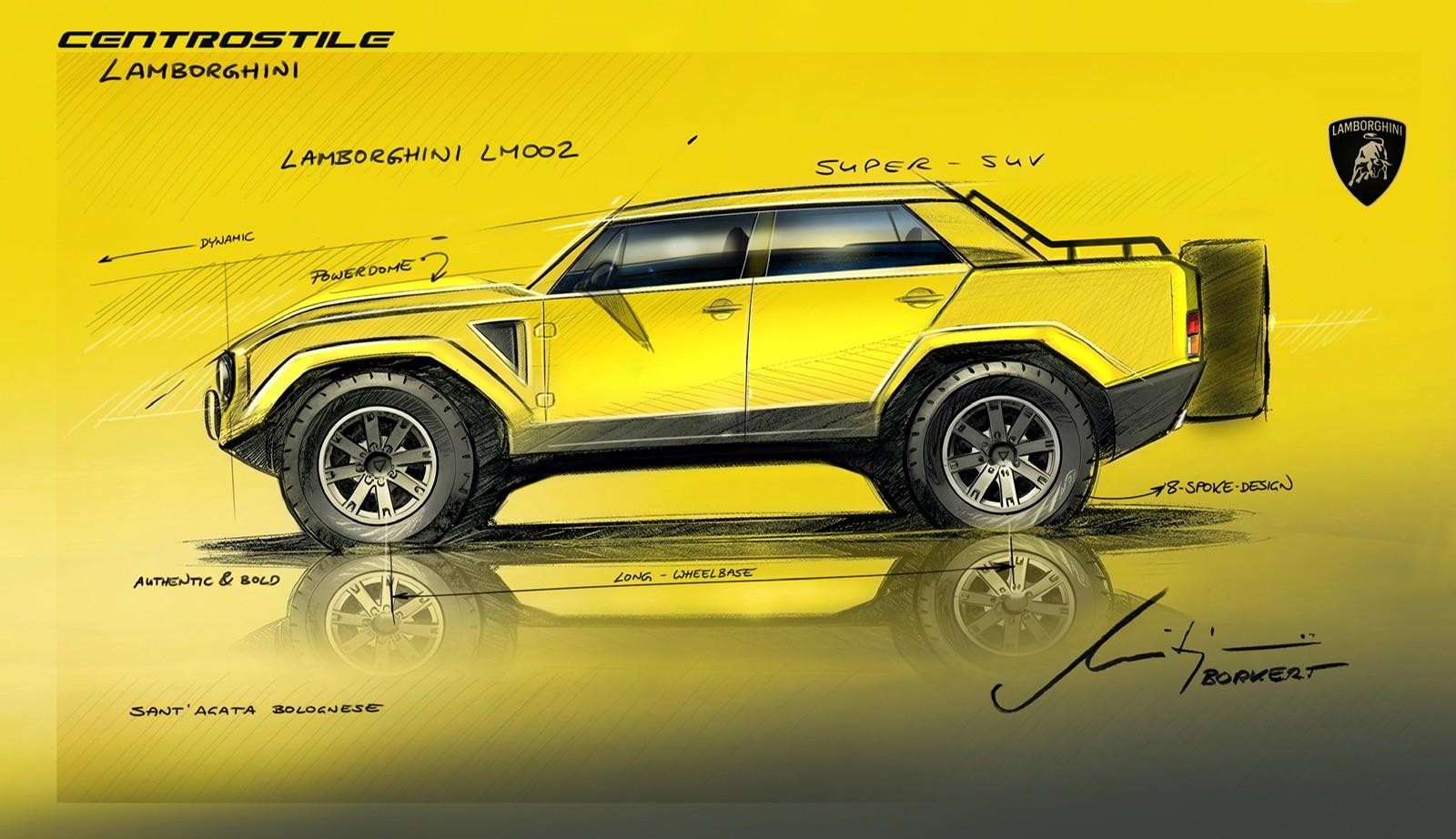
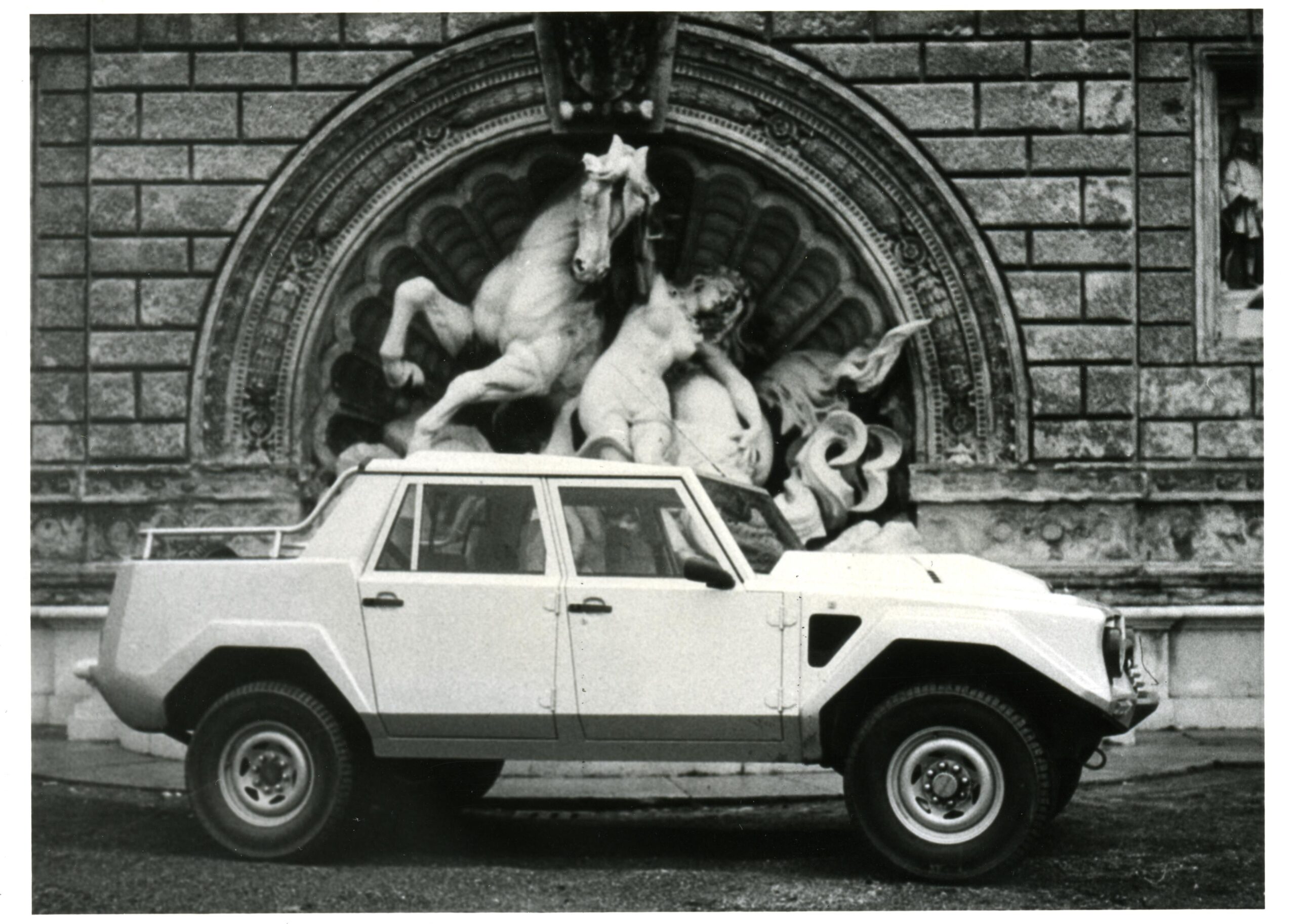
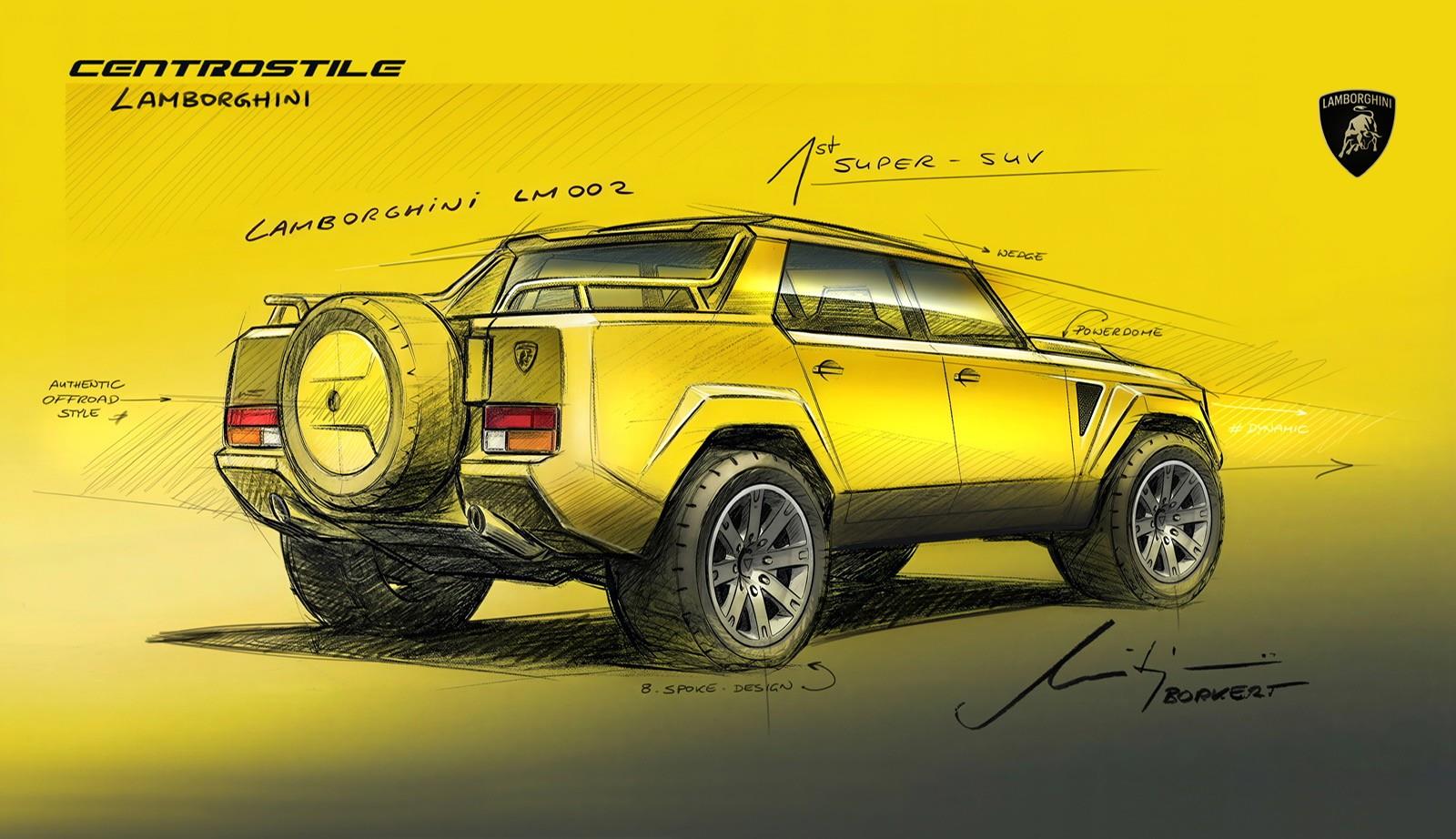
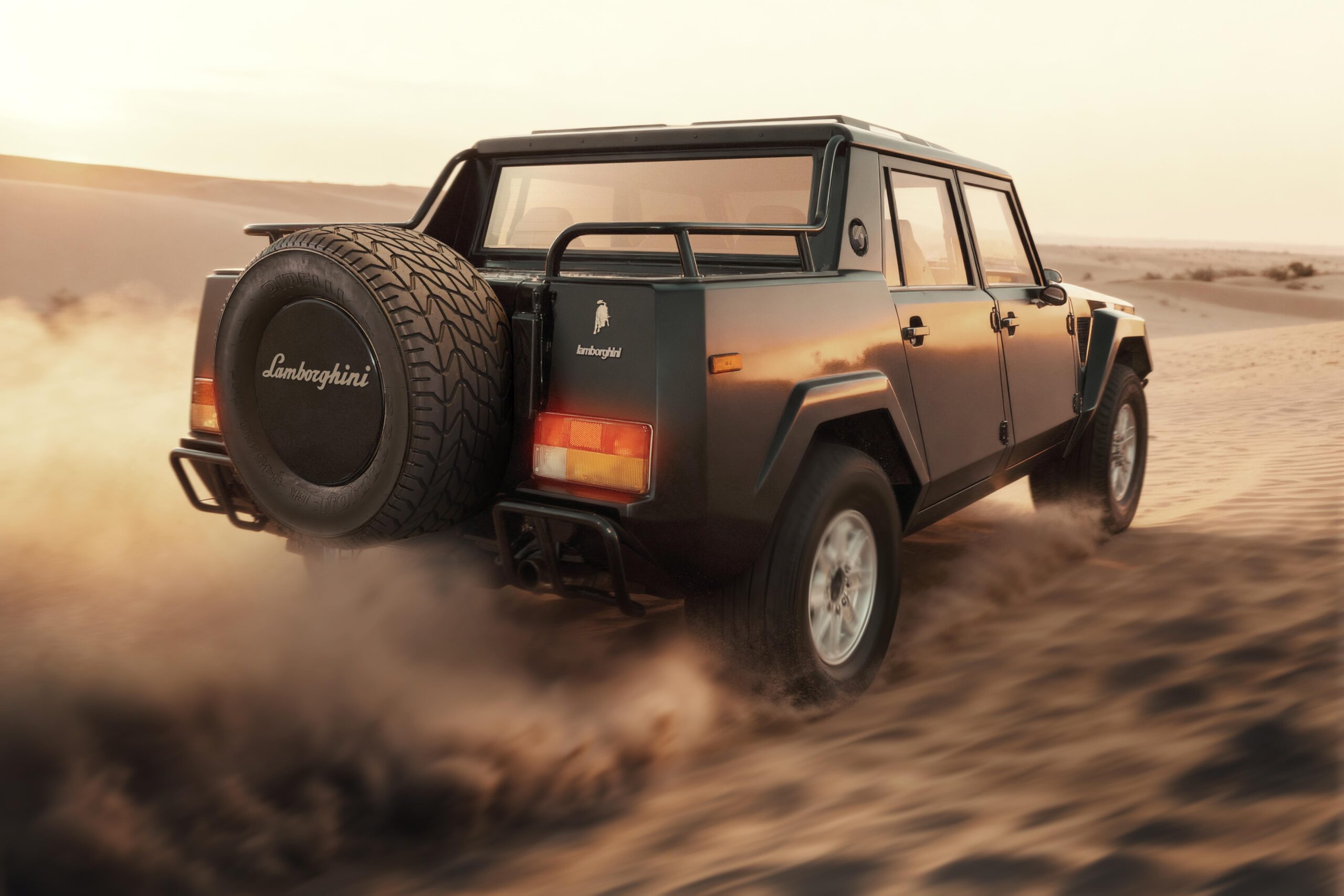
The massive output allowed the 2,700-kg vehicle to get up to around 210 km/h. Three self-locking differentials made it capable of scaling 120% gradients. The fully independent suspension system with wishbones provided generous wheel travel, with 130 mm in compression and 110 mm in extension. The vehicle could also ford water up to 820 mm deep without requiring special preparation.
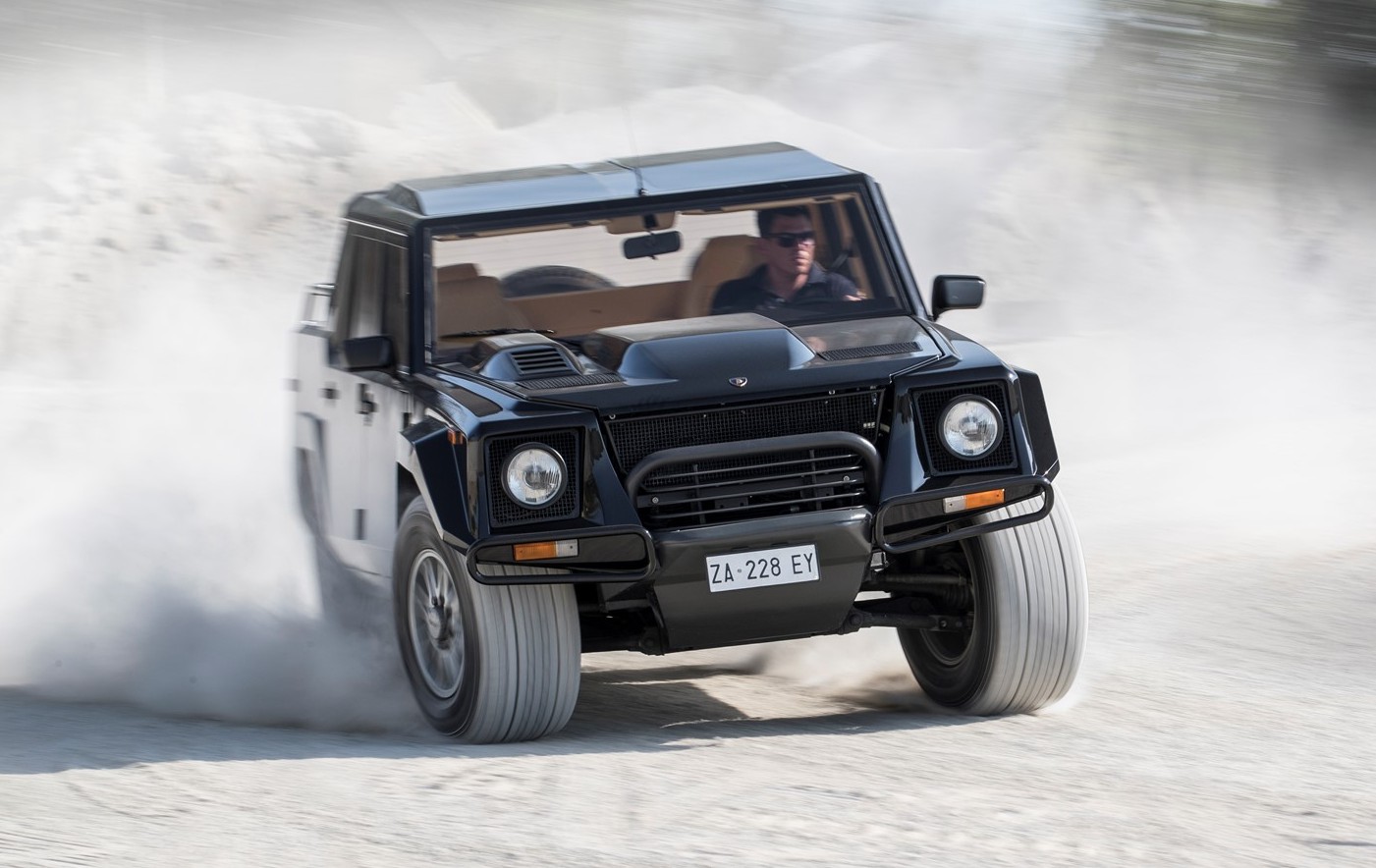
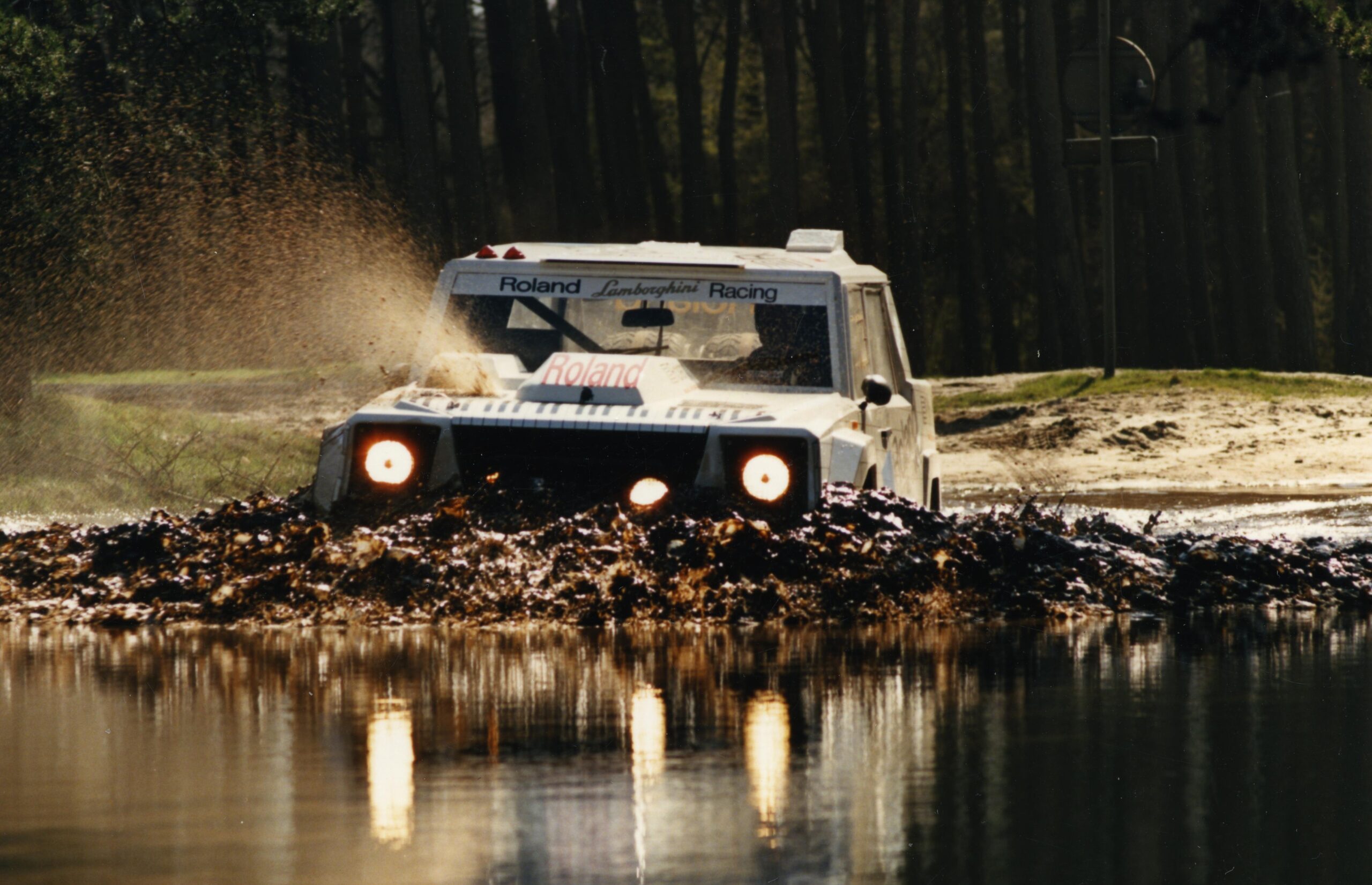
To make this extreme power usable on soft ground, Pirelli engineered special Scorpion BK tyres featuring unique sidewall flaps or ‘ears’ that allowed the big and heavy vehicle to ‘float’ over desert dunes rather than dig into them. To protect against rocks, the casing was reinforced with aramid anti-cut materials.
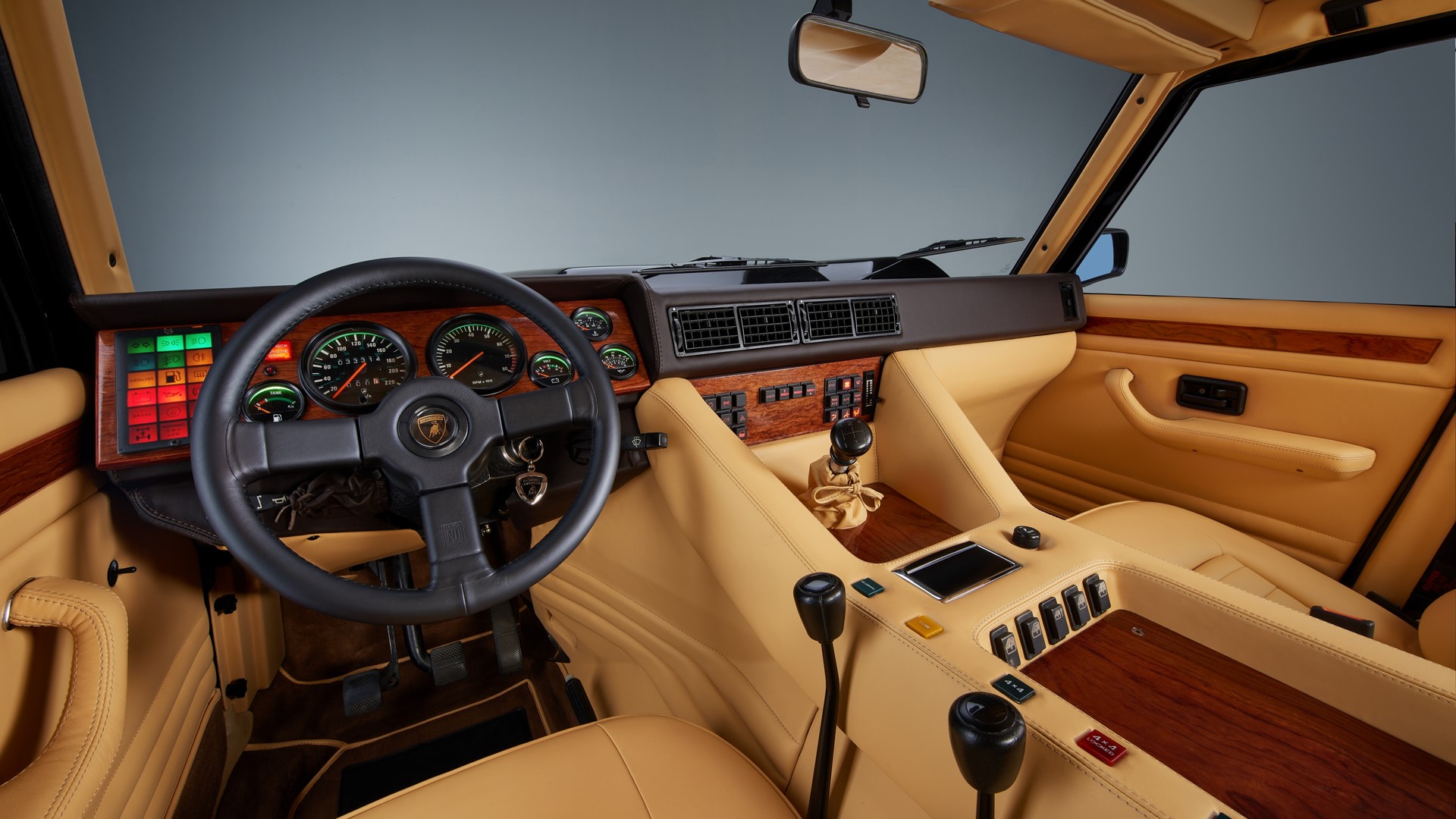
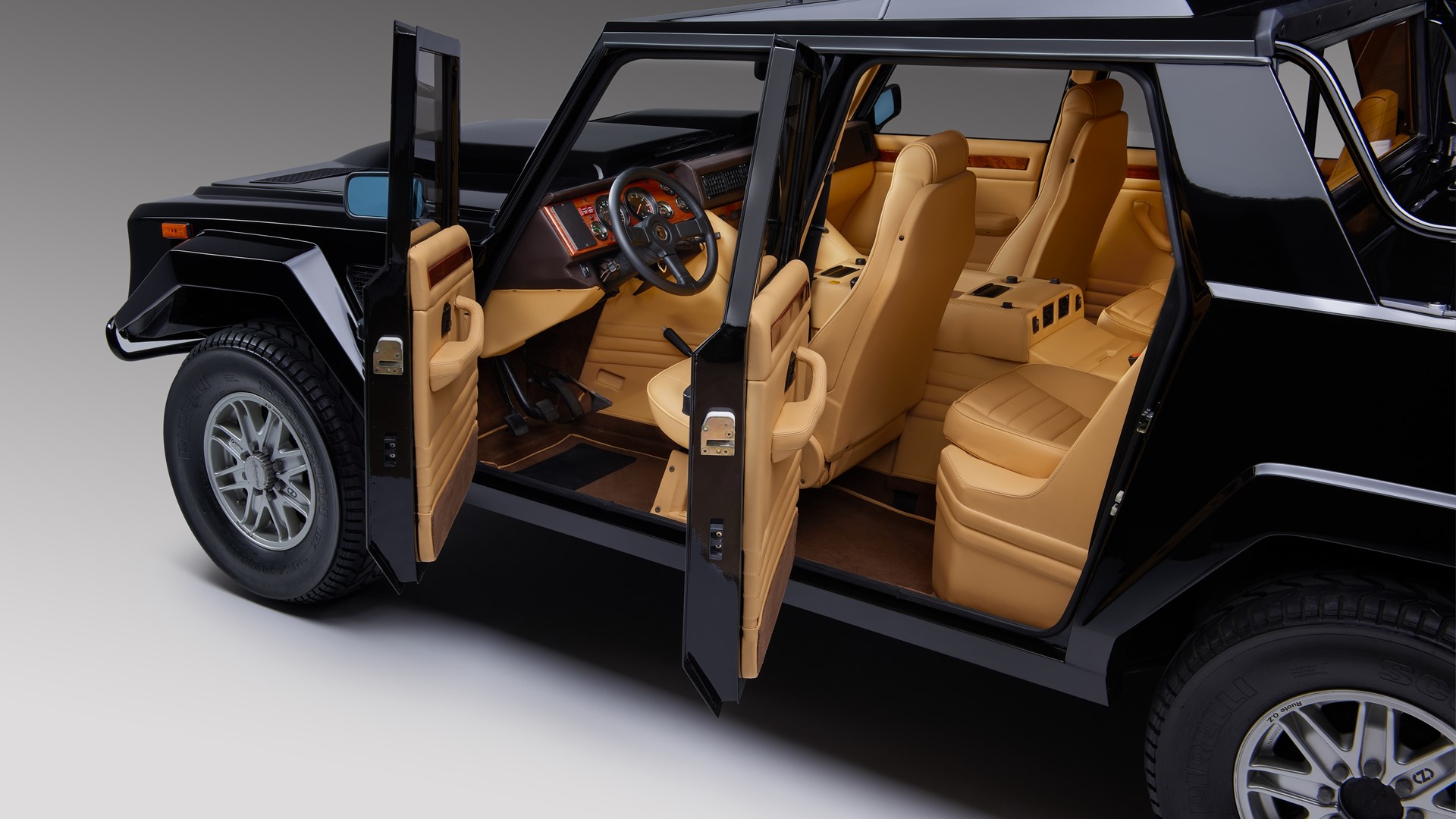
As Lamborghini intended the LM002 for a more exclusive clientele, the cabin was given a highly luxurious feel lined with premium leather and fine wood trim. In 1987, the LM002 carried a pricetag of approximately 169 million Italian lire (well over US$360,000 today), reflecting both its technological exclusivity and the absence of any direct competitors.
Modified US version
To get into the US market, major revisions were needed and in 1989, an American version was available which met strict US (especially California) emissions regulations that could not be passed with the Weber carburettors. Lamborghini’s engineers developed the LIE 52/12 multipoint electronic fuel injection system and integrated catalytic converters, but this took away 30 bhp.
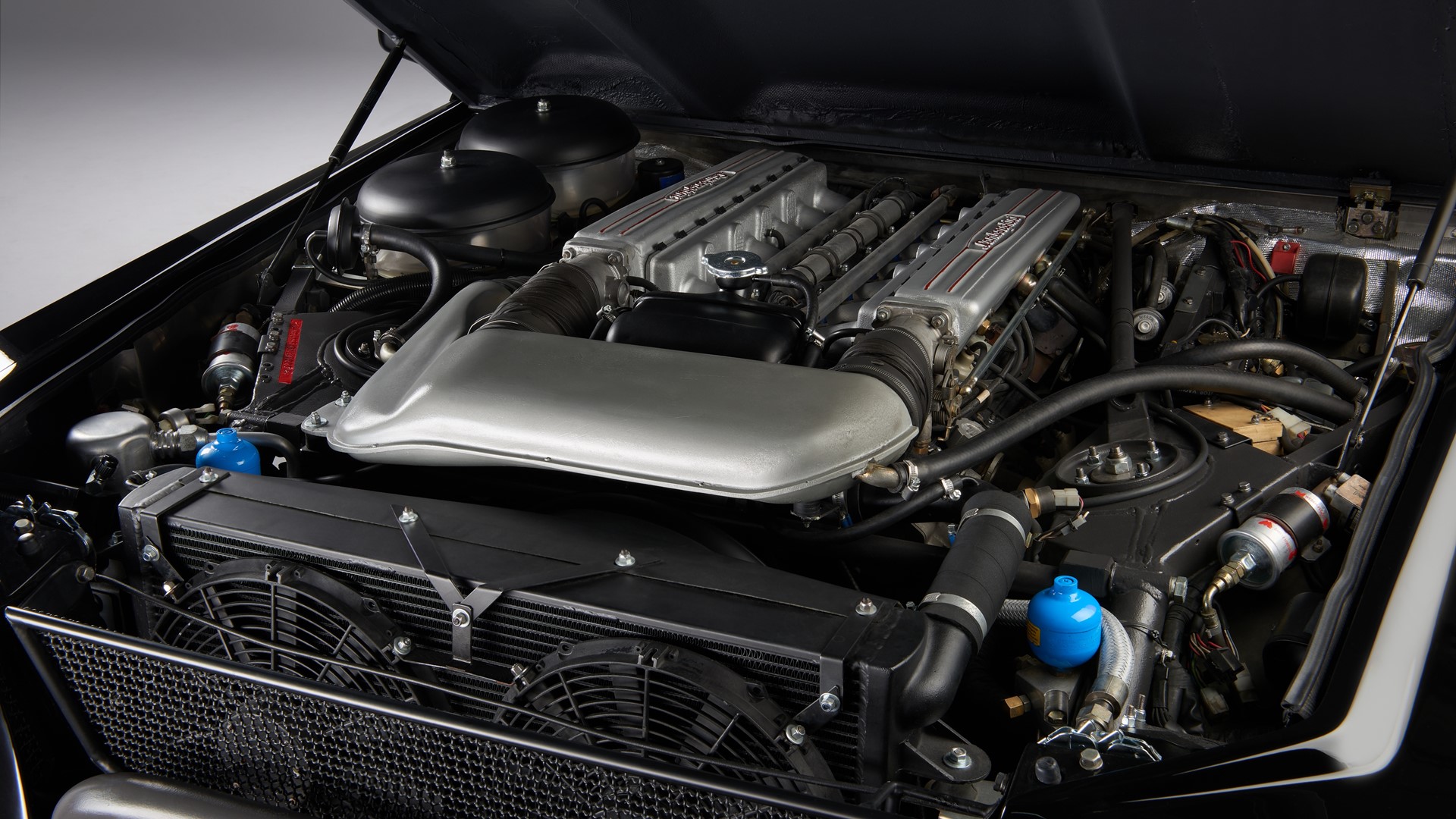
Along with stricter safety requirements, the advanced electronics needed extra space so a substantial redesign was done under the skin. This modification forced a reduction of 100 litres in the standard 280-litre fuel tank capacity. Only 60 of these fuel-injected variants were ever built out of the total of 301 units ever made for sale.
Legacy of the LM002
Fast forwarding to the 21st century, all the experience gained in developing the LM helped to provide the starting point for the Urus. Lessons learned during the extreme desert testing of the 1980s laid the structural groundwork for how a high-riding vehicle can safely manage supercar levels of torque and high centre of gravity dynamics.
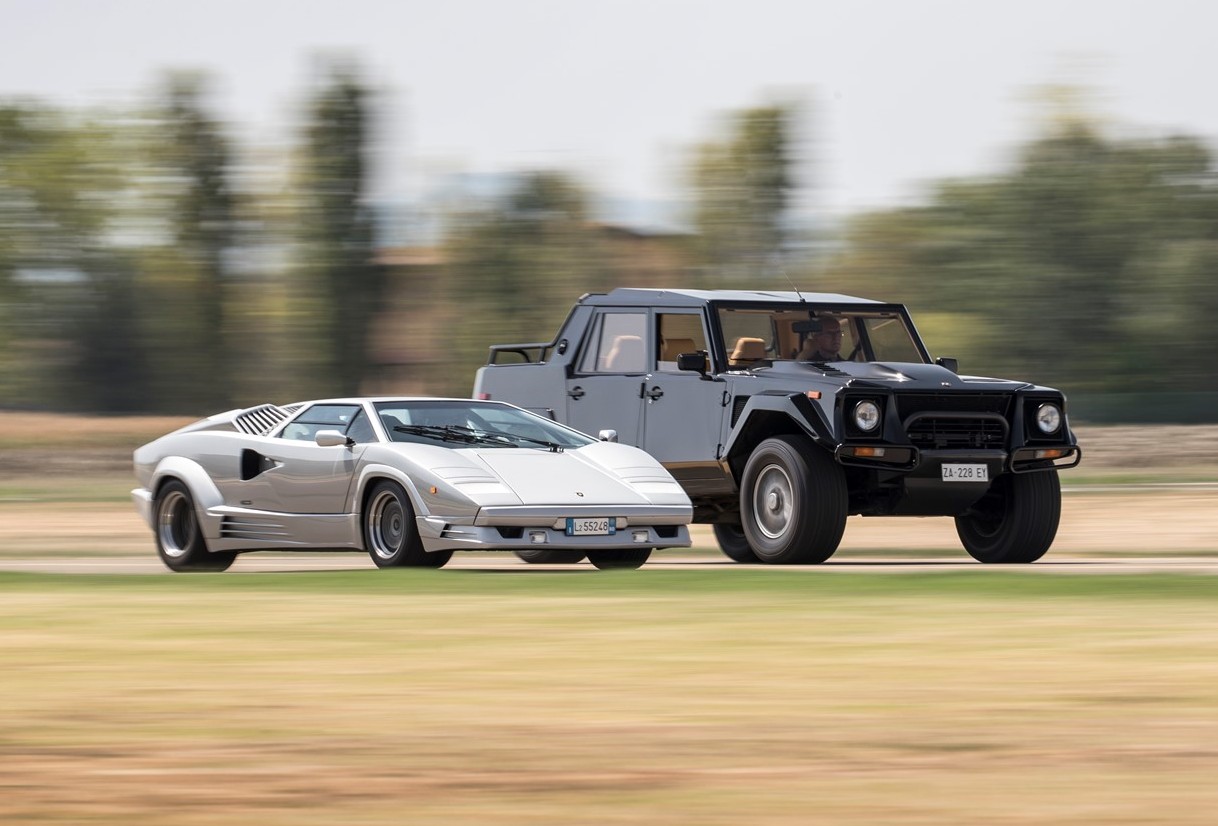
The LM002 forged a path that simply did not exist at the time, becoming the true pioneer of the modern high-performance luxury SUV. Decades later, this legacy was reinterpreted with the unveiling of the Urus concept in 2012 that openly referenced the LM002, and the production model in 2017.
![Lamborghini Urus Performante Dubai Police [2024]](https://www.motaauto.com/wp-content/uploads/2024/01/Lamborghini-Urus-Performante-Dubai-Police-2024-3-scaled.jpg)