
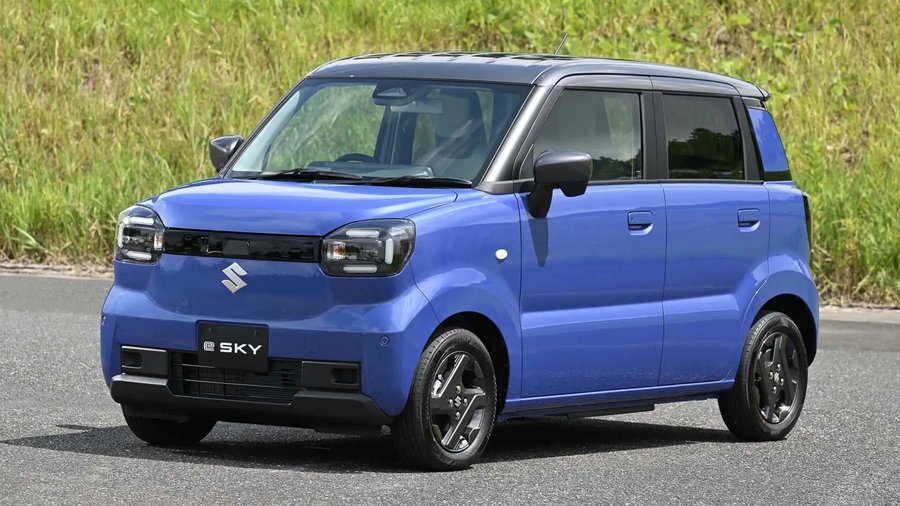
Suzuki Motor Corporation has revealed the preliminary details for the e SKY, a battery-electric model that marks the company’s entry into Japan’s passenger electric kei car segment.
To go on official sale in Japan later this year, the move applies fully electric propulsion to a vehicle class long dominated by Suzuki’s internal combustion engine (ICE) offerings.
For decades, Suzuki has maintained a market-leading presence in the kei car space, building a reputation on maximum spatial efficiency and low operational costs.
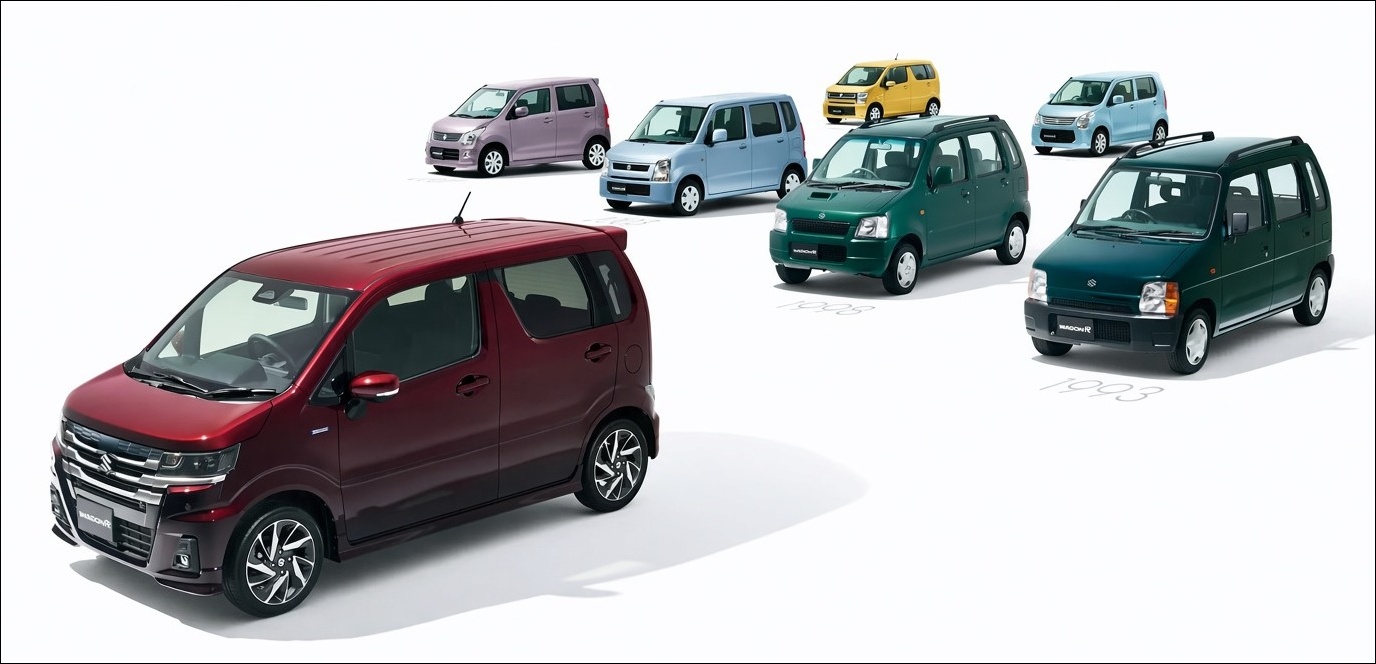
Uniquely Japanese category
Kei cars are in a uniquely Japanese vehicle category defined by strict specifications to qualify for tax and insurance incentives. These specifications were dictated by the narrow roads in Japanese cities decades earlier and set maximum exterior dimensions.
A kei car must not be more than 3395 mm long, 1475 mm wide, and 2000 mm high, while the powerplant is limited to 660 cc. Besides the fuel efficiency of the small engine, the car’s weight is also between 600 kgs and 850 kgs, which further helps in keeping fuel consumption low.
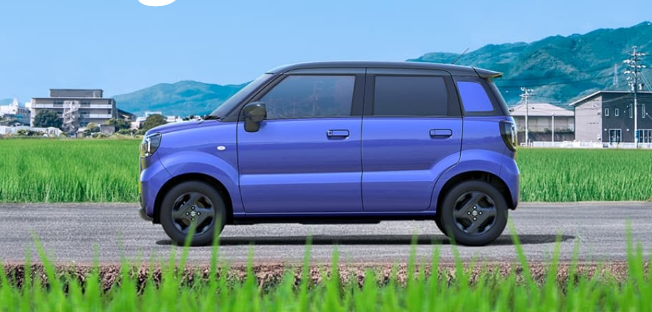
While Suzuki has fully electric models like the e-Vitara and e-Every, as well as several hybrid electric models, the e SKY represents its first dedicated passenger EV within the constrained kei dimensions.
Foreign challenge
The e SKY arrives at a crucial juncture for Japan’s domestic kei car market. The segment, long considered insulated from foreign competition due to its highly specialized dimensions and low profit margins, has recently seen the entry of Chinese automaker BYD with its Racco — a purpose-built, made-for-Japan electric kei car.
![BYD Racco EV [2026]](https://www.motaauto.com/wp-content/uploads/2026/09/BYD-Racco-EV-2026-1.jpg)
The production model is based on the Vision e-Sky concept displayed at the 2025 Japan Mobility Show. Between the concept’s debut and the production prototype’s reveal recently, Suzuki engineers have improved the drivetrain and energy management to raise the vehicle’s reference driving range from 270 kms to 310 kms.
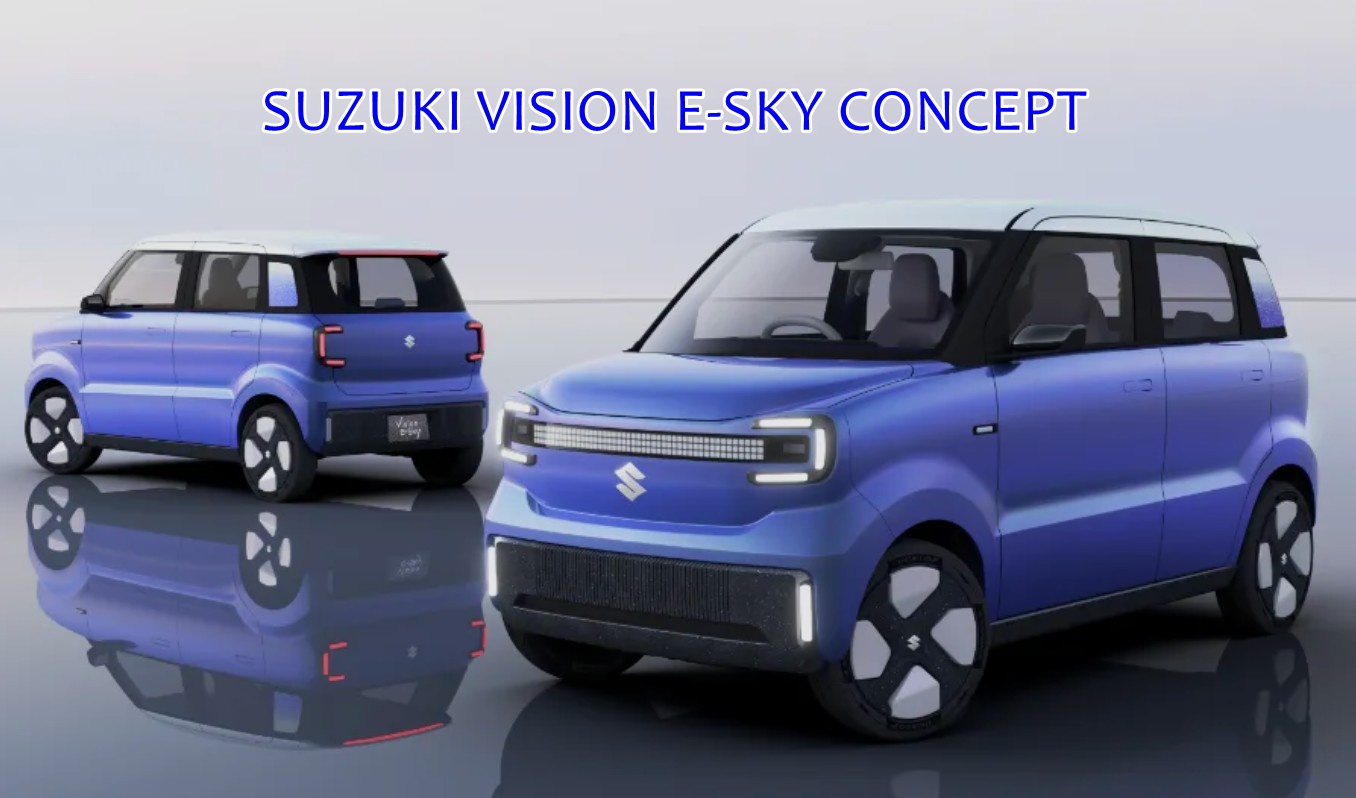
Rather than expanding the vehicle’s proportions to squeeze in larger batteries, Suzuki built the e SKY on its HEARTECT-e architecture developed for EVs.
Underneath the floor is a 26 kWh lithium iron phosphate (LFP) battery pack, powering an integrated e-Axle that combines the motor, inverter, and reduction gear set.
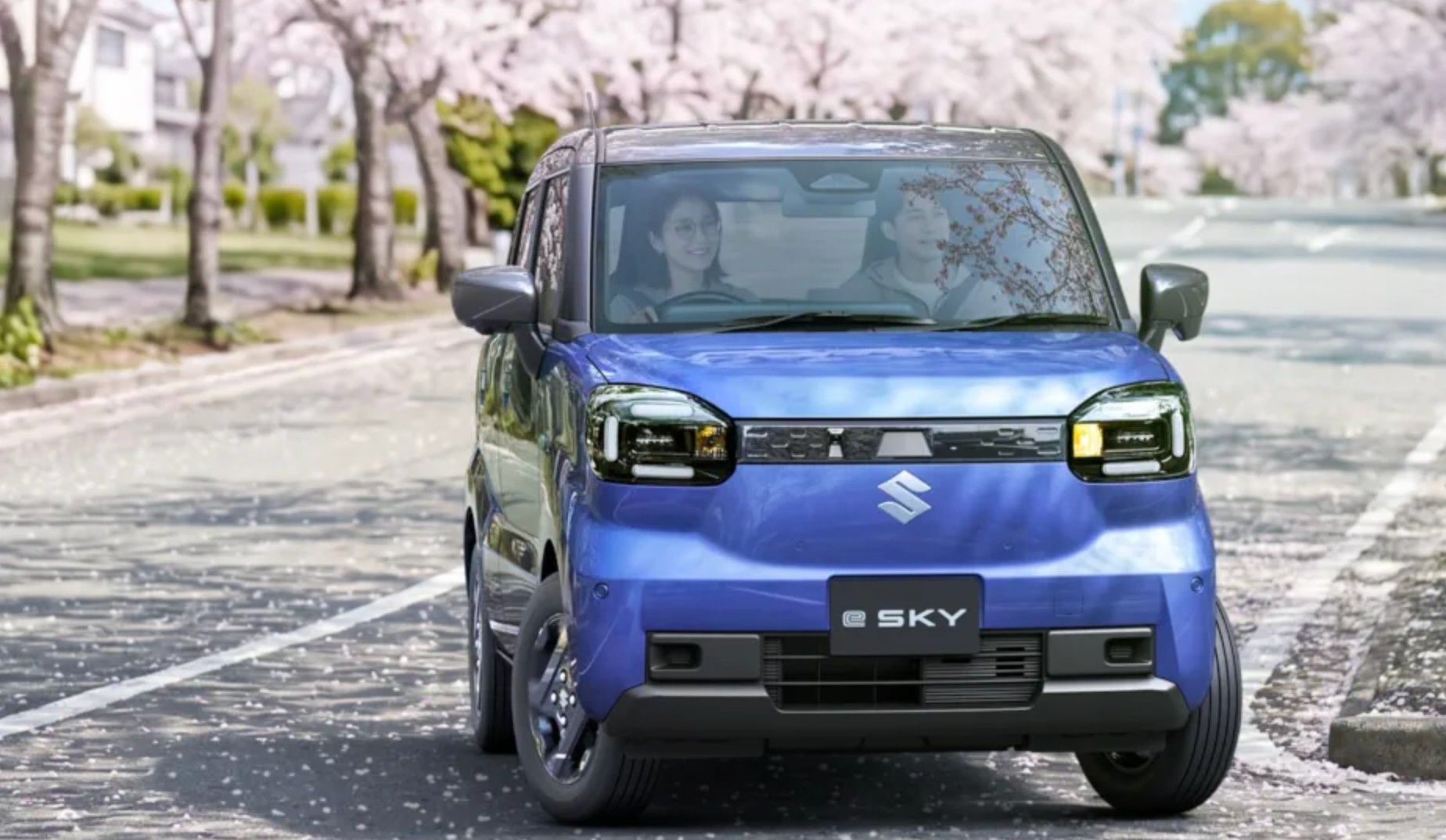
By having an energy-efficient direct heat-pump system with a fast-acting electric heater, the e SKY’s powertrain minimizes thermal power draw to preserve real-world driving range— a critical advantage for an EV with a small battery pack — while ensuring immediate cabin warmth in very cold climatic conditions.

Reduced energy demand
Keeping kerb weight down to approximately 1,030 kgs, Suzuki says energy consumption is 97 Wh/km, demonstrating an engineering focus on reducing total energy demand rather than carrying excessive battery weight. This limits the e SKY to routine daily usage — commuting, school runs, and local errands.

Suzuki’s first EV – the e Vitara – now in Malaysia, priced from RM188,000