
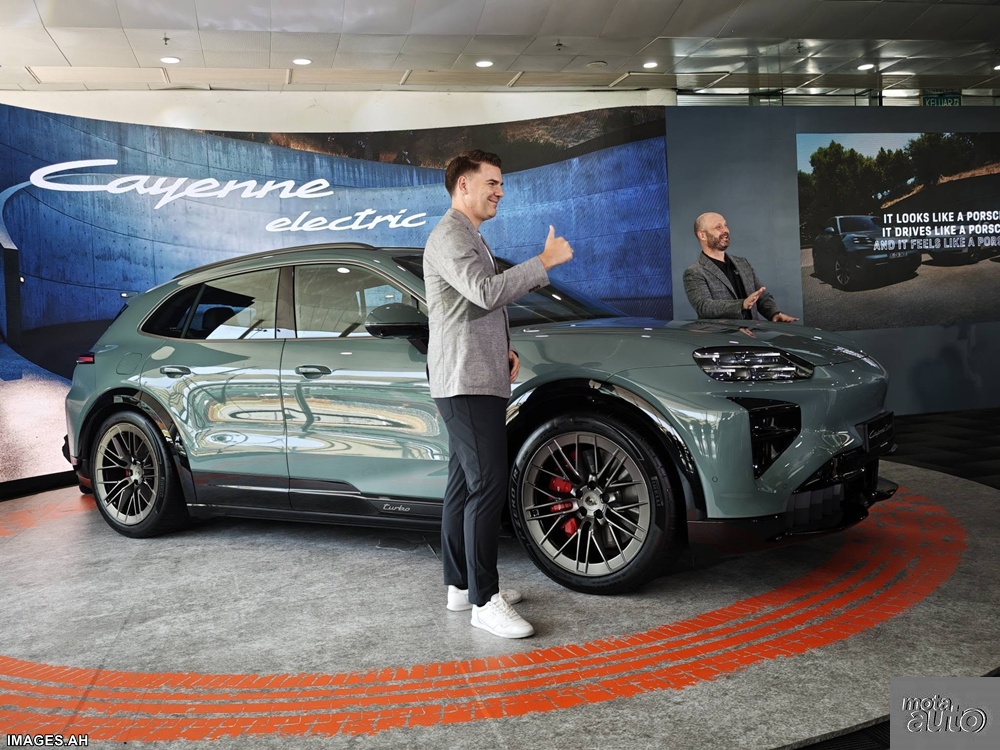
Porsche, like many other automakers, rushed into the EV shift a few years ago. Huge investments were made in developing new EVs with a plan to leave ICE (internal combustion engines) behind. But the sales numbers were not indicative of car-buyers giving strong support to the change, forcing a review and change in mid-term strategy.
Transitioning completely to fully electric mobility will happen, perhaps not as soon as what policy-makers tried to force. Other than Norway, which has reached an amazing 95.9% of new vehicles sold being fully electric, other markets still have dominance of ICE models, though PHEVs (plug-in hybrid electric vehicles) are increasing.
The strategy for now is therefore to still offer customers a choice, rather than force a single one on them. So many automakers are still developing new ICE models, while also continuing development of models with electrified powertrains. To control costs, efforts have been made to make platforms more versatile and accommodate both ICE and electrified powertrains.
3 powertrain choices
Porsche is among those with the multi powertrain approach and with its latest Cayenne line-up, it offers encompasses 3 choices: ICE, PHEV and fully electric. This allows customers in different markets to choose the technology best suited to their preferences as well as local conditions.
SUV and Coupe bodystyles
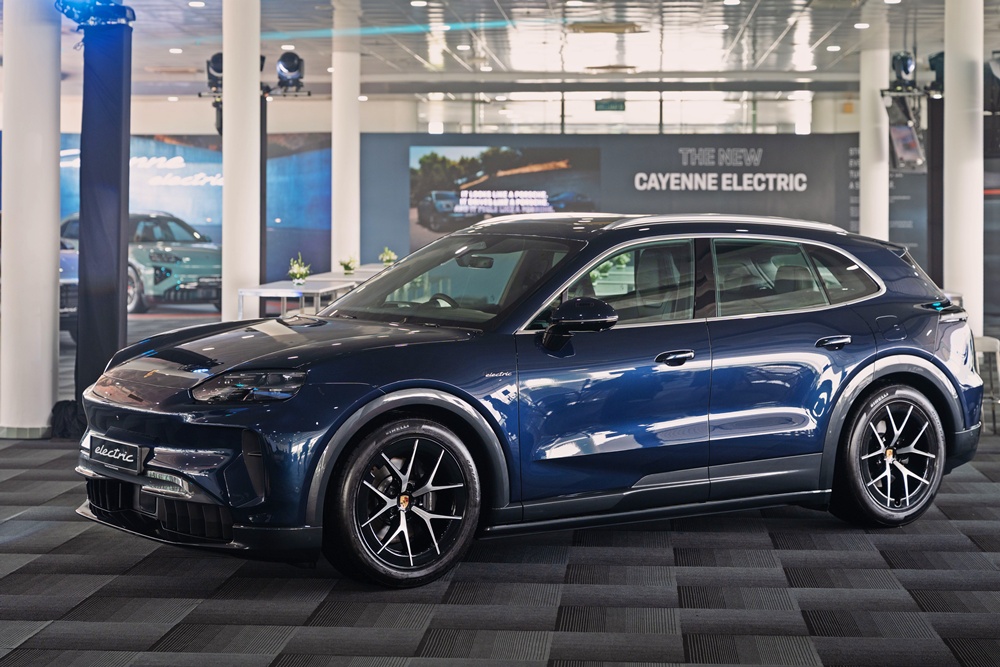
With the launch of the new Cayenne Electric, all three are now offered in Malaysia. The Cayenne Electric marks the arrival of Porsche’s Premium Platform Electric architecture (also used by Audi) for the flagship SUV line-up which is available in SUV and Coupe SUV bodystyles.
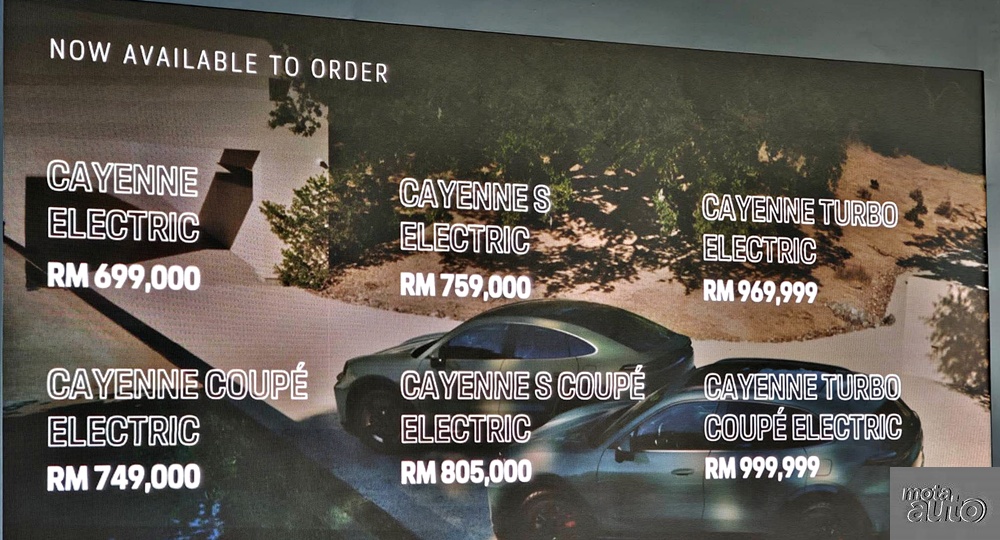
Unlike the other two Cayenne models which are assembled locally (the only place outside Germany Porsche assembles any model), the Cayenne Electric comes from Germany. Of course, with its ex-factory price and high power output, the new MITI conditions for CBU EVs are irrelevant and prices start from RM699,000 (excluding insurance) for the standard Cayenne Electric SUV, rising to RM999,999 for the range-topping Cayenne Turbo Coupe Electric.
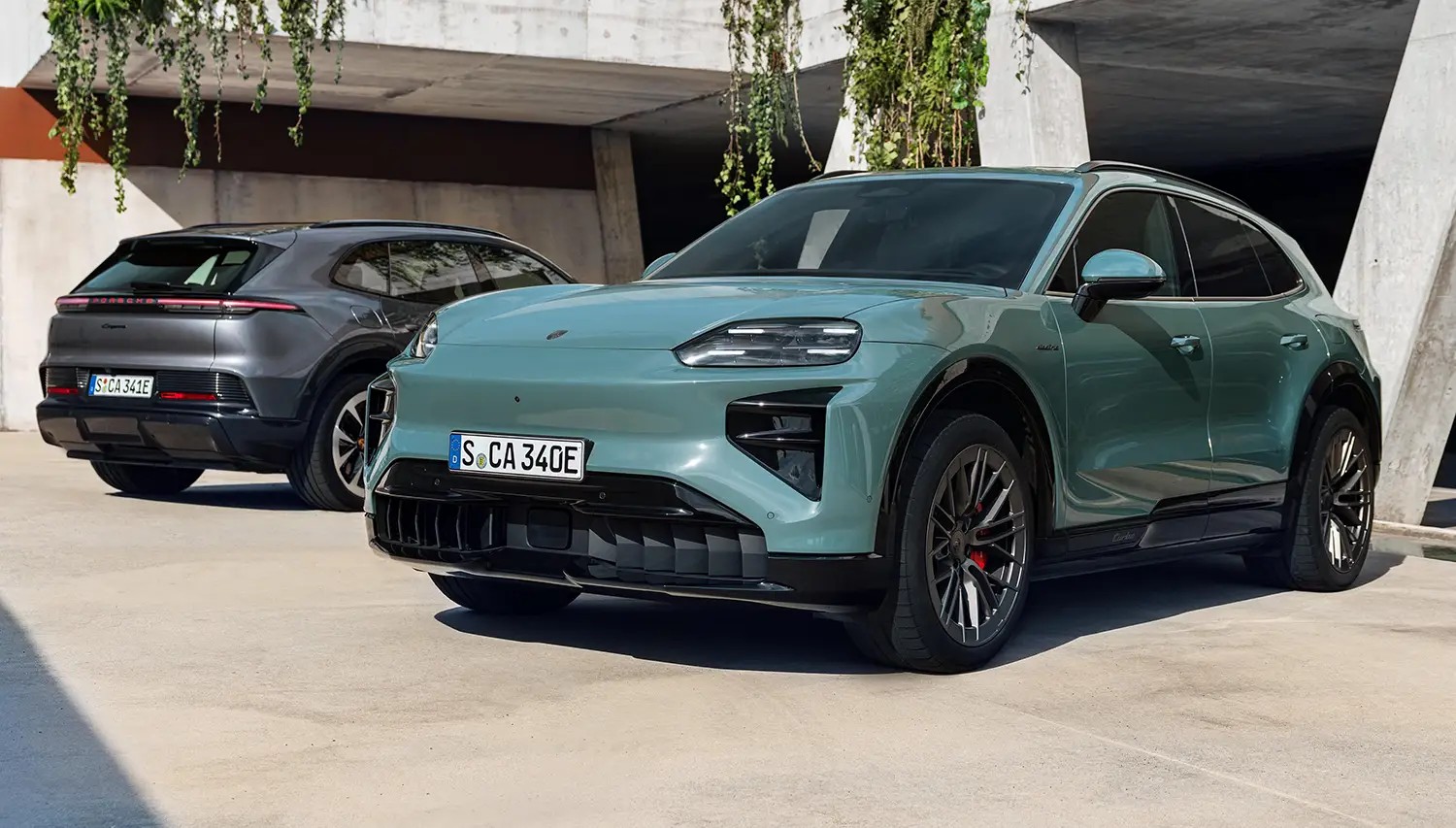
Both the SUV and Coupe have similar dimensions of 4985 mm in length and 1980 mm in width. The height is slightly lower for the Coupe (1650 mm vs 1674 mm). The wheelbase is 13 cm longer than the ICE model at 3023 mm, which gives extra legroom to rear passengers (who also enjoy powered seat adjustment).
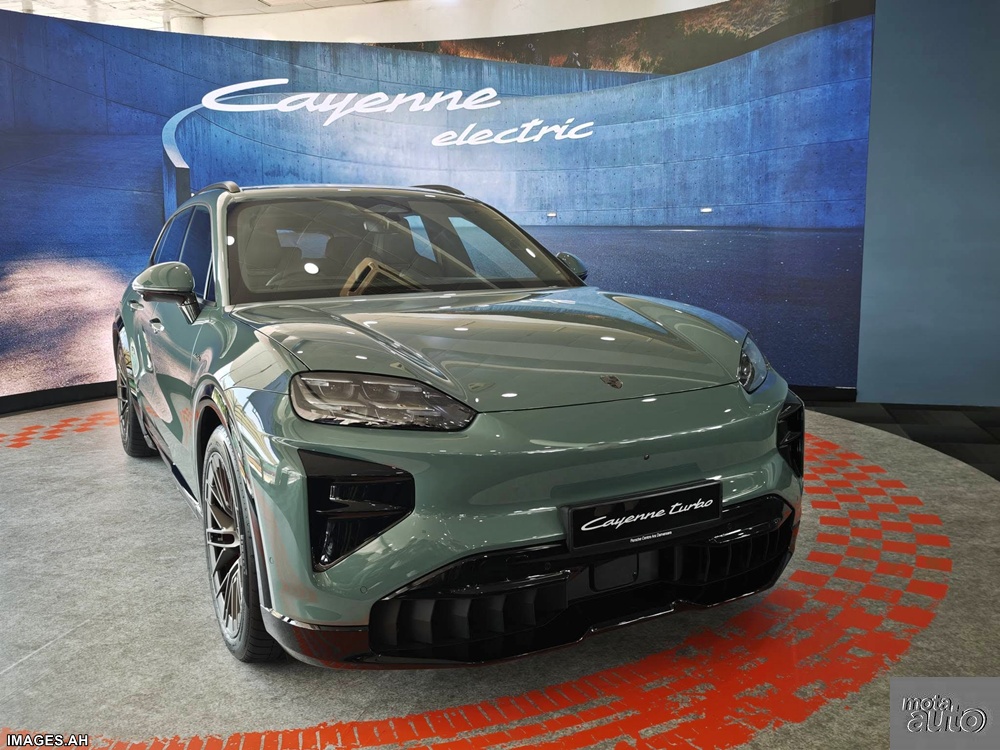
The appearance is recognisable as a Cayenne although the bodywork was given more attention to aerodynamic efficiency which is vital for an EV. This makes the Cayenne Electric one of the most aerodynamic SUVs (0.23 Cd for the Coupe) in its class, offering benefits in terms of range and energy consumption.
Extensive aerodynamic aids
The Porsche Active Aerodynamics system adapts the aerodynamic properties to the driving situation and speed and, alongside an efficient control strategy, also contributes to the driving dynamics expected of the brand with extra downforce.
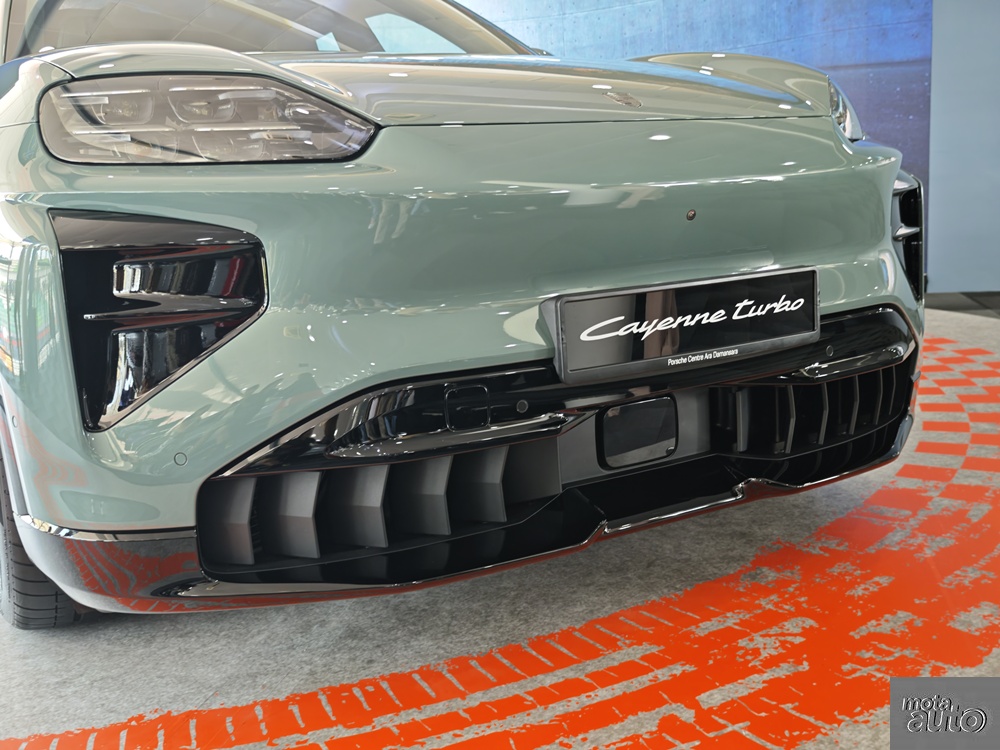
Active aerodynamic elements include movable cooling air flaps in the nose, an adaptive roof spoiler and the innovative, active aeroblades at the rear of the Turbo. They extend the lateral tear-off edges and improve the flow characteristics, which leads to an increase in range, especially at higher speeds.
Other aerodynamic measures include air curtains in the front bodywork, an almost completely enclosed underbody, special aero wheels and a diffuser at the rear.
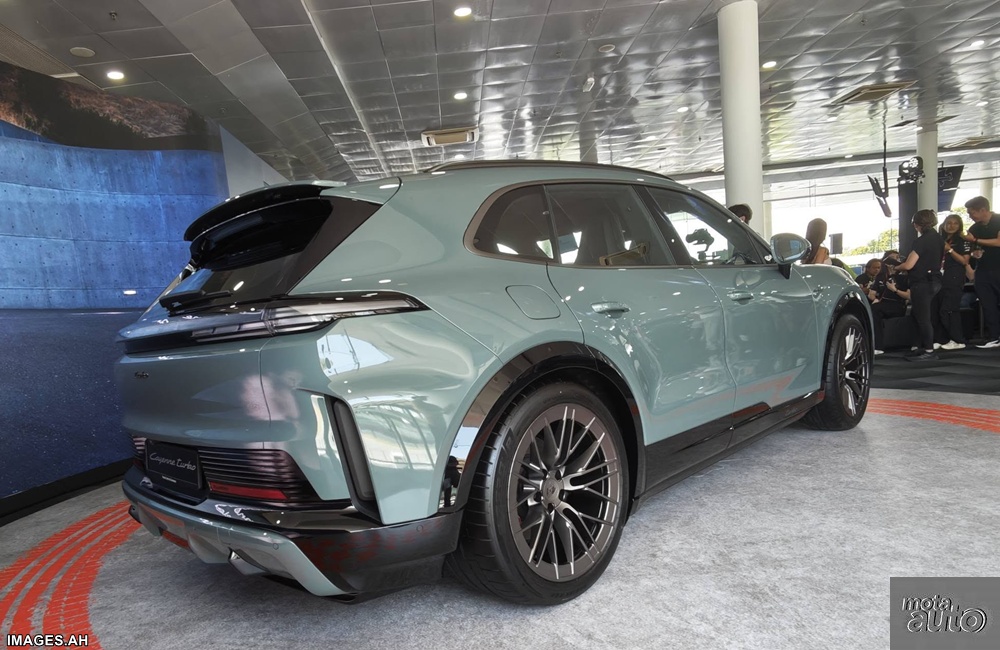
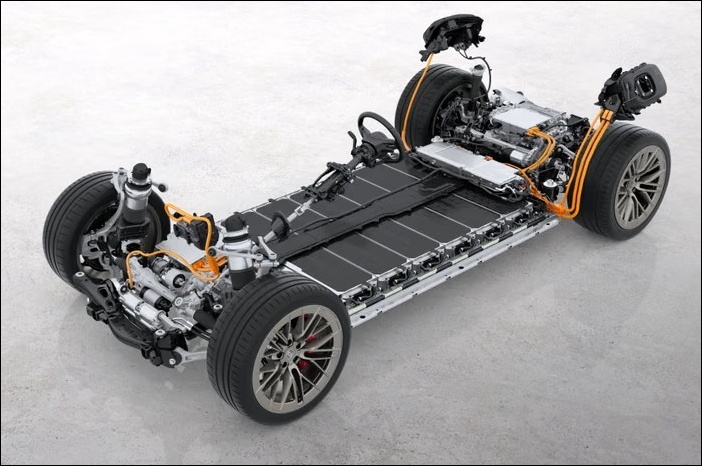
The powertrain uses a newly developed 113 kWh high-voltage battery which benefits from double-sided cooling for optimum thermal management. To support thermal stability during repeated high-load runs, the rear electric motor on the Turbo variant features direct oil cooling (a solution from Porsche’s development for its racing cars in Formula E).
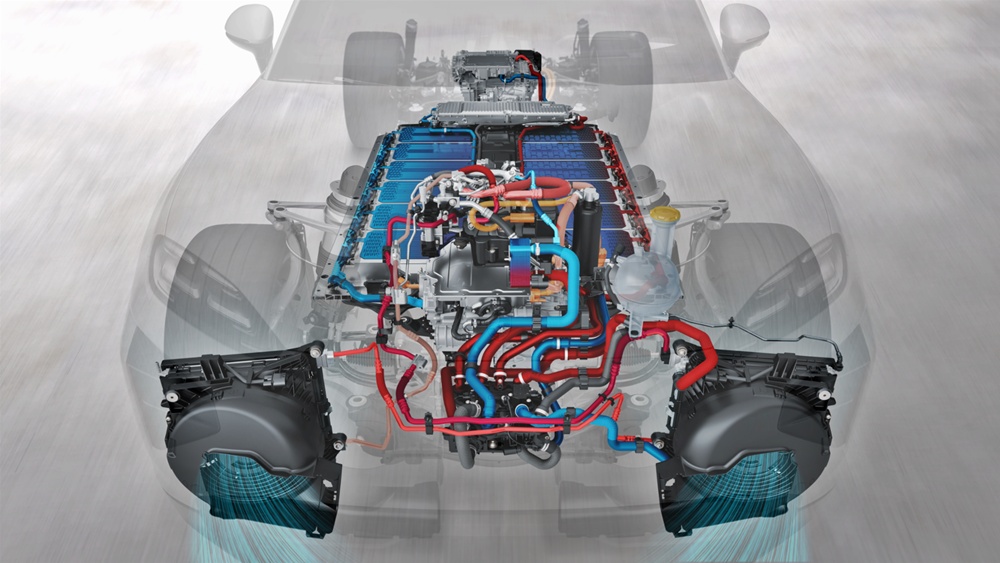
Up to 1,156 ps/1,500 Nm
The battery powers motors at the front and rear, with 630 kW (857 ps) generated in normal driving mode. When Launch Control is activated, the number boosts to 850 kW (1,156 ps)/1,500 Nm which can send the SUV from 0 to 100 km/h in a claimed 2.5 seconds and reach a top speed of 260 km/h. Power delivery across all models is dynamically split via electronic Porsche Traction Management.
That performance level is, however, for the Cayenne Turbo. The powertrain for the lowest-priced version generates 300 kW (408 ps)/835 Nm, boosting to 325 kW (442 ps) with Launch Control. For the Cayenne S, the powertrain generates 400 kW (544 ps)/1,080 Nm, which can be boosted to 490 kW (666 ps) with Launch Control.
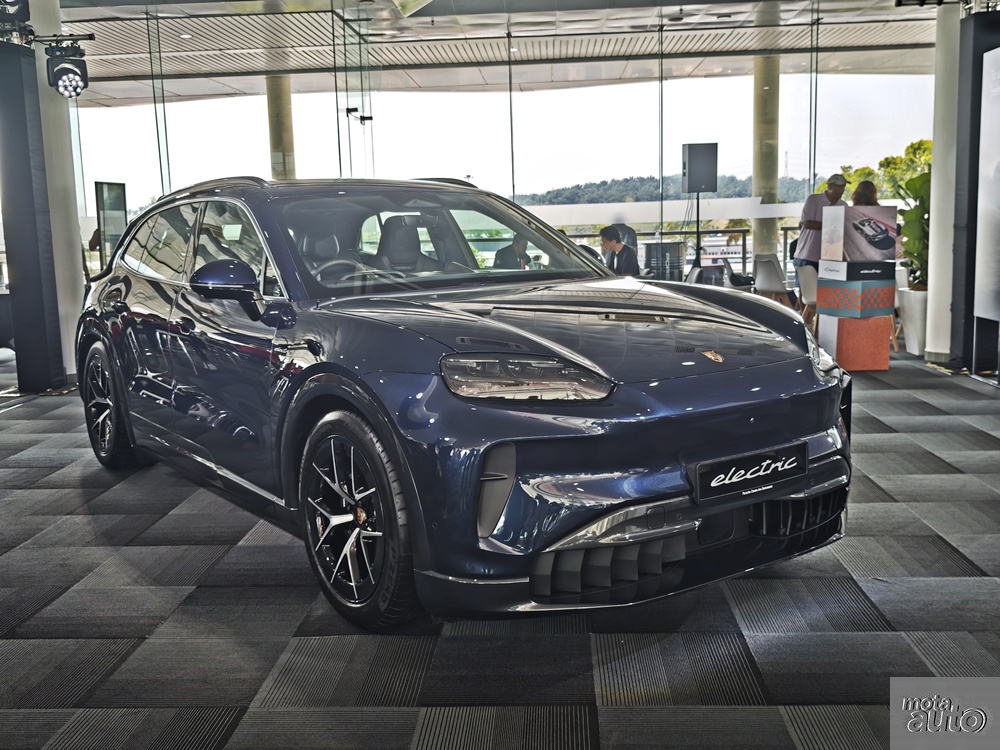
800V technology
With 800V technology, the Cayenne Electric battery can be recharged with DC supply up to 390 kW, with peak capacity reaching 400 kW under optimal conditions. This allows a 10% to 80% recharge in under 16 minutes, or approximately 325 kms of added range within a 10-minute time-frame. This gives a range of 623 kms to 669 kms, depending on the powertrain and bodystyle with the Coupe being slighter better.
Energy recovery is similarly impressive, with regenerative braking capacity reaching up to 600 kW, drawing on principles also refined in Formula E racing. In daily operation, the mechanical friction brakes are bypassed for roughly 97% of all deceleration events.
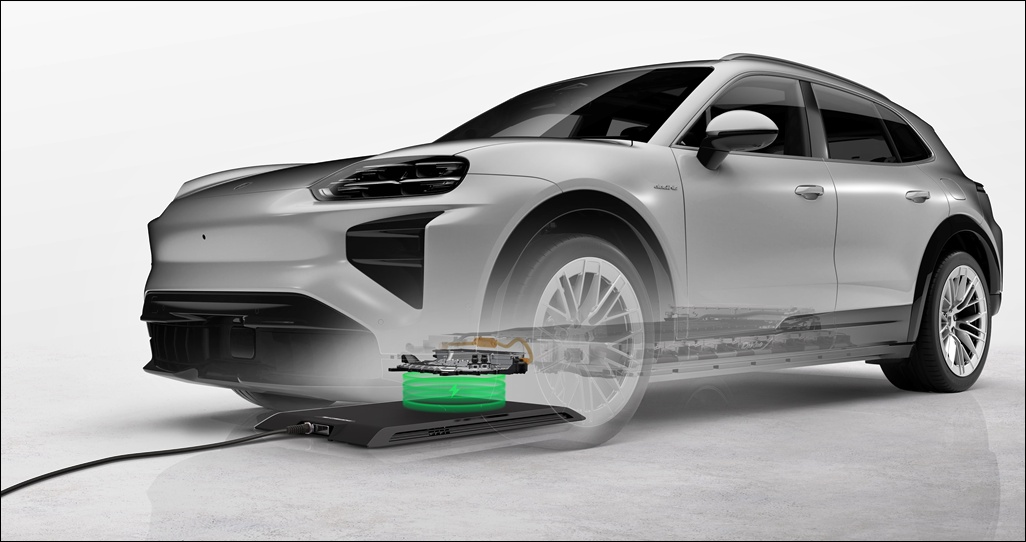
The Cayenne Electric is the first Porsche to support inductive charging, with a system that charges at up to 11 kW. However, as such a facility, which uses a charging plate on the floor, is not currently available in Malaysia, the option is irrelevant.
Chassis control
Dynamic chassis control is handled by standard adaptive air suspension with Porsche Active Suspension Management. The air suspension can raise the ride height up to 245 mm, allowing the SUV to cross water that is 550 mm deep. Rear-axle steering (up to 5 degrees) and Porsche Active Ride hydraulic suspension control are offered on some variants.

Porsche Driver Experience concept
Inside, the dashboard is based on the Porsche Driver Experience concept. This includes a curved OLED Flow Display in the centre console, a 14.25-inch digital instrument panel, an optional 14.9-inch passenger display, and a head-up display utilizing augmented reality to project virtual guidance over an effective 87-inch area. Physical controls remain for primary climate and volume settings.
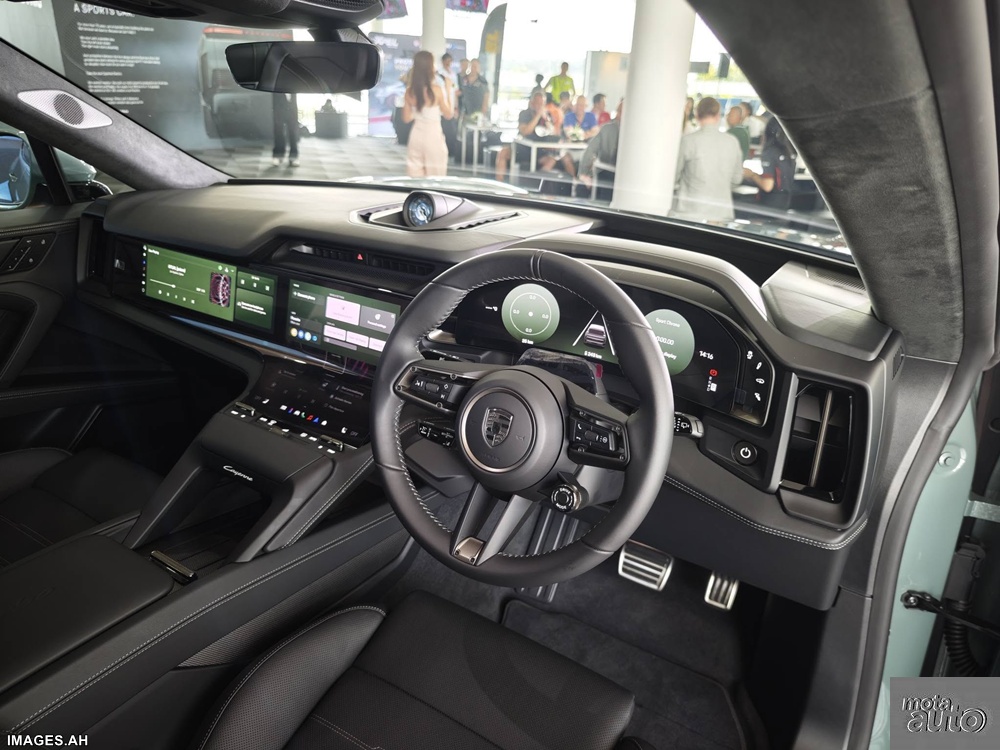
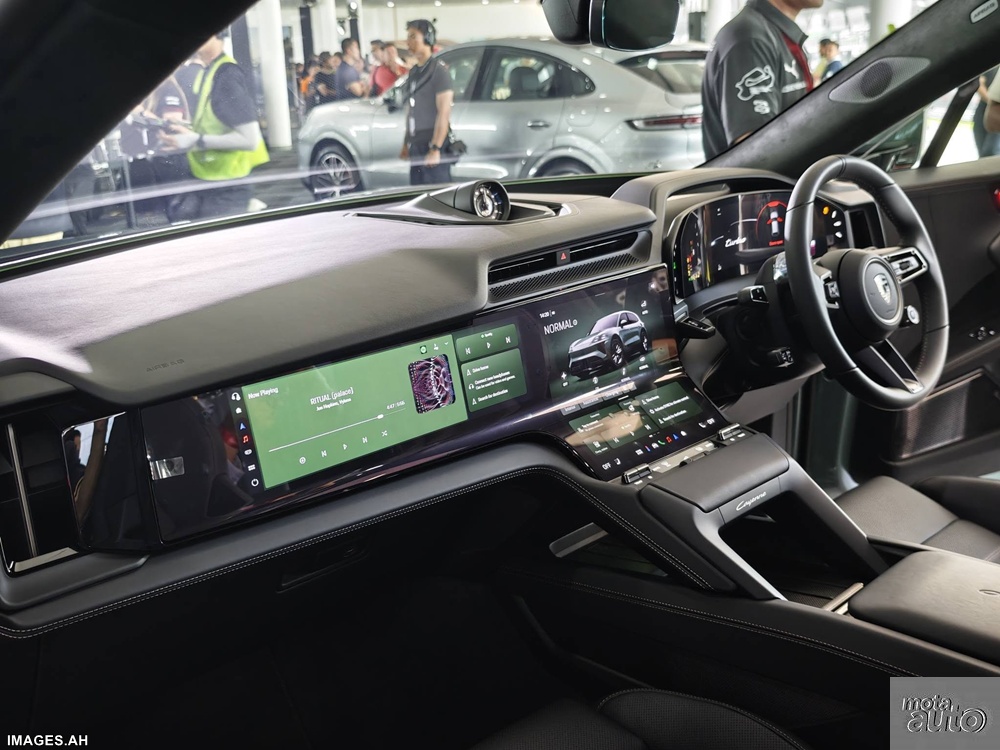
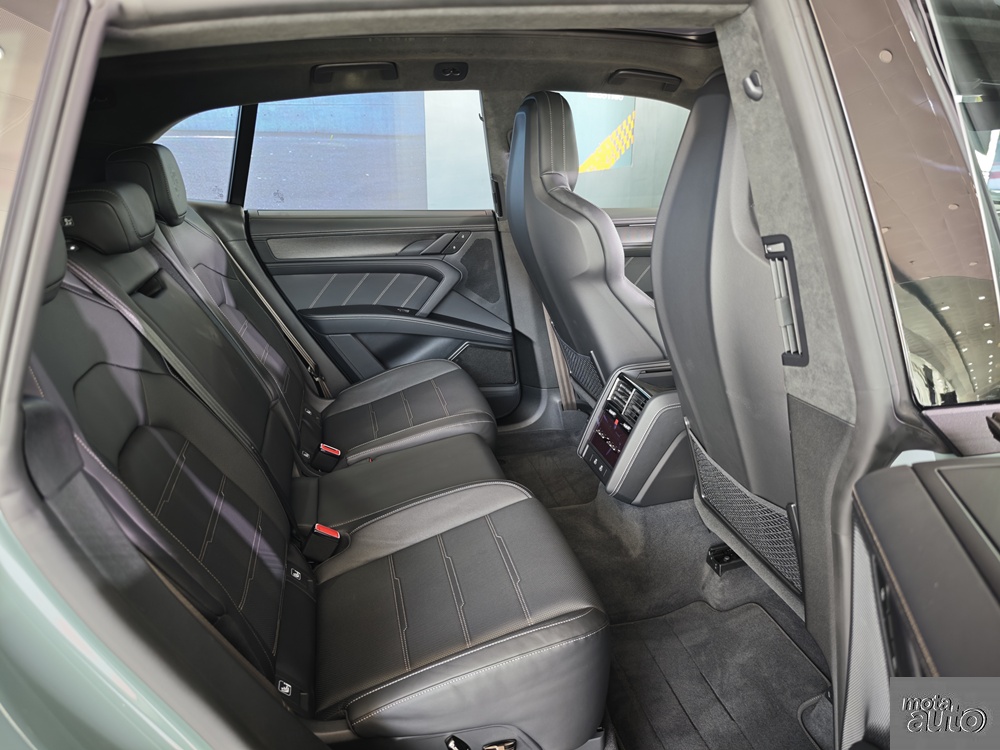
For the Malaysian market, standard equipment includes 4-zone automatic climate control, 14-way adjustable front seats, power rear sunblinds, a Bose Surround Sound system (Burmester on the Turbo), and the Sport Chrono Package with Electric Sport Sound. The mid-tier Cayenne S adds HD Matrix LED headlights, while the Turbo variant includes the Augmented Reality HUD, Porsche Active Ride, and Mood Modes as standard fitment.
Local assembly too?
Whether Porsche will also assemble the Cayenne Electric locally is not known. The tax-exemption incentive for locally-assembled EVs expires at the end of 2027 and MITI has not indicated what happens next. An attractive incentive would be needed to make it worth Porsche’s investment to assemble the Cayenne Electric in Malaysia.
![Porsche Cayenne Hybrid assembly at Inokom [2024]](https://www.motaauto.com/wp-content/uploads/2024/07/Porsche-Cayenne-Hybrid-assembly-at-Inokom-2024-4.jpg)
Updates for 2026 Porsche Cayenne and Cayenne S E-Hybrid Coupe