
Quick look:
-
In the 21st century, PROTON is focussed on developing the digital infrastructure and sovereignty as part of its ongoing mission.
-
It is also revitaling the domestic economy by localization of cockpit hardware assembly while future-proofing the workforce.
PROTON was established as an automaker over 40 years ago with investment by the Malaysian government. But it was more than just another new company in the auto industry. PROTON also had the important mission of helping the Malaysian auto industry develop further.
PROTON has remained dedicated to this mission through four decades with its deep commitment to technology localization and talent cultivation.
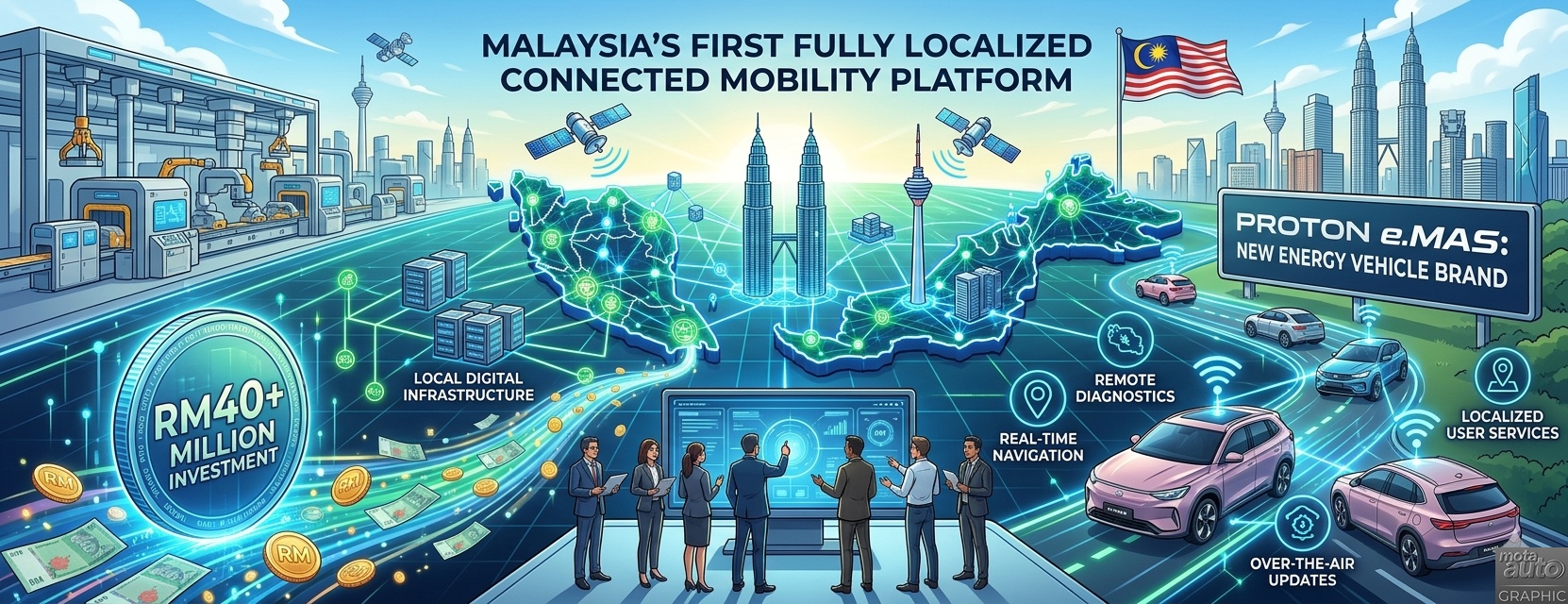
In its ongoing mission, the Malaysian automaker recently an announced an aggressive investment strategy exceeding RM40 million into local digital infrastructure to construct Malaysia’s first fully localized connected mobility platform for its Proton e.MAS, its New Energy Vehicle (NEV) brand.
Localized connected vehicle ecosystem
The launch of the Proton e.MAS localized connected vehicle ecosystem is a definitive moment for Malaysia’s digital sovereignty and technical self-reliance. This connectivity platform currently services more than 300,000 vehicles, making it the country’s first self-developed vehicle connectivity platform and facilitating upwards of 8 million remote-control downstream requests for electric vehicles to date.
![Proton e.MAS 7 EV [2025]](https://www.motaauto.com/wp-content/uploads/2025/06/Proton-e.MAS-7-EV-2025.jpg)
The entire cloud framework is anchored within Telekom Malaysia’s data centres, ensuring that vital automotive data remains securely stored within national borders.
Uniquely Malaysian
This platform is also distinctly set apart from imported systems with its adaptation to the cultural and physical habits of Malaysian motorists. The connected suite seamlessly integrates comprehensive Bahasa Malaysia language protocols, highly localized navigation frameworks, and an active Live Charging Map covering approximately 90% of the nation’s public EV-charging network.
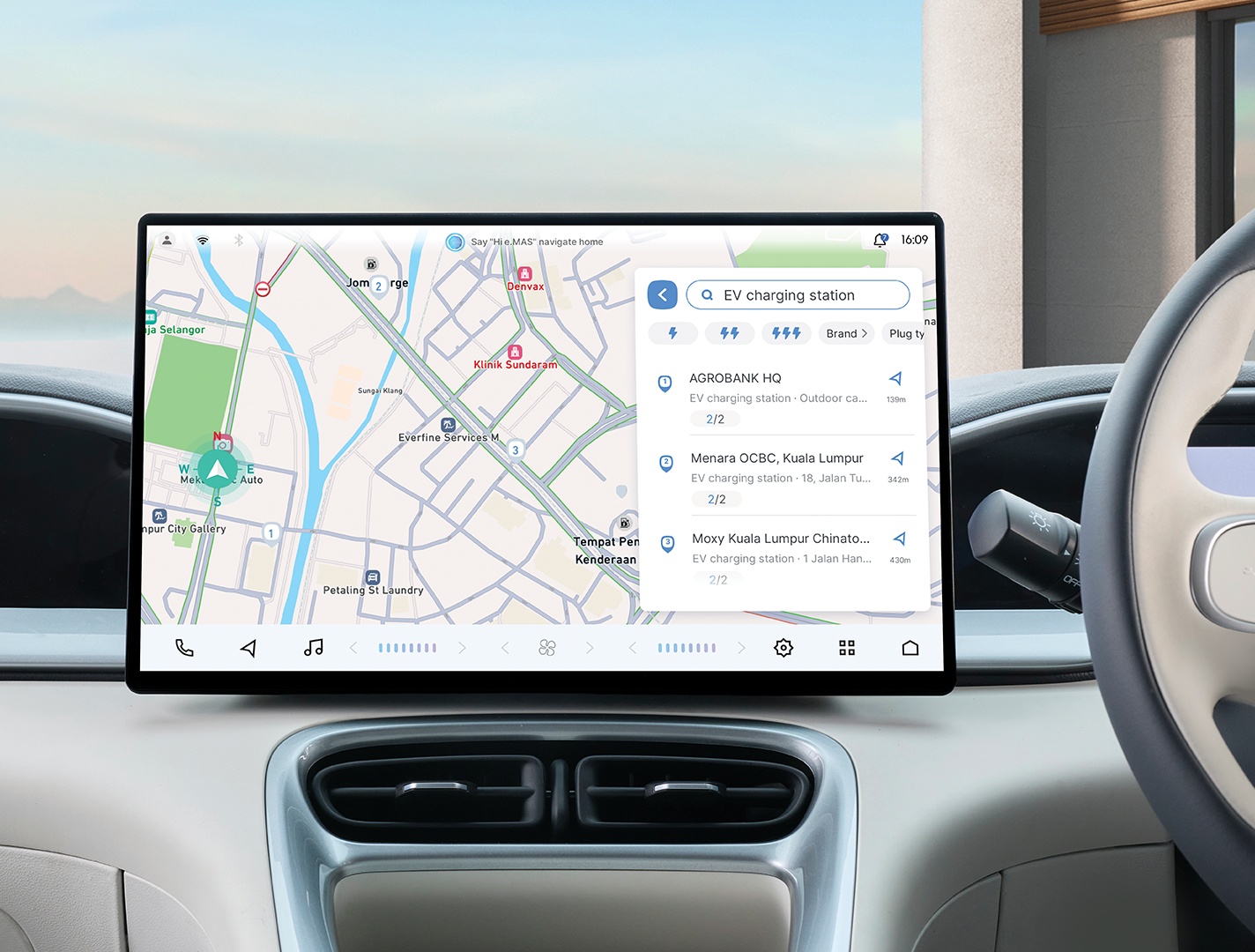
Culturally resonant features like a Qibla compass and the integrated Noor prayer application are embedded directly into the interface, rendering an exceptionally organic and customized ownership environment for the majority of Malaysia’s population.
Crucially, the economic ripples of this digital push are revitalizing the domestic supply chain, with Proton e.MAS successfully engineering a completely localized supply chain for cockpit equipment, including fully Malaysian-manufactured infotainment hardware.
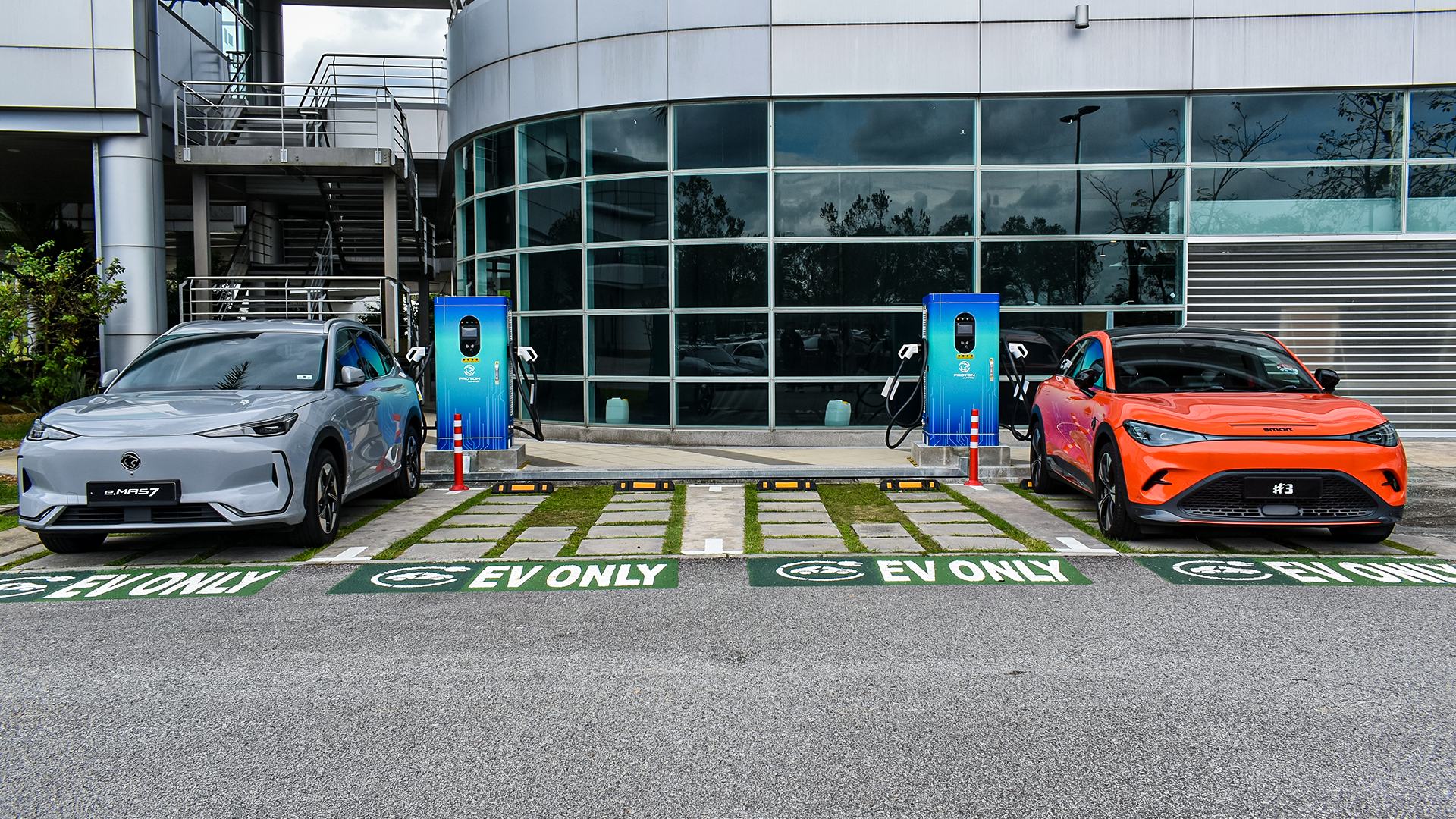
This technological push is reinforced by over RM4 million going directly into local charging services, which has already recorded approximately 11,000 users and processed close to 790,000 kWh in charging volume. By engineering robust partnerships with home-grown technical, banking, and telecommunications giants, the initiative has pumped an annual economic value exceeding RM10 million into the local telecommunications ecosystem alone.
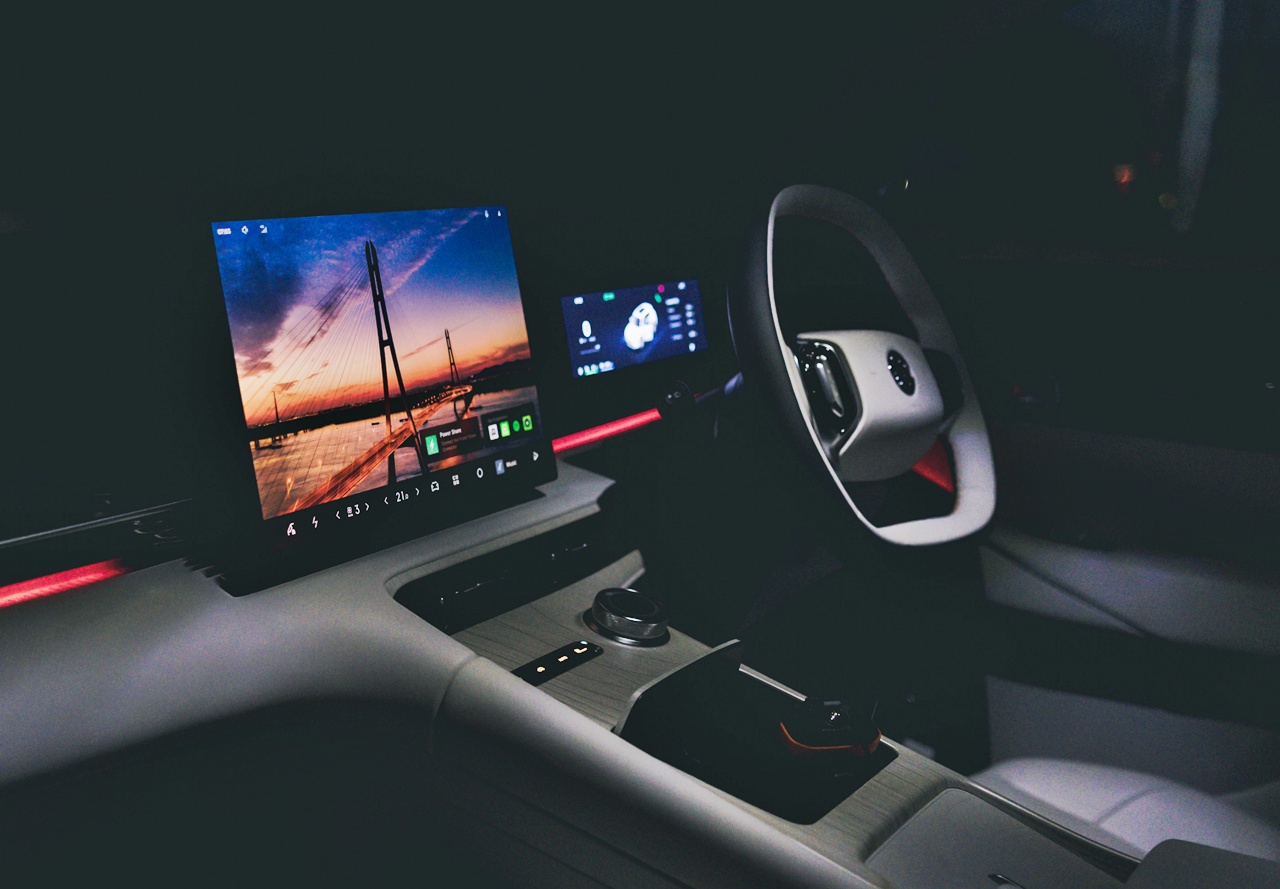
“By localising our connected services and digital infrastructure, we are laying the foundation for a stronger Malaysian EV ecosystem,” said Zhang Qiang, Chief Executive Officer of PRO-NET. PROTON’s NEW subsidiary.
“This allows Proton e.MAS to deliver mobility solutions that are not only technologically advanced, but also practical and relevant to the way Malaysians live and drive,” he said.
Fortifying human capital
While PRO-NET constructs the digital corridors of tomorrow, PROTON is concurrently fortifying the human capital required to sustain a high-technology manufacturing future. recognizing that an industry is only as strong as its technical workforce, the automaker completed a comprehensive nationwide educational campaign, delivering advanced, production-based engine units to selected technical training facilities and higher learning centres across Malaysia.
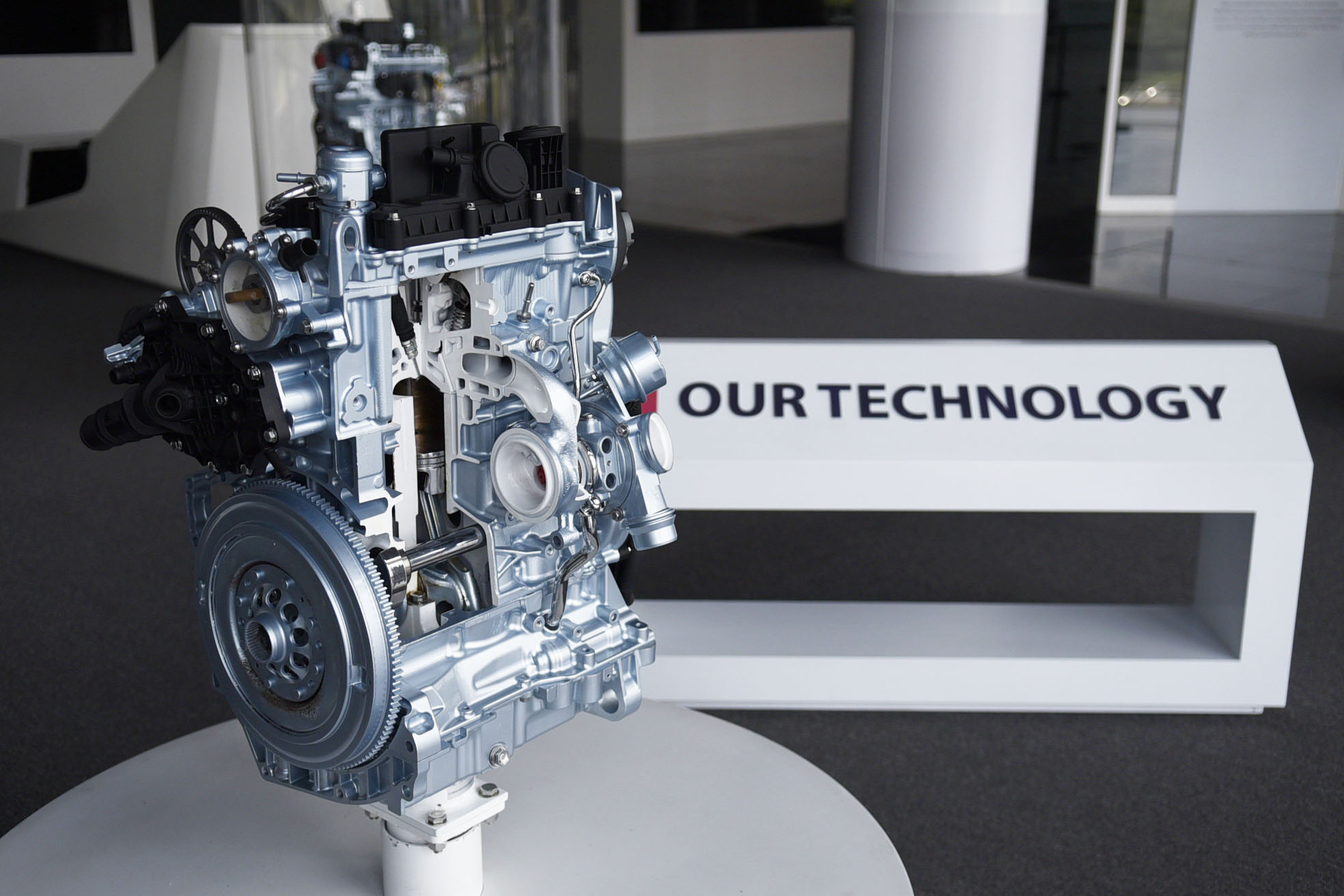
The fully functioning engines were donated to key institutions such as the Industrial Training Institute Marang, Vocational College Arau, Universiti Tun Hussein Onn Malaysia, Universiti Malaysia Pahang Al-Sultan Abdullah, DRB-HICOM University, and the PROTON Institute Melaka.
These units serve as critical teaching aids for intricate technical disciplines, including advanced diagnostics, engine assembly and disassembly, Electronic Control Unit (ECU) familiarization, component stress analysis, and practical maintenance operations. By having fully engineered and functioning powertrains, students have better direct exposure to complex engineering applications.
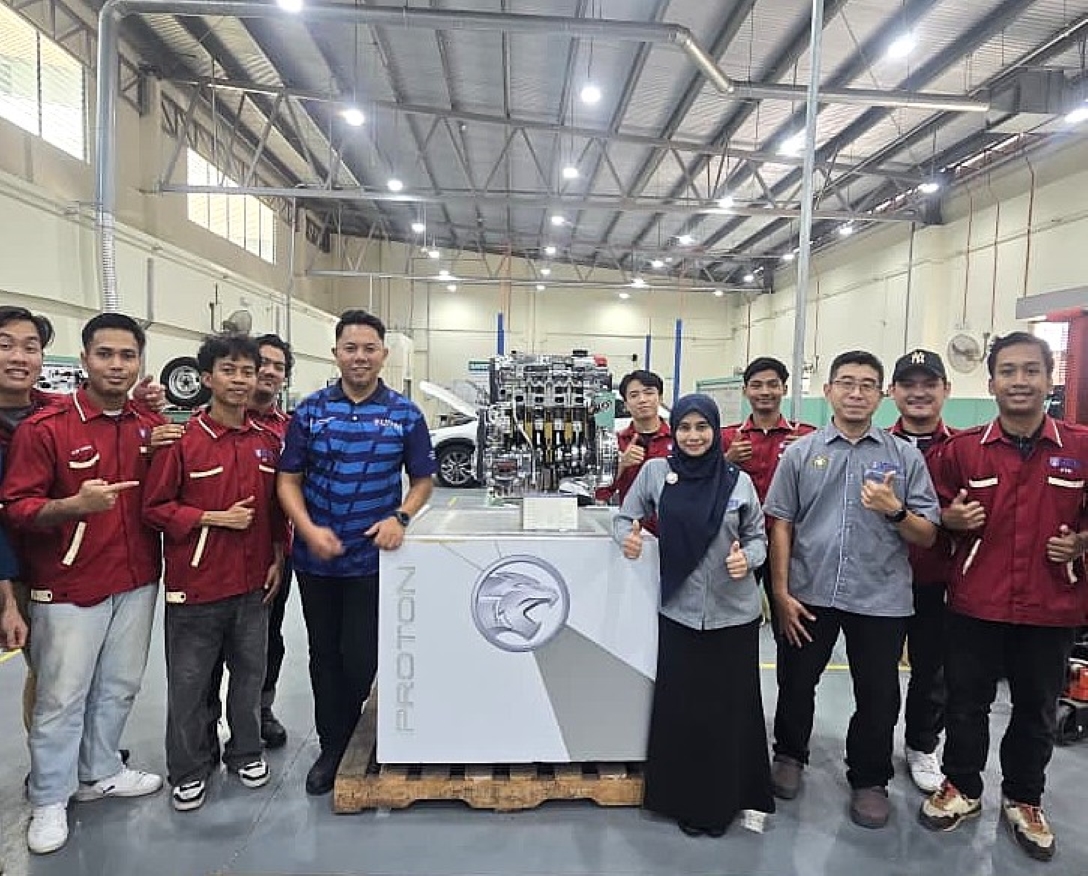
This hands-on methodology drastically compresses the learning curve for graduates, transforming them into industry-ready assets from day one. For the receiving academic institutions, this collaborative approach elevates the quality of technical education and fosters intimate integration with the commercial sector.

Developing skilled workforce
Dato’ Ir. Abdul Rashid Musa, Deputy Chief Executive Officer of PROTON, emphasised that educational focus is a fundamental mandate. Playing an active role in developing a skilled workforce is a core commitment the company has carried since its establishment.
“By distributing our engines to universities and technical training institutions, PROTON is investing in the future of the industry while helping create a talent pool with direct exposure to advanced automotive technologies and engineering practices,” he explained.
“Moving forward, we also intend to expand this initiative to include EV-related components as part of our ongoing efforts to enhance the capabilities of the local workforce,” he added.