
UMW Toyota Motor (UMWT) has always given assurance to its customers that they will get complete aftersales support for their vehicles, a requirement that all official distributors must adhere to as part of their obligations as a representative of a brand.
UMWT upholds this obligation and provides a high standard of aftersales support that is appreciated by Toyota owners and which makes them choose another Toyota as their next car.
For owners of Toyota vehicles not distributed by UMWT, such aftersales support has not been available (except for a brief period when the company tried offering services to Lexus owners). These are the reconditioned vehicles from Japan and used vehicles from some other countries.
They are imported and sold by independent dealers who do not invest in aftersales facilities to support their customers, so owners of such vehicles have to rely on independent workshops for service and repairs. These workshops usually handle multiple brands and would not have specific expertise on one brand.

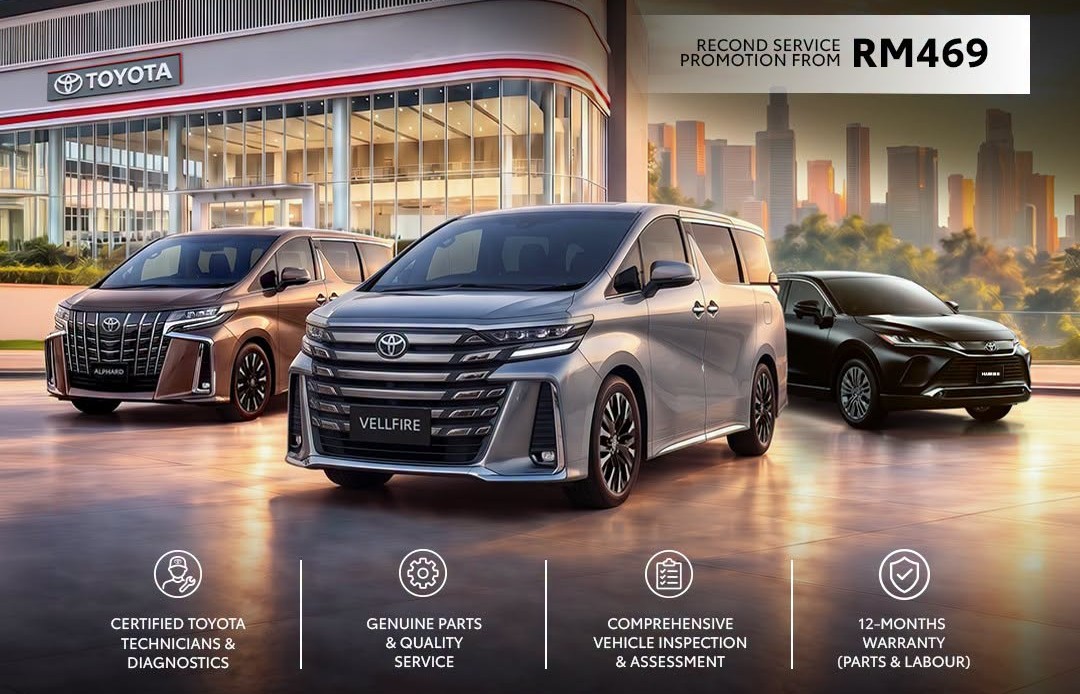
Now UMWT has announced that as part of its Toyota Extra Mile initiatives, it is accepting reconditioned Toyota vehicles at its service centres, which number 103 nationwide. This means that owners of such vehicles can receive professional attention from trained technicians, genuine parts, comprehensive inspections and even a 12-month warranty after the work is completed (terms and conditions apply). Charges start from RM469 but the actual cost would depend on what work is required.
“Every Toyota, even recond Toyota vehicles, deserve the attention of people who understand the vehicle, its engineering and the care required to keep it performing at its best. Through this campaign, we are extending the strength of our aftersales expertise to recond Toyota vehicles,” a statement from the company says.
The range of recond Toyota vehicles in Malaysia is quite large but from their website, it appears that they would focus on Alphard, Vellfire and Harrier models. These have also been sold by UMWT so the service centres would be familiar with them and some parts are also common.
Furthermore, as the official distributor, UMWT has a direct line to the factory in Japan where it can get additional technical support if necessary, not to mention any required parts. This is an advantage independent workshops do not have and can sometimes have difficulty resolving certain problems.

Background to recond vehicles
Recond vehicles, mainly from Japan, started to appear in Malaysia in the 1970s. Such vehicles have some parts that are worn out replaced before being exported. Recond vehicles from Japan have been popular as many are in pretty good condition and there are also models which are not generally exported (known as JDM – Japan Domestic Market – models).
Due to the ‘shaken’ compulsory vehicle inspection established in Japan in 1951 and required for all motor vehicles after the first 3 years (and every 2 years thereafter), many owners choose to sell off their vehicles before the inspection is due.
The inspection is one of the most rigorous in the world and requires spending up to 200,000 yen (RM5,200) which includes replacement of parts and repairs. This is why many owners sell off their vehicles, which then go into the used car market and are sold to exporters (often through auctions).
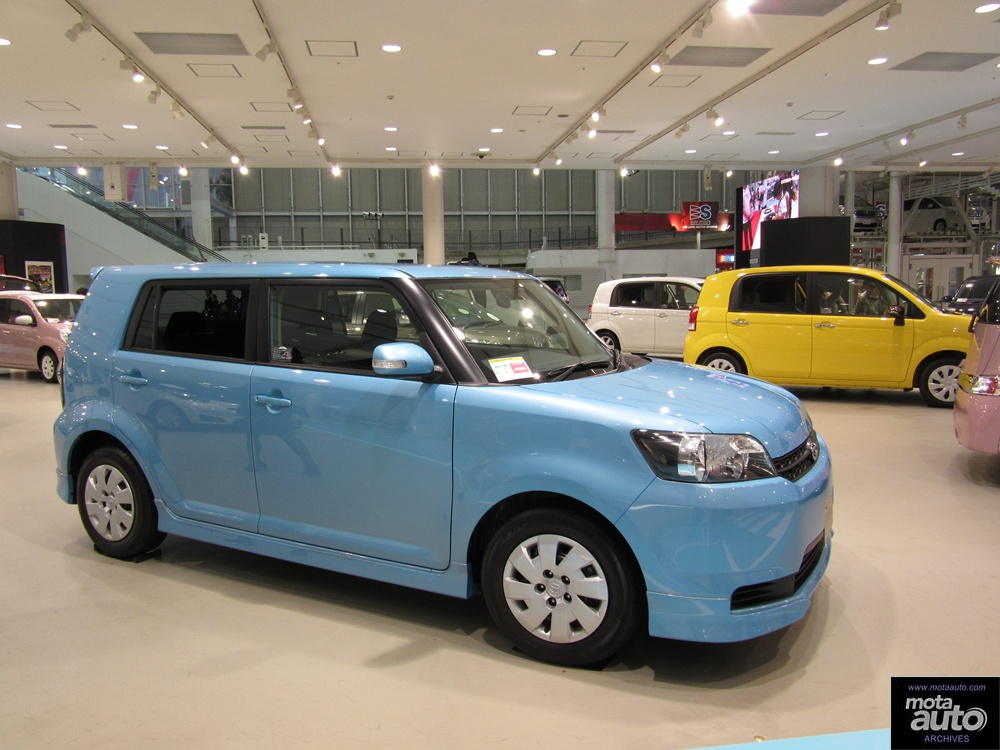
Although it may seem that the technical aspects of cars would be the same, it is not entirely true. In Japan, where emission control regulations are stricter and more demanding, engines have specifications and systems which may not be installed on models sold in other markets.
For instance, Honda had the CVCC system in its engines to meet tough emission standards in the 1970s. This meant the engines for the Japanese market were more sophisticated and required additional expertise.
Recond Hondas which were sold in Malaysia had such engines and partly for this reason, the official distributor refused to support such vehicles, and the policy remains to this day. They did not have the tools nor the expertise, so they could not service such engines.
Owners of used cars imported privately from Europe also had the same problem. The official distributors did not accept such vehicles at their service centres. This led to the growth of workshops that specialised in certain brands, and could help owners get parts from overseas.
The other reason is business-related; as mentioned earlier, official distributors are obliged to provide complete aftersales support to customers of the brand. This means setting up service centres, training technicians and maintaining genuine parts supply, all of which costs millions.
However, they are only required to support the vehicles they sell and not any vehicle of the brand. This generally applies to almost all brands and only in certain exceptional circumstances such as serious safety recalls would a manufacturer expect its distributor to handle vehicles it did not import or sell.
The situation is still the same today although some companies are a bit more open and may accept vehicles that were not sold by them. If their service centres can get some extra business, why not? However, there may be some terms and conditions which differ from what can be offered.