


Quick look
-
BYD has reported deliveries of 2.25 million EVS in 2025, beating Tesla which is expected to report not more than 1.65 million EVs sold for the year.
-
The success of BYD comes from having a strong competitive advantage, thanks to vertical integration in manufacturing that gives it control over supply of crucial parts and costs.
After being the dominant EV brand for the past 7 years, Tesla has been overtaken by BYD, which began selling EVs in 2009. Data released this week confirms that the Chinese automaker’s total volume of EVs for the whole of 2025 was more than 2.25 million units (excluding hybrid electric vehicles) which was part of the 4.6 million vehicles it delivered in 2025, up 7.7% from 2024.
Although Tesla has not officially reported its numbers, analysts expect its 2025 sales total to be between 1.6 to 1.65 million vehicles. The projection is based on Tesla’s declining sales in the fourth quarter which were 16% lower than for the same period in 2024.
![Tesla Model 3 EV [2023]](https://www.motaauto.com/wp-content/uploads/2023/09/Tesla-Model-3-EV-2023-3.jpg)
From being a start-up named after Nikola Tesla (1853 – 1943), an electrical engineer, Tesla became a dominant force in the EV segment from 2017 and then the No.1 EV brand in the years that followed. It began selling EVs two years before Nissan launched the LEAF as the world’s first mass-produced electric vehicle. The company, owned by Elon Musk, had bet on EVs being the future of personal transportation and had its entire business model based on EVs.

From batteries to cars
For BYD, this achievement is the culmination of a ‘slow-burn’ strategy that began in 1995 as a humble battery manufacturer. Today, that foundation in battery technology has become their greatest weapon, allowing them to outpace other automakers in both price and production volume.

Unlike Tesla, which relies on various external suppliers, BYD uses the advantage of vertical integration, which was also used by Henry Ford to gain a strong competitive advantage. BYD makes its own semiconductors and even batteries, crucial parts of every EV. This allows them to have better control over supply of parts, keeping production lines moving while others may be forced to slow down or even suspend operations.

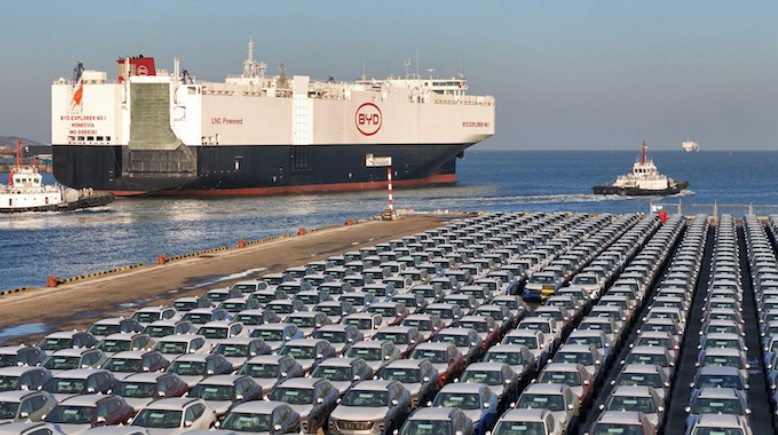
150% increase in exports
Although BYD is not selling passenger vehicles in the US market (but it makes electric buses there), it has been steadily growing sales in many other markets around the world. In 2025, overseas sales rose by 150%, reaching over 1 million units. In markets like Malaysia, which BYD entered at the end of 2022 as a pure electric brand, it is the No. 1 EV brand today.
Find out more about BYD EVs in Malaysia
