
![Rolls-Royce Project Nightingale [2026]](https://www.motaauto.com/wp-content/uploads/2026/04/Project-Nightingale-Rolls-Royce-2026-6.jpg "Rolls-Royce Project Nightingale [2026]")
Quick look
-
Project Nightingale marks the debut of the Coachbuild Collection, a new production concept that will be limited to just 100 hand-assembled units.
-
Art Deco meets modern tech as the design is rooted in the 1920s Streamline Moderne movement — featuring ‘torpedo’ proportions and a side-opening ‘Piano Boot’.
‘Topless’ Rolls-Royce models are not seen much on the road but the British automaker has offered such models in decades past. You may not find them listed as ‘convertibles’ since Rolls-Royce used the traditional British term ‘Drophead Coupe’.
Prior to the modern era under BMW ownership, the best-known convertible was the Corniche, produced between 1971 and 2002. In recent times, there has been the Dawn, based on the Wraith coupe and designed to be a more social and contemporary convertible. It was discontinued as the brand shifts toward its all-electric future.
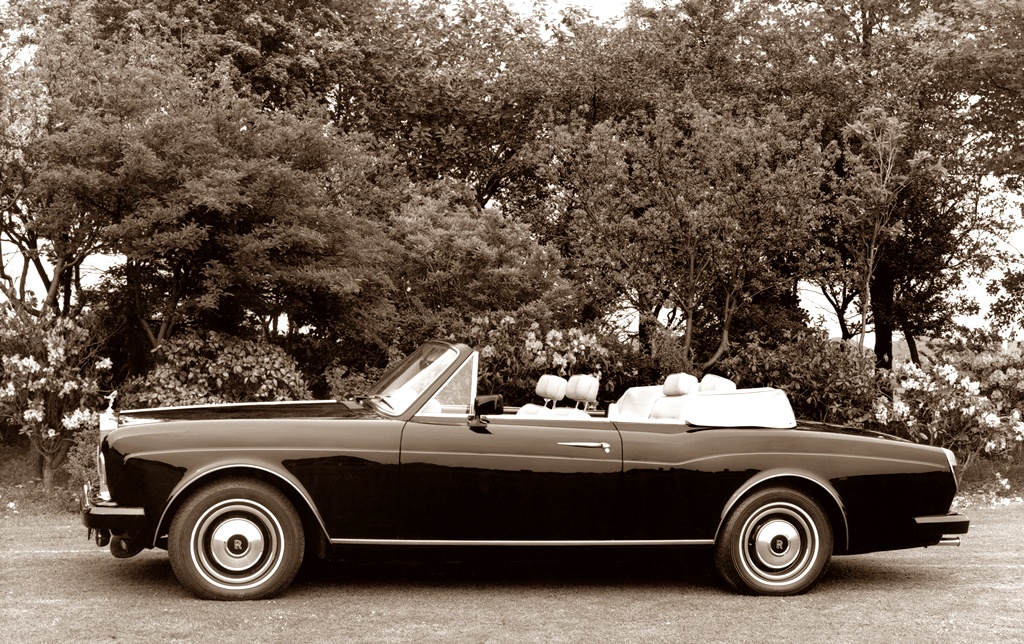
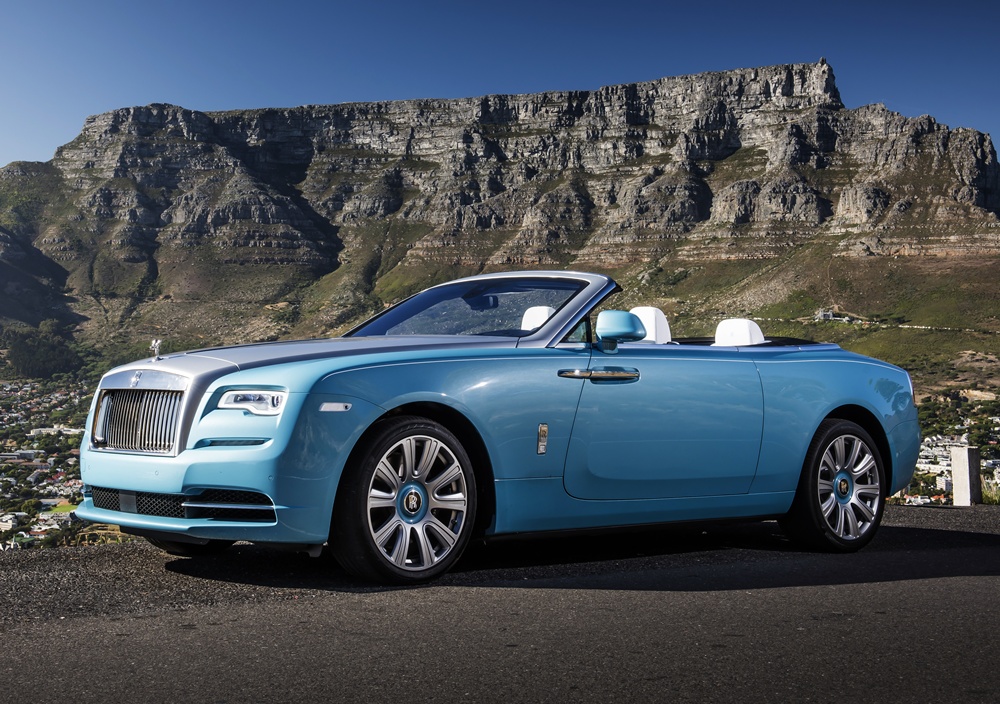
New chapter
With the announcement of Project Nightingale as an ambitious production concept, Rolls-Royce signals a new chapter for the brand’s coachbuilding division that sees a new convertible being created for the inaugural Coachbuild Collection.
![Rolls-Royce Project Nightingale [2026]](https://www.motaauto.com/wp-content/uploads/2026/04/Project-Nightingale-Rolls-Royce-2026-7.jpg)
The open-top car moves away from the one-off approach towards a highly limited series of 100 units. The project draws its identity from the history of Henry Royce himself, specifically Le Rossignol, the villa on his French Riviera estate where his design and engineering teams stayed during the winter months.
Design language
The design language of Project Nightingale is rooted in the Streamline Moderne movement of the late Art Deco era. This design philosophy emphasizes long, horizontal lines and aerodynamic forms, resulting in a monolithic appearance that prioritizes sheer surface discipline over traditional ornamentation.
By utilizing the proprietary Architecture of Luxury aluminium spaceframe, the designers have maintained the imposing scale expected of the brand while stripping away visual clutter to achieve a more contemporary silhouette.
![Rolls-Royce Project Nightingale [2026]](https://www.motaauto.com/wp-content/uploads/2026/04/Project-Nightingale-Rolls-Royce-2026-5.jpg)
![Rolls-Royce Project Nightingale [2026]](https://www.motaauto.com/wp-content/uploads/2026/04/1928-Rolls-Royce-17EX.jpg)
History plays a significant role in the technical DNA of this exclusive model, which takes direct inspiration from the experimental EX prototypes of the 1920s. Specifically, the 16EX and 17EX prototypes developed in 1928 provided the blueprint for the car’s torpedo-like proportions.
![Rolls-Royce Project Nightingale [2026]](https://www.motaauto.com/wp-content/uploads/2026/04/Project-Nightingale-Rolls-Royce-2026-13.jpg)
These early performance-oriented models were characterized by their long bonnets and low-slung cabins, a profile that the modern project replicates through its 5.76-metre length and dramatically raked windscreen.
The front elevation of the car introduces a departure from the cooling requirements of traditional internal combustion engines. This underlines the transition to an all-electric drivetrain which has allowed for expansive, uninterrupted surfaces on the front wings.
![Rolls-Royce Project Nightingale [2026]](https://www.motaauto.com/wp-content/uploads/2026/04/Project-Nightingale-Rolls-Royce-2026-12.jpg)
The iconic Pantheon Grille has been reimagined as a stainless-steel form nearly a metre in width, with the Spirit of Ecstasy figurine integrated directly into the metalwork. Beneath the grille, a carbonfibre apron and a structured plinth provide a grounded, architectural foundation reminiscent of Art Deco skyscrapers.
![Rolls-Royce Project Nightingale [2026]](https://www.motaauto.com/wp-content/uploads/2026/04/Project-Nightingale-Rolls-Royce-2026-9.jpg)
In profile, the car is defined by a single continuous hull line that runs from the front pinnacles to the trailing edge of the rear deck. This high waistline creates a sense of enclosure for the occupants, who sit deep within the chassis. To maintain the purity of the bodywork, engineers developed hidden door handles and integrated locking mechanisms that do not interrupt the flow of the metal.
The presence of 24-inch wheels provides a muscular contrast to the grace of the upper body, featuring a directional design influenced by the propellers of a ship.
![Rolls-Royce Project Nightingale [2026]](https://www.motaauto.com/wp-content/uploads/2026/04/Project-Nightingale-Rolls-Royce-2026-8-scaled.jpg)
The rear features a specialized compartment known as the Piano Boot, which utilizes a cantilevered mechanism to open sideways. This functional element is paired with a vertical tail lamp treatment and a central longitudinal brake light that echoes the speed stripes found on mid-century streamliners.
![Rolls-Royce Project Nightingale [2026]](https://www.motaauto.com/wp-content/uploads/2026/04/Project-Nightingale-Rolls-Royce-2026-2.jpg)
A carbonfibre Aero Afterdeck diffuser manages airflow beneath the car, a component made possible by the absence of a traditional exhaust system, ensuring aerodynamic stability without the need for a prominent spoiler.
Shift to electric propulsion
The shift to electric propulsion has fundamentally altered the acoustic environment of the cabin. Without the inherent mechanical vibrations of a V12 engine, the development team focused on the sensory experience of open-air motoring.
Special attention was paid to the sound-deadening properties of the soft-top roof, which uses a composite of cashmere and high-performance fabrics to manage ambient noise. The goal was to create a space where the sounds of the external environment become the primary soundtrack for the journey.
![Rolls-Royce Project Nightingale [2026]](https://www.motaauto.com/wp-content/uploads/2026/04/Project-Nightingale-Rolls-Royce-2026-3.jpg)
Starlight Breeze illumination
Within the seating space, the designers introduced the Starlight Breeze illumination system, which consists of 10,500 individual fiber-optic points. This pattern was derived from the sound-wave analysis of actual nightingale songs, creating a celestial field that wraps around the driver and passenger. The illumination is housed within a structural horseshoe form that rises behind the seats, providing a protective architectural gesture that defines the 2-seat interior.
![Rolls-Royce Project Nightingale [2026]](https://www.motaauto.com/wp-content/uploads/2026/04/Project-Nightingale-Rolls-Royce-2026-11.jpg)
The cabin materials and controls reflect a minimalist approach to luxury, with a primary focus on tactile interaction. The centre console features a sliding leather armrest that reveals a Spirit of Ecstasy rotary controller when moved. This controller, along with other interior hardware, is finished in faceted and glass-blasted stainless steel.
![Rolls-Royce Project Nightingale [2026]](https://www.motaauto.com/wp-content/uploads/2026/04/Project-Nightingale-Rolls-Royce-2026-4.jpg)
For the presentation model, the exterior is finished in Cote d’Azur Blue, a solid pale shade infused with red flakes that pay homage to the red badges found on the historical experimental models. This is paired with an interior palette of Charles Blue and Grace White leathers.

Global test program
Technical validation for Project Nightingale is scheduled to begin from the middle of this year, involving a global testing program to refine the electric drivetrain and the unique manufacturing techniques required for its complex bodywork.
While the car is currently a production concept, it serves as a functional prototype for the 100 production units that will eventually follow. These cars will be hand-assembled utilizing specialized tools currently under development.
![Rolls-Royce Project Nightingale [2026]](https://www.motaauto.com/wp-content/uploads/2026/04/Project-Nightingale-Rolls-Royce-2026-1.jpg)
First deliveries in 2028
The first deliveries of this Coachbuild Collection will begin in 2028, following the conclusion of the multi-year development cycle. This project marks the formal start of a long-term strategy to integrate bespoke coachbuilding with the brand’s transition towards a fully electric future.