

By now, many people know about GR, Toyota’s brand for high-performance models and motorsport. Starting from an unofficial racing team in 2007 called GAZOO Racing at Nurburgring (with current Chairman Akio Toyoda as one of the members), the name would come to be used for a new brand that would encompass not just global motorsport activities but also develop high-performance models.
Today, the GAZOO name and GR brand have spread almost worldwide and Malaysia was among the early markets outside Japan to introduce it. The introduction coincided with the launch of the GR Supra and also a one-make series called the Vios Challenge (now known as the Toyota Vios Gold Championship) which is extremely successful.
The local GR ecosystem includes dedicated GR Garage outlets, the GR Velocity Esports Championship sim-racing series, and a Young Talent Development Program.
![GR Kart [2026]](https://www.motaauto.com/wp-content/uploads/2026/09/GR-Kart-2026-2.jpg)
For younger drivers and families
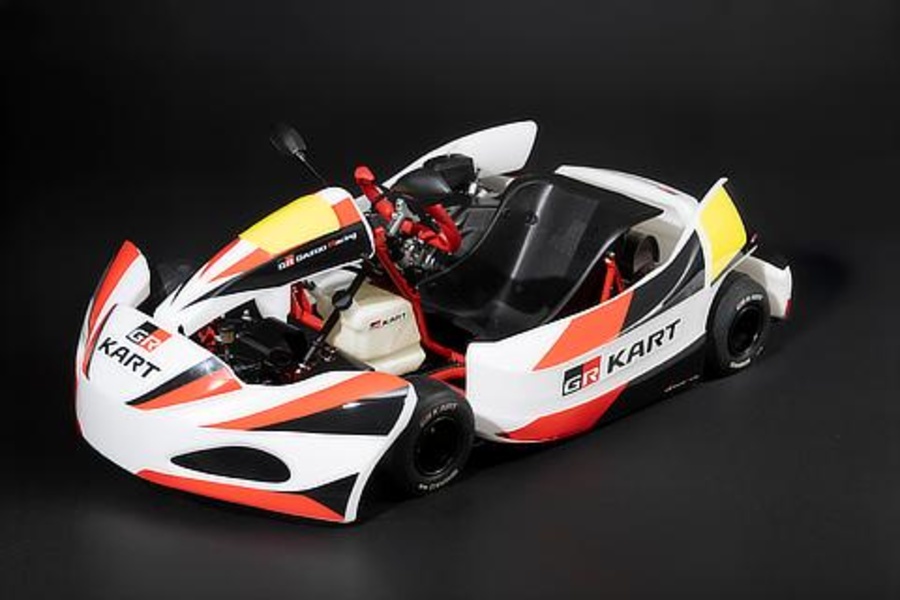
Thus far, GR has been associated with cars and now it adds a purpose-built, entry-level racing kart called the GR Kart. Engineered to lower the financial and operational barriers to grassroots motorsport – a key philosophy of the Vios Challenge – the chassis is developed specifically for younger drivers and families. It represents a deliberate shift by the manufacturer toward expanding motorsport participation from the absolute foundation.
Many of today’s top racing drivers began in karting, though those who have excelled in sim racing are also quite skilled. This has been evident with the rookies of GAZOO Racing Malaysia’s Young Talent Development Program who have very quickly transitioned into real-world racing.
![GR Kart [2026]](https://www.motaauto.com/wp-content/uploads/2026/09/GR-Kart-2026-3.jpg)
Ease of use
While GR’s car models like the GR Supra, GR Yaris, GR86, and GR Corolla bring developments in motorsport to high-performance production vehicles for the road, the GR KART returns the focus to the absolute root of motorsport. Engineering priorities for the chassis centre on practical transportability, durability, and reduced running costs.
![GR Kart [2026]](https://www.motaauto.com/wp-content/uploads/2026/09/GR-Kart-2026-1.jpg)
The kart, with an overall length of 1820 mm and 1160 mm width, is sized specifically to fit inside standard mid-size MPVs, with upright garage storage capability to minimize space requirements.
![GR Kart [2026]](https://www.motaauto.com/wp-content/uploads/2026/09/GR-Kart-2026.jpg)
Simplified design
Mechanical simplicity was prioritized throughout the design to eliminate the need for specialized pit crews. The chassis features extensive adjustment range at the pedal box and steering column, accommodating drivers ranging from children to adults without modifications. Safety features include fully enclosed rear bumpers designed to prevent wheel-climbing incidents in close-quarters kart racing.
![GR Kart [2026]](https://www.motaauto.com/wp-content/uploads/2026/09/GR-Kart-2026-5.jpg)
The 215 cc 4-stroke engine also has a built-in, self-charging battery, eliminating the need to mount a separate battery and the hassle of charging a battery.
![GR Kart [2026]](https://www.motaauto.com/wp-content/uploads/2026/09/GR-Kart-2026-4.jpg)
Additionally, a weight box capable of holding up to 15 kgs of ballast for racing allows easy adjustment of the kart’s weight and includes a place to install a transponder. Top speed is governed to approximately 60 km/h, placing technical emphasis on chassis dynamics, braking technique, and racecraft rather than outright velocity.

Keeping the price low
To keep retail pricing significantly below traditional competition karts, manufacturing is carried out utilizing automated robotic welding processes borrowed from Toyota’s car factories.
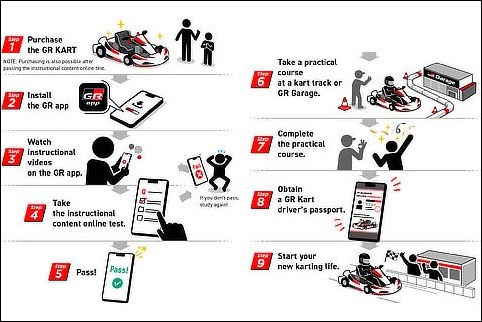
In Japan, it will retail for 385,000 yen (about RM10,200) and does not include a warranty. To support kart owners, there’s a dedicated mobile app offering new owners technical guidance, preventive maintenance tracking, and basic racing instruction.
