
Quick look
-
Hyundai Motor has a strategy which will provide products specifically for the China market, which is justified with the potential volumes.
-
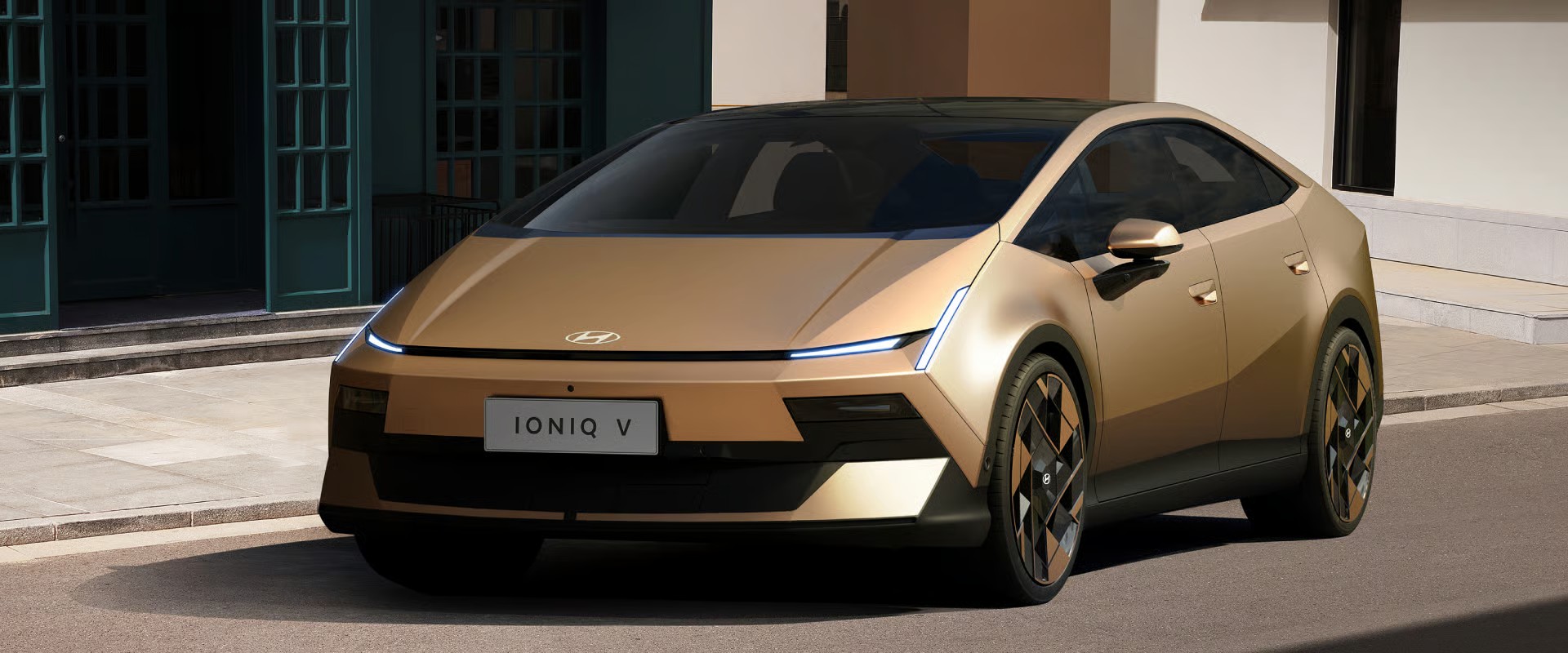
The IONIQ V is part of a 2-pronged launch strategy that will includ a second bodystyle (SUV) under a different name in 2027.
While some automakers are finding it very challenging to compete in China and even scaling back their business, Hyundai Motor is planning a strategic pivot for the China market.
To maintain relevance in the rapidly shifting electrification sector, the Korean automaker will be making a significant departure from previous export-heavy strategies, focusing instead on localized development.
Just for China
The IONIQ V previews how Hyundai will offer future products within the specific requirements of Chinese customers. It is a dedicated production entry that attempts to reconcile global engineering standards with the particular tastes of regional consumer demand – and the China market is big enough to justify such a strategy.
![Hyundai IONIQ V [2026] ev](https://www.motaauto.com/wp-content/uploads/2026/04/Hyundai-IONIQ-V-2026-3.jpg)
Different design direction
The design of the IONIQ V draws heavily from the earlier VENUS Concept, presenting a visual identity the designers refer to as ‘The Origin’. This direction favours a single-curve silhouette, moving away from the more aggressive, multi-faceted surfaces seen in some contemporary competitors.
The exterior is defined by edge lighting that spans the front end, creating a wider visual stance while framing a face that emphasizes a high-tech, streamlined character for the electric era.
Second bodystyle
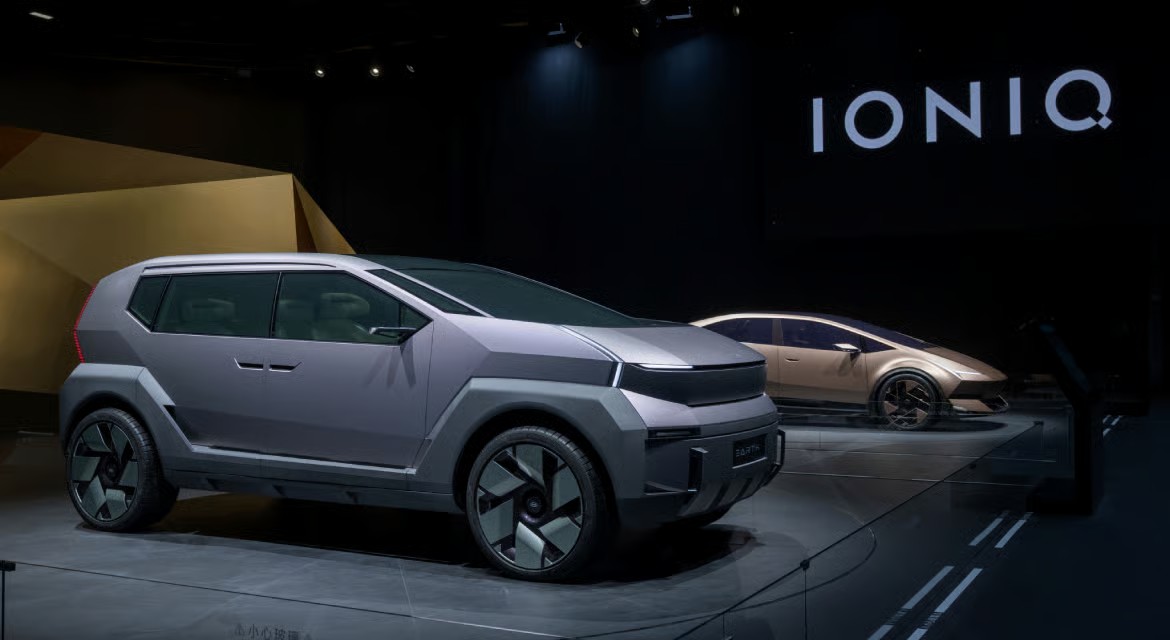
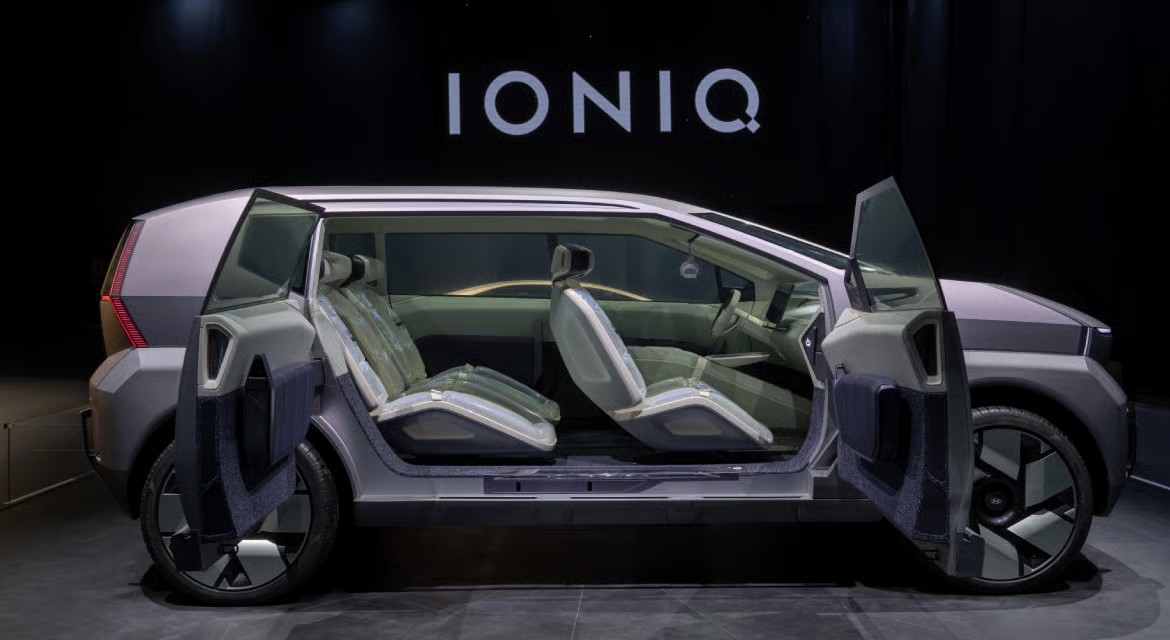
The IONIQ V itself is exclusively a midsize sedan (or fastback), but it is part of a 2-pronged launch strategy that introduces a second bodystyle under a different name. This is the EARTH Concept which has a rugged SUV bodystyle and the production version will be in the first half of 2027.
Spiritual successor to IONIQ 5
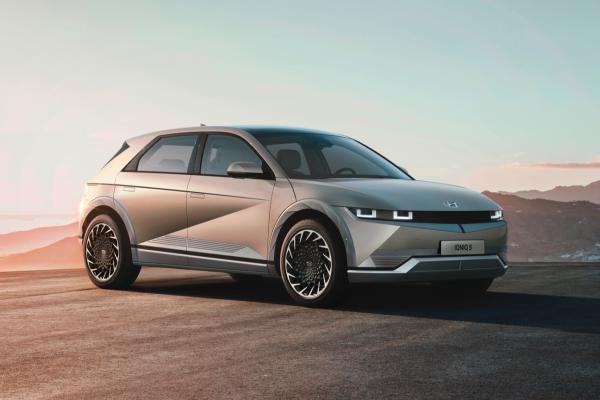
In many ways, the IONIQ V is a spiritual and technical successor to the IONIQ 5, which served as one of Hyundai’s foundational EVs. While the IONIQ 5 was admired for its retro-futuristic, pixel-inspired design and E-GMP flexibility, the IONIQ V adopts a more fluid, integrated approach.
The transition from the sharp angles of the 5 to the smooth contours of the V suggests a shift toward greater aerodynamic efficiency and a different interpretation of premium positioning.
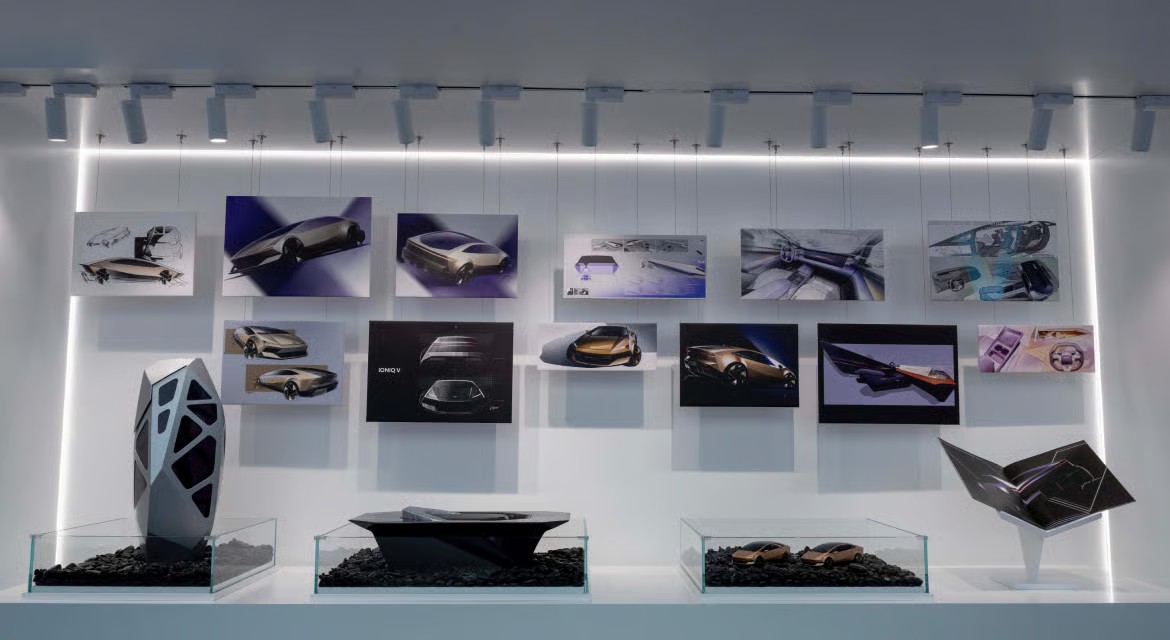
With a body length of 4900 mm and a 2900 mm wheelbase wheelbase, the IONIQ V occupies a larger footprint than its predecessors. This increased dimension is directly translated into cabin volume, where the interior architecture has been optimized for passenger comfort.
The use of a wraparound layout aims to minimize visual clutter, providing a more cohesive environment that reflects a shift from traditional car interiors toward a more lounge-like atmosphere.
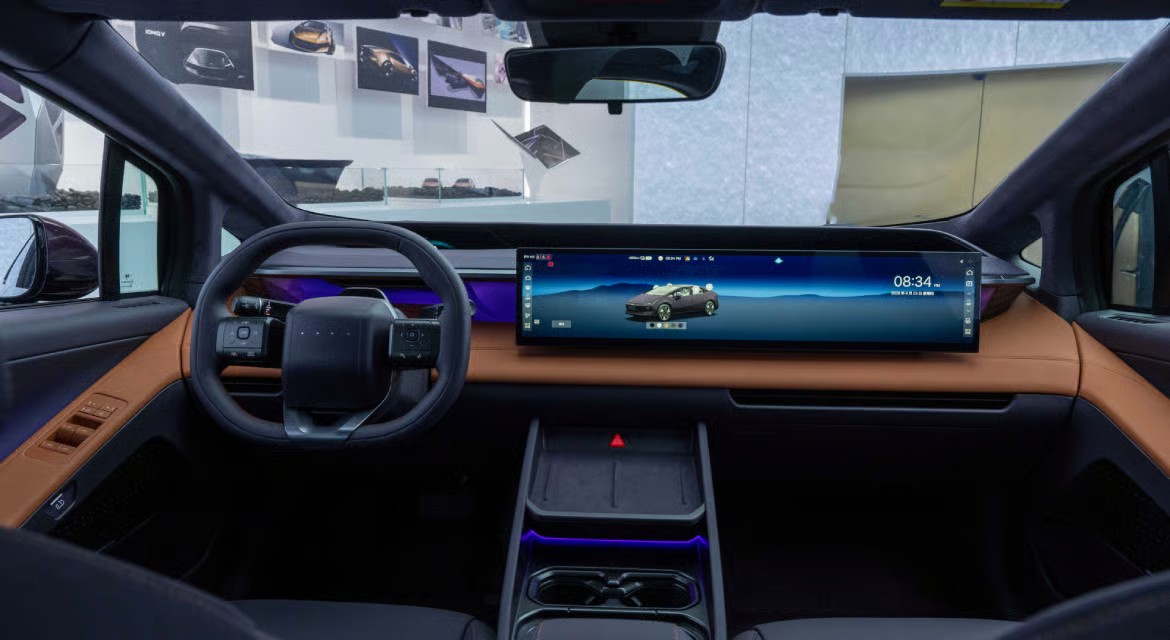
The technological core of the cabin is centered around a 27-inch panoramic 4K display. This hardware integrates both the primary instrument cluster and the secondary infotainment interfaces into a single, ultra-thin unit. By consolidating these functions, the dashboard maintains a low profile, which, when combined with the Horizon head-up display, allows for a more unobstructed view of the road ahead, reducing the information load on the driver during operation.
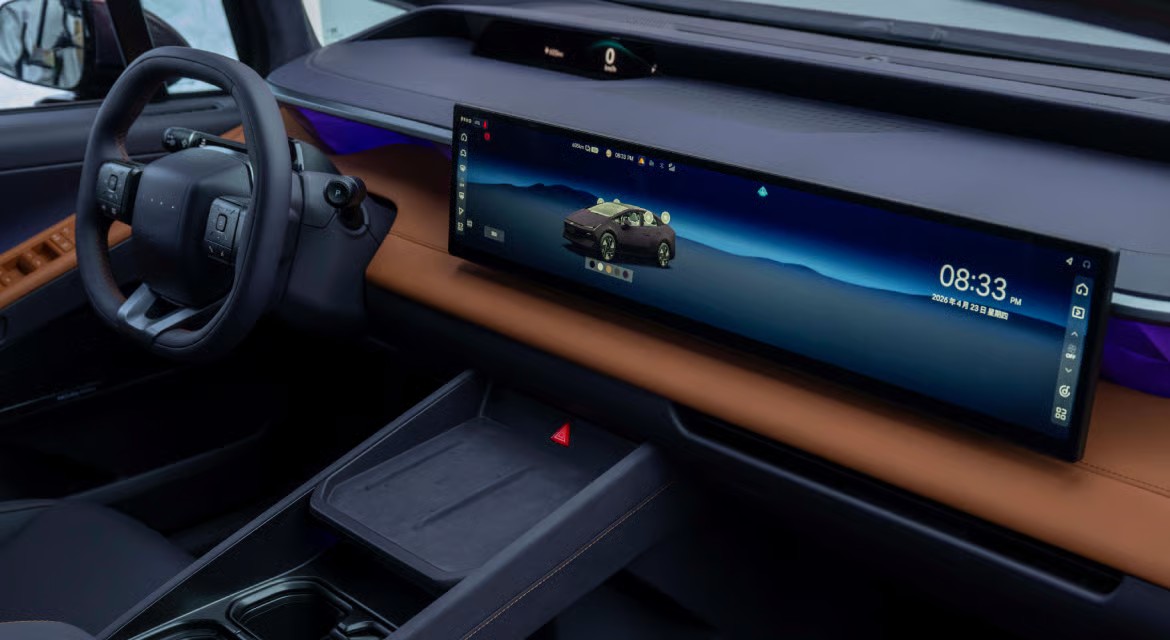
Powerful computational capabilities
Computational power for these systems is provided by the Qualcomm Snapdragon 8295 chipset, which handles the complex processing required for the vehicle’s smart assistant. This assistant utilizes a large language model to facilitate interaction, moving beyond basic voice commands toward a more responsive interface.
This integration is a response to the high expectations for digital connectivity in the local market, where the interface is often as critical as the mechanical performance.

On the safety front, the IONIQ V incorporates a reinforced body structure designed to manage the specific weight distributions of a large battery pack. Beyond structural strength, the EV features a 9-airbag system and a specific pedal misapplication safety assist.
Automated driving capabilities are also present through a partnership with Momenta providing the hardware and software logic for the car’s assistance systems. By utilizing localized software expertise, the IONIQ V attempts to offer a more predictable and smoother driver-assistance experience than systems developed for general global use.
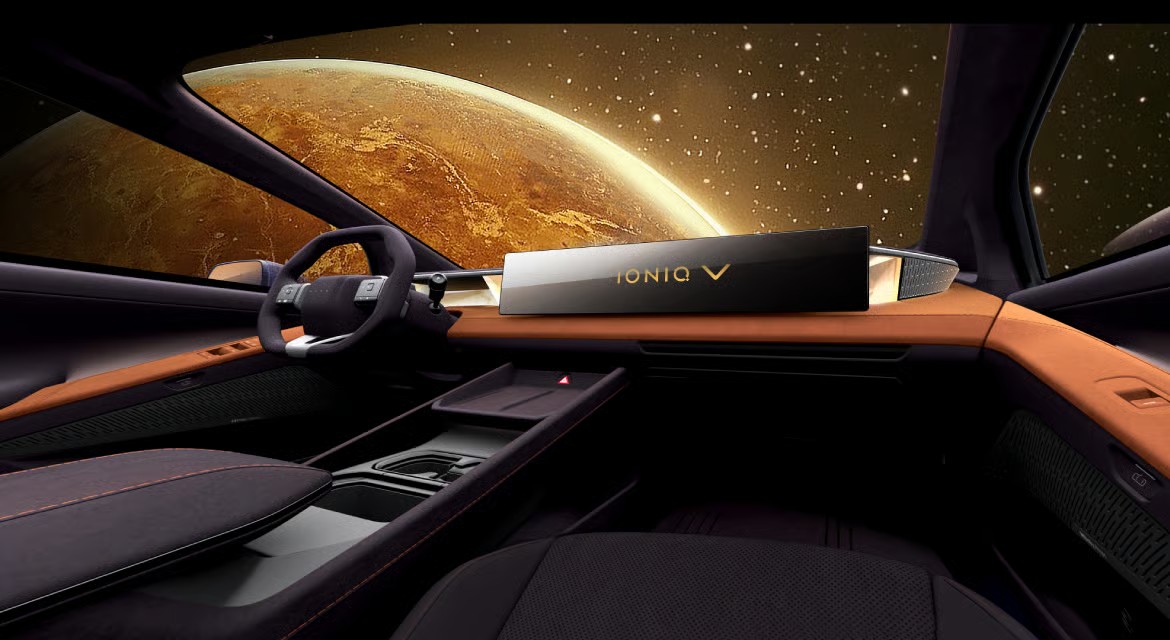
Performance metrics indicate a focus on endurance, with the long-range variant achieving over 600 kms on a single charge. The chassis has been tuned with an emphasis on vibration dampening and noise reduction, utilizing specific suspension settings to manage the constant variations of road surfaces.
First of many steps in China
Ultimately, the IONIQ V represents the first of many steps by Hyundai in a broader roadmap that seeks to integrate more deeply into the regional supply chain and innovation ecosystem.
“China is an essential market for Hyundai Motor Company. The world’s most demanding EV consumers, the fastest development cycles, the deepest battery supply chain, and an advanced innovation ecosystem. That is why we are tripling down on our commitment to China,” explained Jose Munoz, President & CEO of Hyundai Motor Company.
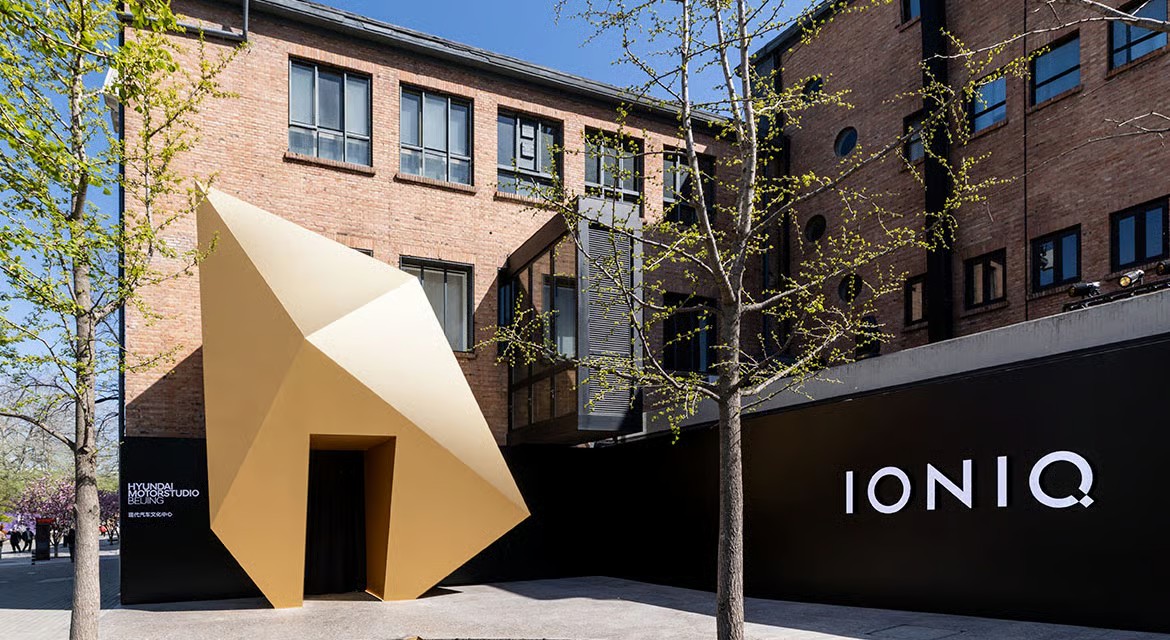
“With significant investments into Beijing Hyundai, 20 new models coming over the next 5 years, the official launch of our IONIQ brand in China and the unveiling of IONIQ V, this is the most committed, the most ambitious, and the most exciting chapter we have ever written in this market,” he declared.