
Quick look
-
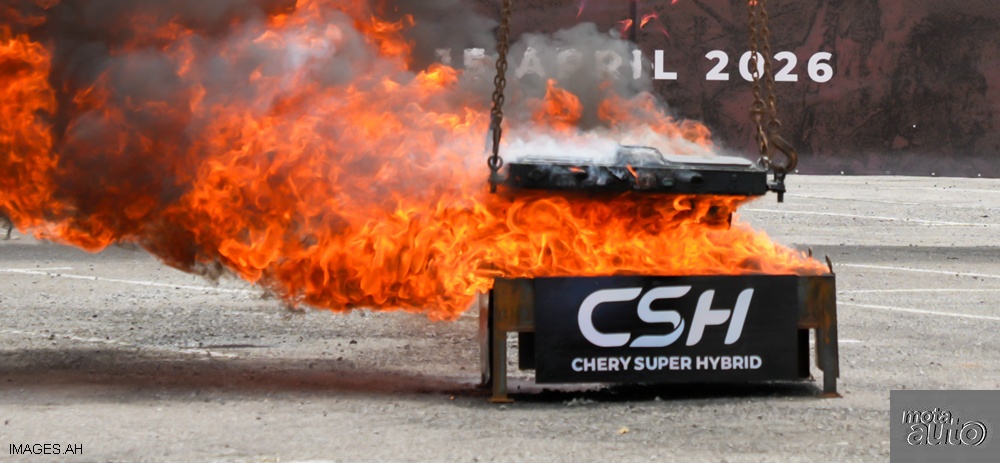
A high-voltage battery from the Chery Super Hybrid (CSH) system was subjected to a 1,000° C. petrol fire for 80 seconds, a temperature high enough to melt glass and silver.
-
By remaining structurally intact and not catching fire itself, the battery proved it would not intensify an external vehicle fire, allowing occupants with vital time to escape.
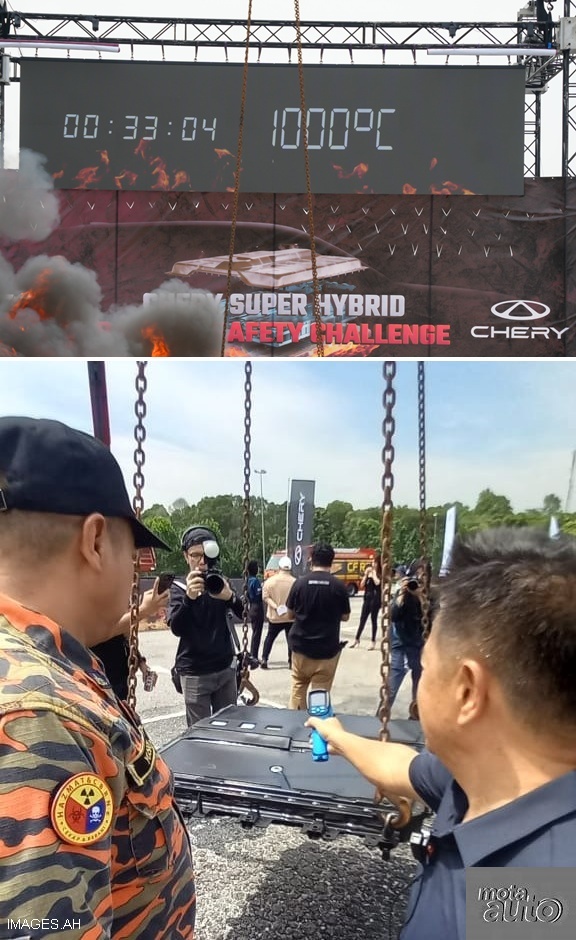
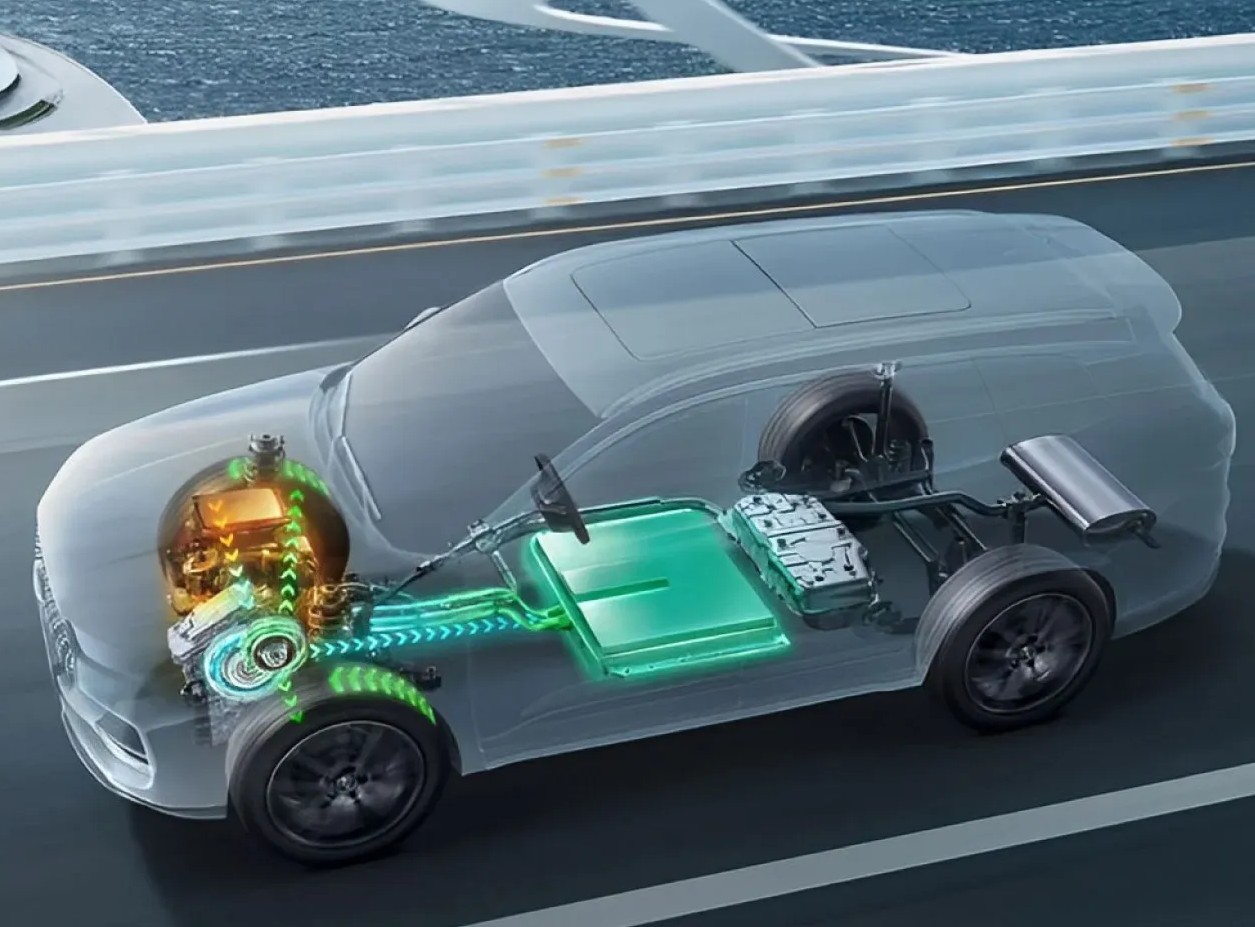
Chery Malaysia today demonstrated the safety of the battery in the Chery Super Hybrid (CSH) system of its PHEV models (TIGGO 7 and TIGGO 8) by placing it in a 1,000-degree C. petrol fire for 80 seconds. The battery did not burn or explode – important assurance for owners whose vehicle may catch fire (due to other causes).
What does the test show?
What does enduring 80 seconds in a 1,000-degree C. fire means to the consumer? Firstly, 1,000 degrees will melt glass, pure aluminium, lead, silver and vapourise plastic so the fact that the entire battery casing remained intact – not even distorted – is very significant.
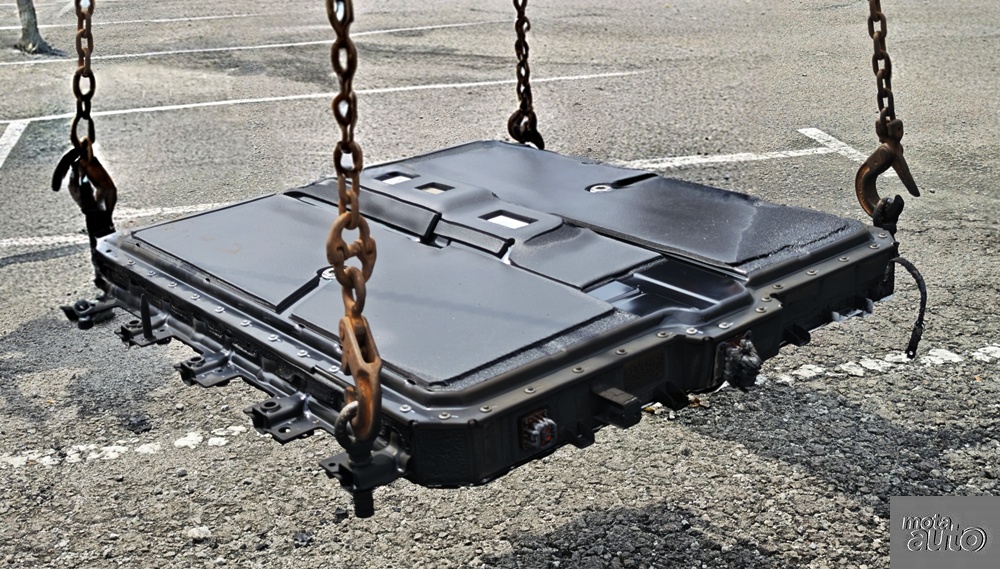
The important point to understand is that the battery did not itself catch fire, a major concern of high-voltage batteries that can have ‘thermal runaway’ (catching fire) if not well designed. A battery that catches fire in, say, an accident will start a fire that burns the rest of the car. If it does not start a fire, then the occupants have a better chance of getting out (unless they are seriously injured).
We were told that the battery was a new one and had some charge in it, and this charge was still there after the test. Of course, the battery was not usable as the fire melted the connectors but in a real-world scenario, lives could be saved by it not starting a fire.
Part of global campaign
The demonstration in Malaysia, observed by 100 government officials, BOMBA personnel and media, is one of a number of global demonstrations which have seen batteries subjected to extreme challenges that can be encountered during real-world motoring.
In Indonesia, a battery pack was immersed in seawater for 53 hours, testing resistance to corrosion and electrical isolation in highly humid and saline conditions. When that test ended, the same battery was installed in a Chery SUV which ran as normal.
It is unlikely that the battery pack in a Chery would be directly targeted by someone with a gun. But in Ecuador, Chery used such a scenario to show the strength of its battery. Bullets from pistols and even a machine gun were fired at the battery and it did not blow up or break.
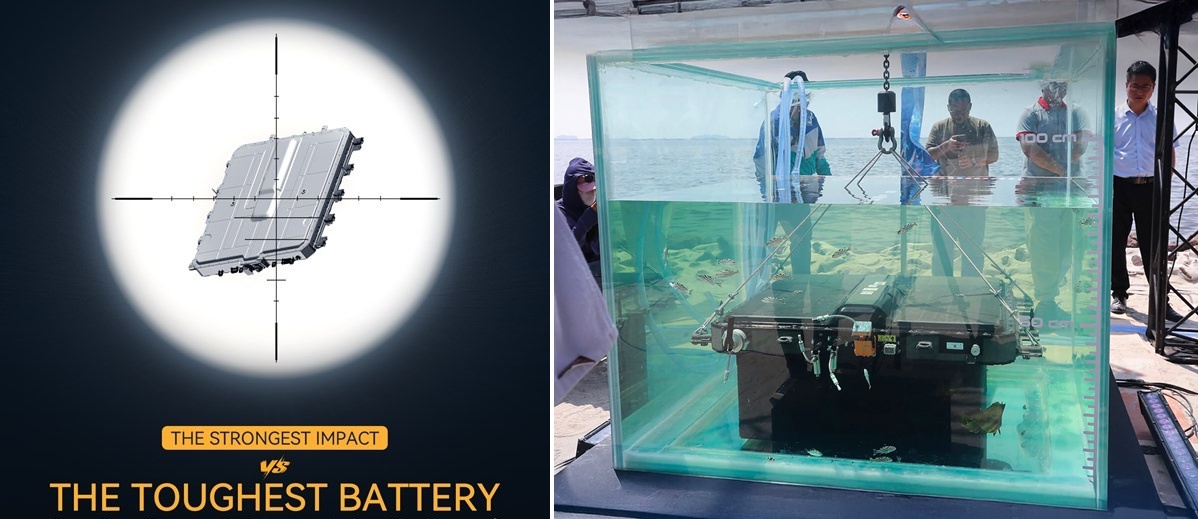
In the Middle East, two tests were conducted in totally opposite extremes. In Qatar, a battery was subjected to 60-degree seawater immersion for 48 hours, while in Kuwait, it was buried in the desert sand under the hot sun for 48 hours. In both cases, the batteries were in operable condition when the tests ended.
A test in Mexico showed the protection provided for the battery pack under the vehicle. Driven at speed along a road, the underside hit against an object sticking out of the road. Though there was a scrape mark, the battery itself was intact.

These tests done worldwide in front of public audiences show how Chery is taking another approach to proving the safety of the hardware in its electrified models. Rather than just stating test results, the events have validated the claims of thermal stability and structural strength.
Strengthening consumer confidence
“Safety is at the core of our development process. Beyond meeting regulatory requirements, we conduct rigorous and extreme validation tests, and we demonstrate these tests publicly to help people understand the technology, the standards behind it, and why we are confident in its safety,” said Men Lin Bo, Executive Vice-President of Chery Corporate Malaysia.
He added that with every Safety Challenge conducted, Chery continues to strengthen consumer confidence, improve engineering processes and set higher benchmarks for the automotive industry.