
Quick look
-
Technology for portfolio-wide implementation of circular economy and decarbonization principles.
-
Using recyclable mono-materials for parts is one innovation.
-
Low-carbon aluminium, already in use, has 70% lower CO₂ emissions than the European average.
Concept cars are 3-dimensional representations of what automakers are thinking about for their next generation of products. While some are just design studies, there are many which are based on technologies under development and utilise new and innovative materials.
Strategic shift
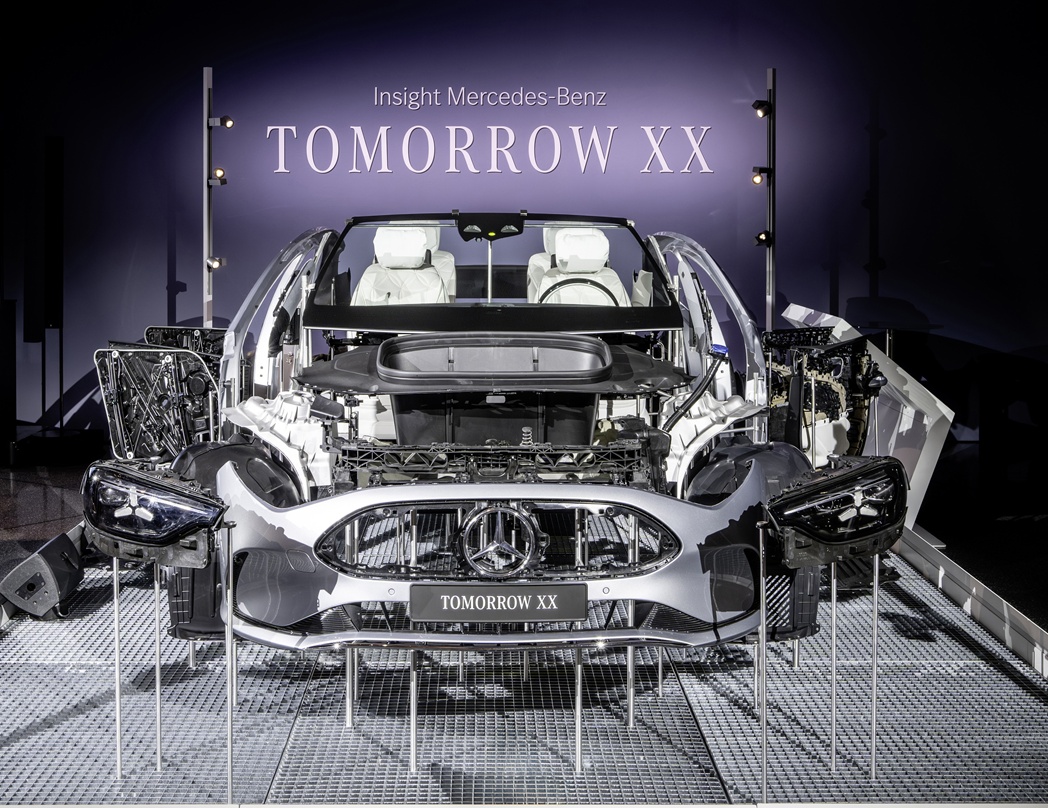
The Mercedes‑Benz Tomorrow XX technology programme, for example, represents a strategic shift from concept car experiments to a portfolio-wide implementation of circular economy and decarbonization principles.
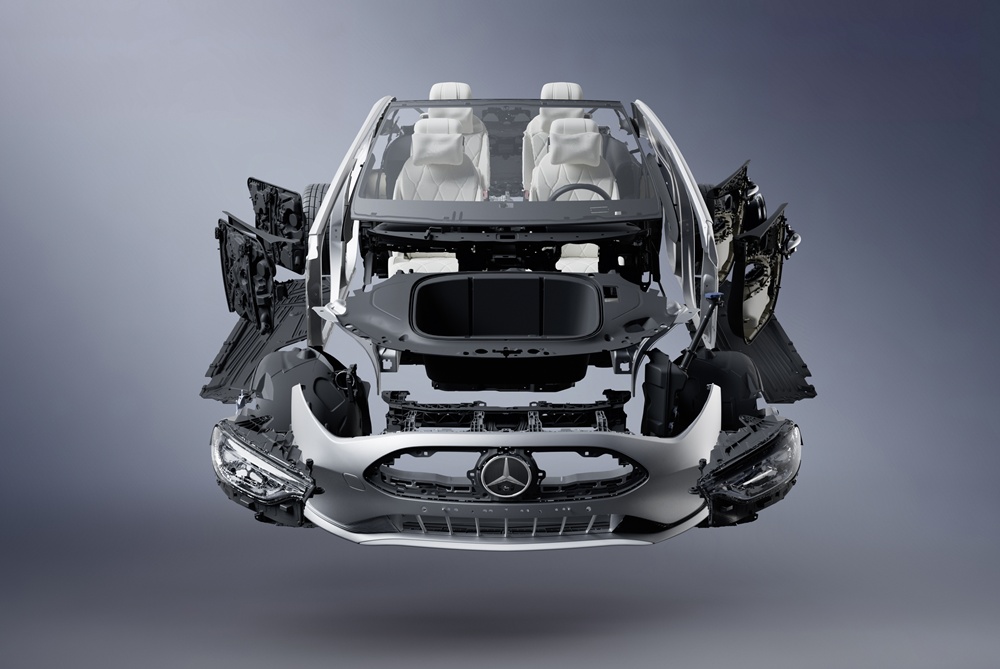
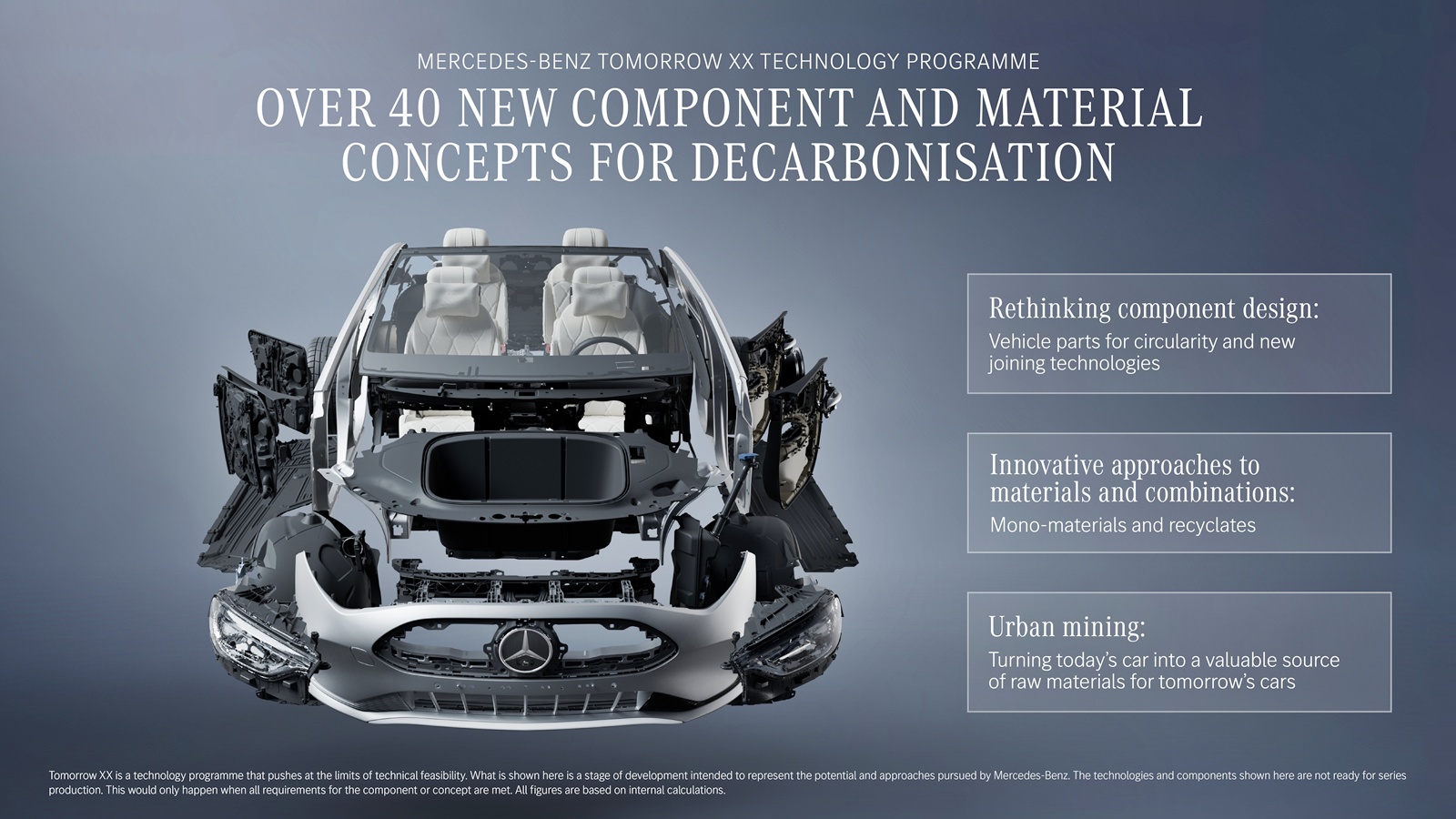
A core pillar of Tomorrow XX is rethinking how parts are put together so they can be taken apart. This shifts the focus from ‘recycling’ (which often destroys material quality) to ‘repairing’ and ‘high-quality reuse’. In a way, it is a return to the practice of earlier years where parts were not readily discarded and instead repaired and used again.
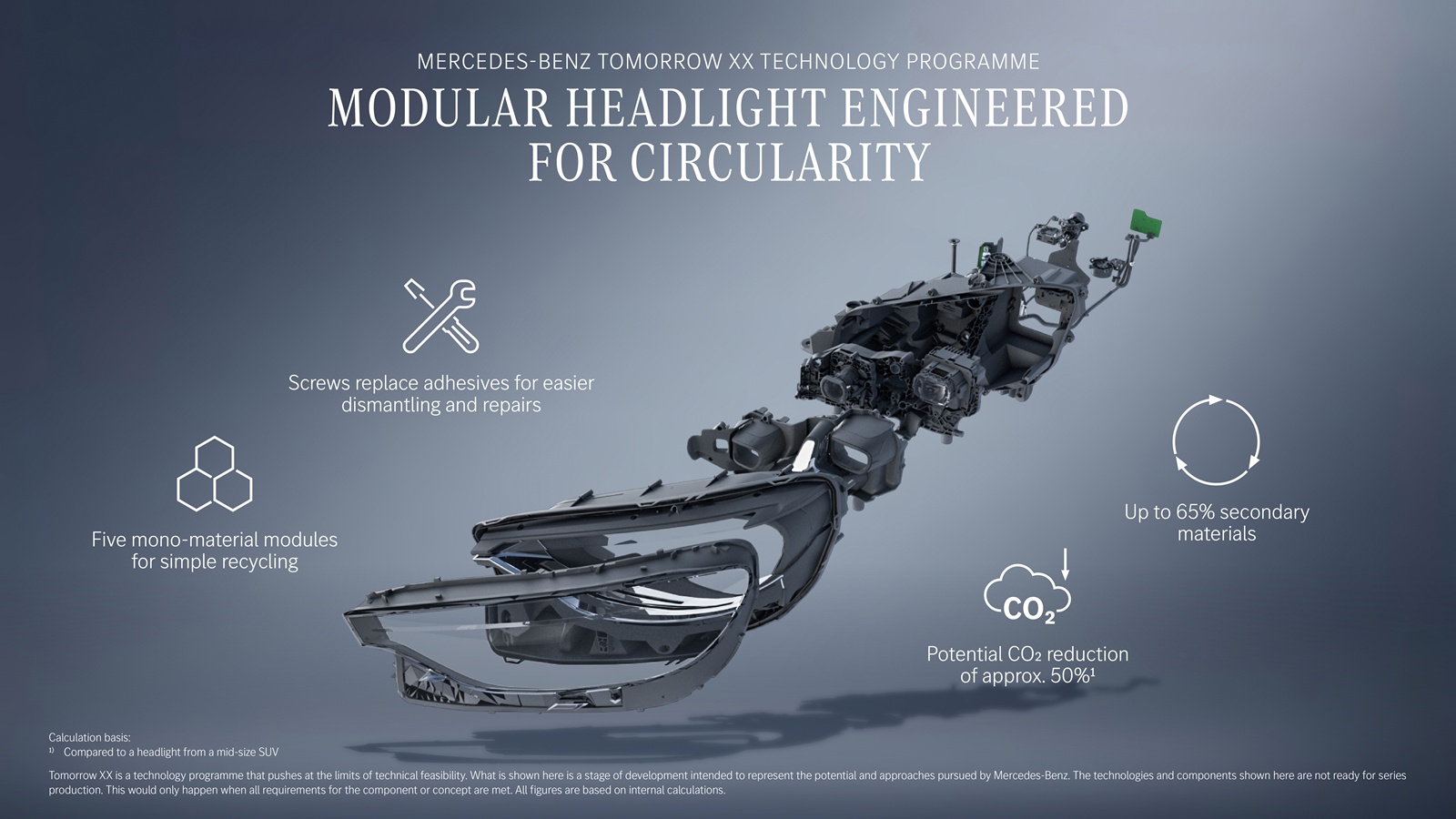
One example Mercedes-Benz researchers have been looking at is recyclable headlights. Moving away from permanent adhesives to screw-based assembly, this allows for the replacement of a single lens after a stone chip rather than the entire unit.
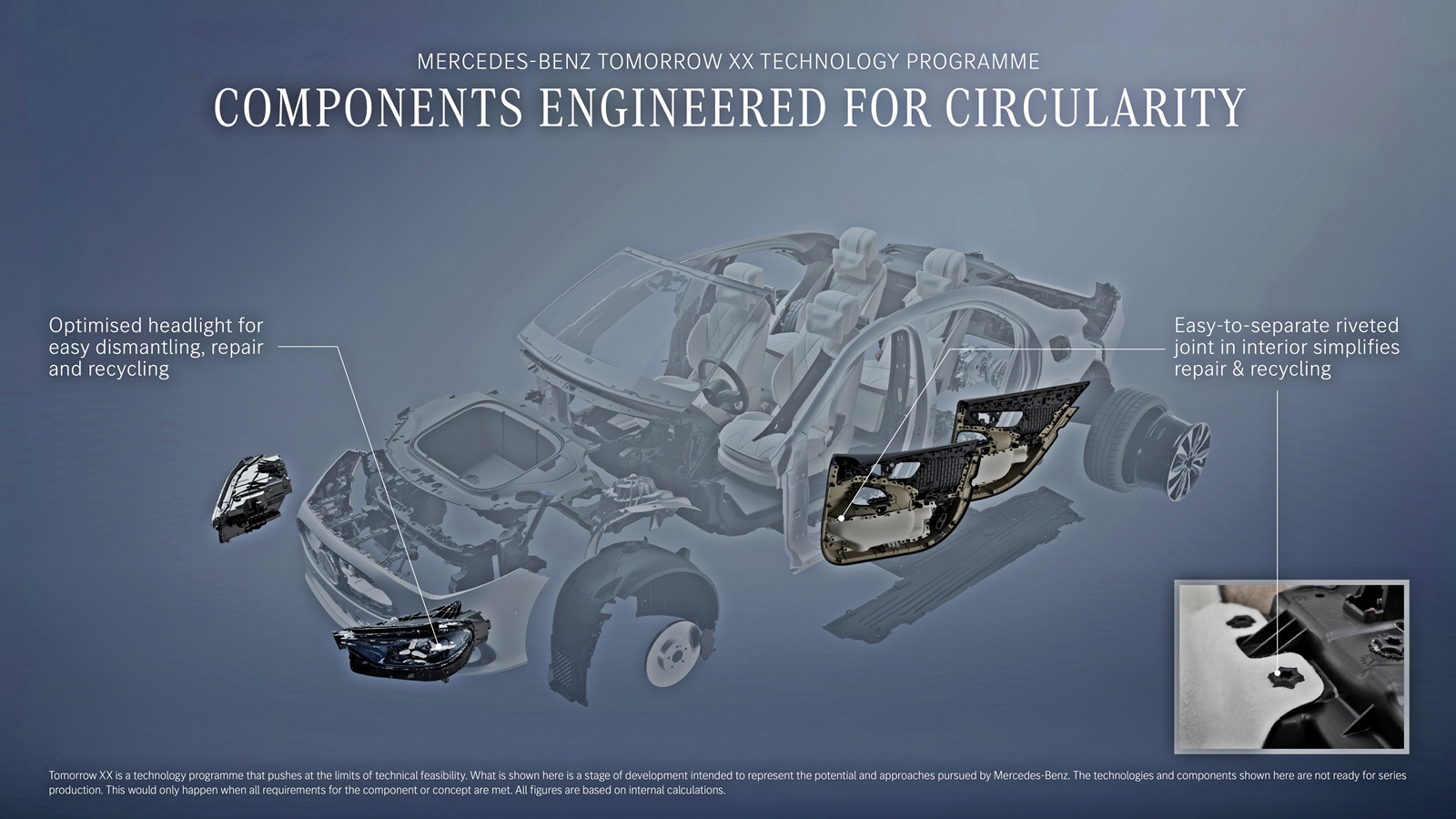
Thermoplastic rivets are another idea where ultrasonic welding in interior door panels is replaced with rivets that can be undone. This allows for the fast, damage-free separation of components at the end of a vehicle’s life.
On average, a modern Mercedes‑Benz contains around 250 kgs of plastic. Many of these components consist of mixed plastics, which can only be mechanically recycled to a limited extent and are therefore often thermally recycled. Recovering them for use in high-quality products is usually not possible.
Replacing primary resources
The Tomorrow XX technology programme focuses on accelerating the use of mono-materials, while also replacing primary resources with secondary materials. Applying mono-material philosophy, a single type of plastic (like the PET mono-sandwich) for complex parts can be used. This eliminates the need for separation before recycling, ensuring the plastic remains high-grade for its next life.
Aluminium plays a central role in vehicle architecture. However, the production of this material is one of the most energy-intensive industries in the world. To significantly reduce its emissions in the long term, Mercedes‑Benz is working with technology partners to pursue multi-stage transformation across the entire value chain.
Using alternative energy sources
The company is making the switch to alternative energy sources part of its procurement criteria. 40% of the aluminium for the new CLA is already produced in electrolysis plants using renewable energies. This delivers a reduction of around 400 kilograms of CO₂ per vehicle in comparison to the preceding non-electric model.

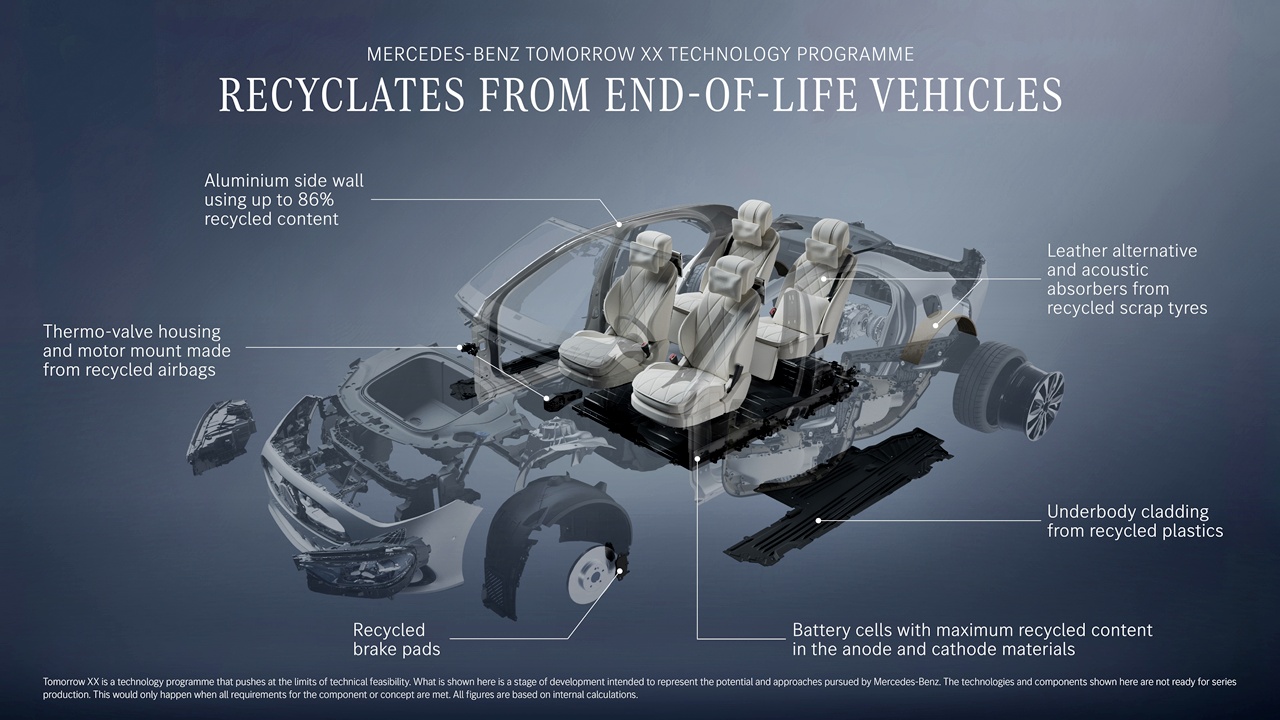
In addition, Mercedes‑Benz is already using low-carbon aluminium in series production. Sourced from strategic partner Hydro, it has 70% lower CO₂ emissions than the European average. By 2030, the partners want to reduce the carbon footprint even further – by around 90%.
Alongside aluminium, steel is a material that is likewise carbon-intensive to produce. That’s why Mercedes‑Benz is targeting innovative technologies and partnerships with leading steel manufacturers. The focus is on processes that can avoid greenhouse gas emissions almost completely.
The core of this development is the replacement of the classic blast-furnace route. The alternative combines hydrogen-based direct reduction with the use of electric-arc furnaces and a higher scrap content. If this process is powered entirely by renewable energy, CO₂ emissions can be reduced to a minimum, resulting in virtually zero-carbon steel.
Steel used for components that are visible to customers has the most demanding surface-finish requirements. Currently, this is produced primarily using 16% to 25% pre-consumer scrap content. Tests with material containing a proportion of post-consumer scrap are currently delivering very promising results. This specially processed post-consumer scrap comes exclusively from end-of-life vehicles.
End of life materials
At the end of their life, materials should not be a problem but a resource. Mercedes‑Benz therefore wants to use end-of-life vehicles strategically as an urban source of raw materials. The company wants to close value chains and recover secondary raw materials for use in new Mercedes‑Benz vehicles.
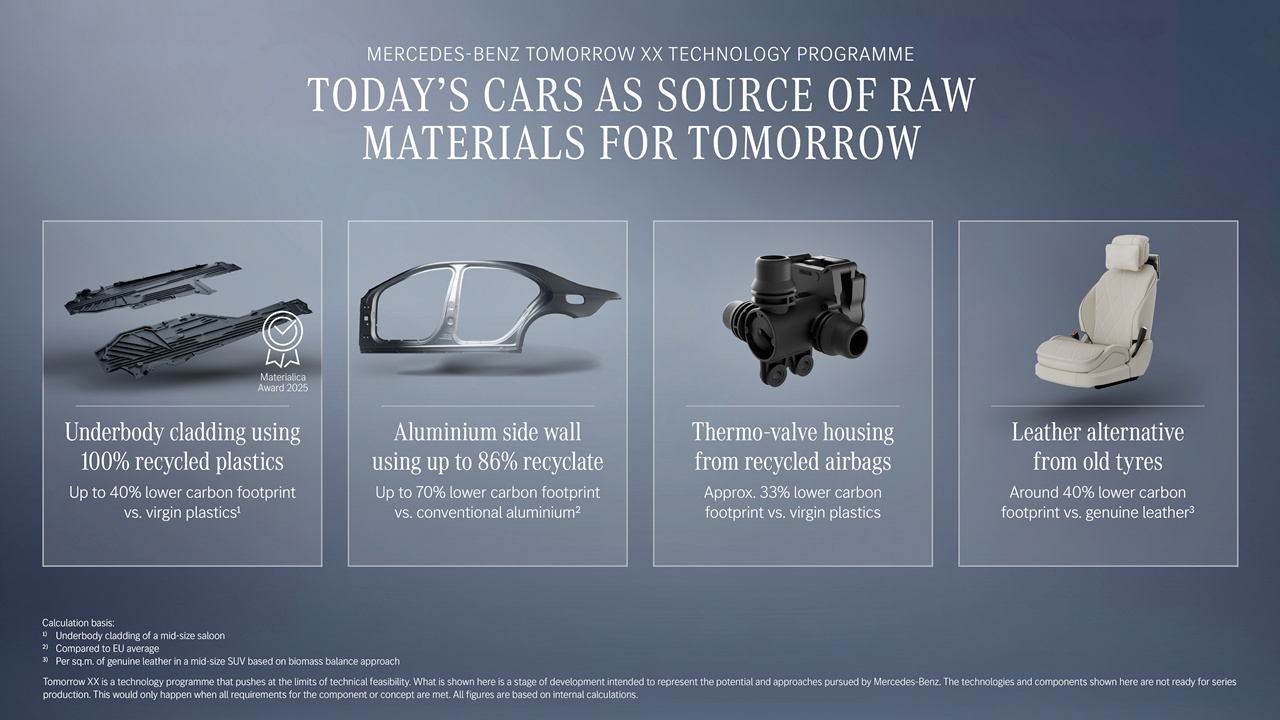
Scrap tyres offer great potential. With the help of biotechnology, plastic recyclate based on old tyres can also be used to produce a high-quality leather alternative. Combining it with bio-based proteins creates an innovative material that resembles real leather in composition and structure. Compared to real leather, the carbon footprint is around 40% lower – and, the content based on plastic recyclate can be recycled again.
In addition to chemical recycling, used tyres can also be mechanically recycled. Mercedes‑Benz is working on producing absorbing materials from shredded old tyres, with one possible use for their fibres being acoustic insulation. These absorbers are welded directly onto the underbody cladding as vibration dampers.
As part of Tomorrow XX, Mercedes‑Benz R&D has developed a brake pad concept in cooperation with suppliers. The new brake pads contain around 40% waste from old brake pads. At up to 85%, the CO₂ savings for this highly complex material mixture are particularly interesting. The component is paired with a back plate made of CO₂-reduced steel. This is just one example of how Mercedes‑Benz is reducing CO₂ emissions for individual components through the optimisation of material composites.
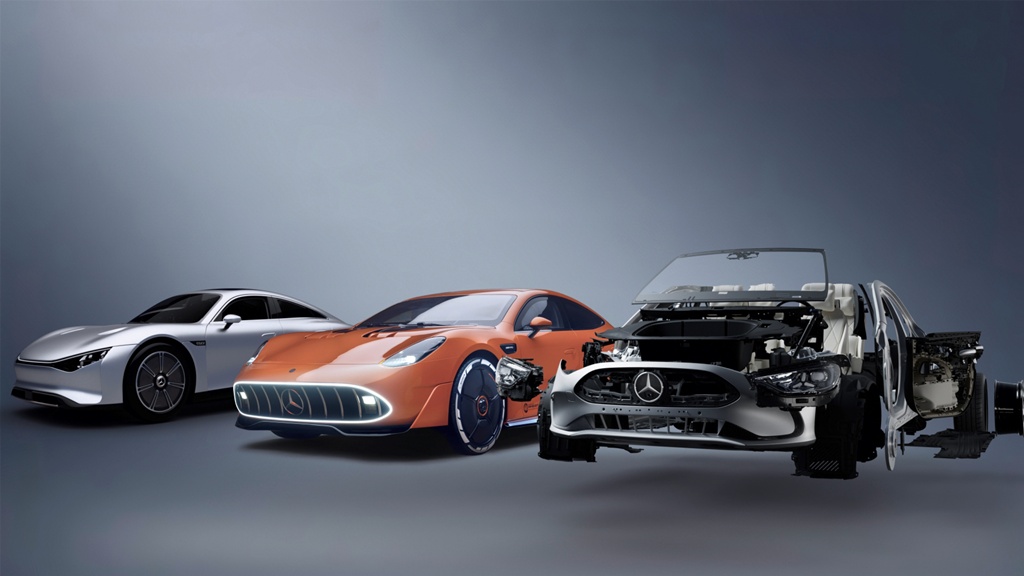
The Tomorrow XX programme currently covers over 40 components that replace carbon-intensive primary resources with sustainable alternatives. As part of the programme, the automaker and its partner companies are already working on a large number of new concepts. Together, they are seeking to replace existing materials with post-consumer recyclates from end-of-life vehicles – and thus close the company’s own material loops.
New Mercedes-Benz electric GLC to have evolved grille design